The passage of the GENIUS Act has accelerated the entry of traditional financial institutions, fintechs, and big tech companies into stablecoin issuance. However, as the number of issuers increases, stablecoin fragmentation is emerging as a structural issue that replicates the inefficiencies of traditional finance, and a stablecoin clearing layer is becoming essential infrastructure.
Two startups, Ubyx and The Better Money Company, have each raised $10M in seed funding and entered the competition to build stablecoin clearing infrastructure. While both share a similar goal of solving the many-to-many model problem, their clearing mechanisms differ slightly.
Historically, companies that solved many-to-many model problems have built massive scale and strong moats. In that context, stablecoin clearing could become a significant business opportunity. However, there is a key variable. As stablecoins increasingly gain recognition as money, there may be a view that clearing should be handled not by private companies but by governments or regulatory bodies. This is especially likely in more conservative financial markets such as Asia. It remains to be seen whether startups like in the United States or governments will ultimately take on this role.
The stablecoin market has entered a phase of rapid maturation. As of early 2026, the total market capitalization of stablecoins has surpassed $300B. USDT and USDC still dominate the market, but beyond these two giants, many other stablecoins such as USDe, DAI, PYUSD, USD1, USDG, and RLUSD are establishing meaningful positions.
The year 2026 is particularly important because stablecoins are no longer just tools for crypto trading. They are actively being integrated into core areas of traditional finance, including payments, remittances, treasury operations, and institutional settlement. Visa’s stablecoin-linked card payment volume reached an annualized $3.5B as of Q4 2025, representing 460% year-over-year growth. JPMorgan launched its deposit token JPMD on Base, and SoFi launched SoFiUSD on Ethereum. Mastercard partnered with Fiserv to connect bank-branded stablecoins to its Multi-Token Network.
The stablecoin market is no longer just for crypto enthusiasts. It is evolving beyond Web3 into a core layer of global financial infrastructure. However, as the market grows, a structural problem is quietly intensifying.
The passage of the GENIUS Act in 2025 marked a turning point for the stablecoin market. By establishing clear reserve requirements, issuer oversight, and consumer protection rules, it removed regulatory uncertainty that had previously held back large institutions.
The result has been an unprecedented rush of companies and institutions issuing stablecoins. JPMorgan, Bank of America, Wells Fargo, and Citigroup are exploring a joint stablecoin, although discussions are still at an early stage. In Europe, banks including BNP Paribas, ING, and UniCredit have formed a joint venture called Qivalis to develop a euro-based stablecoin, targeting a 2026 launch. Retail companies such as Walmart and Amazon are reportedly considering their own stablecoins to reduce card network fees and improve supplier payment efficiency. Companies including Stripe, PayPal, Fiserv, Klarna, Cloudflare, and Sony have also launched or announced stablecoin initiatives.
In other words, we are entering an era where every institution that moves money needs a stablecoin strategy.
Source: Minneapolis Federal Reserve
An increase in issuers is a positive signal. It means broader adoption, more use cases, and a more competitive market. However, it also introduces a structural problem that the stablecoin ecosystem is not yet ready to handle: fragmentation.
Although all USD-pegged stablecoins theoretically represent one dollar, they are not fungible with each other. A USD stablecoin issued by issuer A is fundamentally a different token from one issued by issuer B. They are backed by different reserves, issued under different regulatory frameworks, and deployed on different blockchains. If a merchant receives a stablecoin it does not support, it must go through exchanges, OTC desks, or multiple intermediaries to convert it into usable funds.
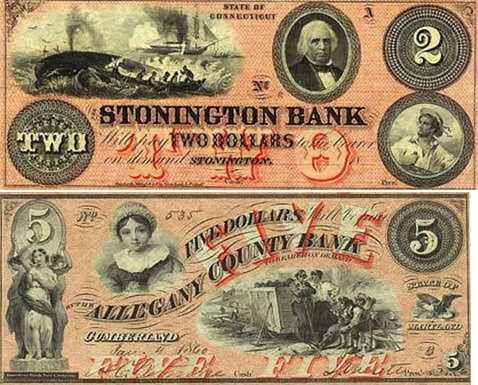
This is not a hypothetical issue. It is the same fragmentation problem that has plagued traditional finance for decades, now at risk of being replicated onchain. If every major bank and company issues its own stablecoin without interoperability infrastructure, the result will resemble a digital version of the fragmented banking system of 19th century America. At that time, each bank issued its own currency, and one dollar in one city was not necessarily accepted as one dollar in another.
In traditional finance, currency fragmentation has long been addressed through clearing and settlement infrastructure. When money is transferred from Bank A to Bank B, the two banks do not settle directly. Instead, transactions are processed through clearing houses such as the Federal Reserve’s Fedwire, the Clearing House’s CHIPS, or Europe’s TARGET2. This ensures that one dollar at Bank A is recognized as exactly one dollar at Bank B.
This is what economists call the singleness of money. It is the principle that one unit of money maintains the same value regardless of who holds it. Clearing houses make this principle possible. Without them, every bank would need bilateral agreements with every other bank, and complexity would grow exponentially as the number of participants increases.
The same issue is now emerging onchain. As the number of stablecoin issuers grows, the ecosystem faces a many-to-many network problem. Each issuer must build its own distribution network, off-ramp infrastructure, and relationships with receiving institutions. Likewise, each bank or fintech that wants to accept stablecoins must integrate individually with each issuer.
One might argue that DEX AMMs or centralized exchange order books already provide stablecoin swaps. Technically true, but fundamentally insufficient for institutional adoption.
Slippage: AMM-based swaps do not guarantee 1:1 exchange. Large trades can suffer meaningful slippage, especially in pools with limited liquidity.
Variable pricing: Exchange order books treat stablecoins as tradable assets with fluctuating prices rather than money redeemable at par.
Accounting issues: For institutions to treat stablecoins as cash equivalents on balance sheets, a mechanism guaranteeing par redemption is required. Trading at variable market prices does not meet this requirement.
Compliance gaps: DEXs typically lack AML, KYC, and sanctions screening required by regulators.
In short, exchanges are trading venues. What the stablecoin market needs is not trading, but a clearing system that guarantees par redemption through regulated channels.
Two startups are emerging as early leaders in building stablecoin clearing infrastructure: Ubyx and The Better Money Company. Both have raised $10M in seed funding and aim to solve fragmentation, but their approaches differ significantly.

The most important way to understand Ubyx is this: it adopts a collection model rather than a sale model. Instead of users selling stablecoins into an order book or AMM pool at market price, banks or fintechs collect tokens on behalf of customers and present them to the issuer for redemption at par value.
The company compares this to check clearing. Rather than discovering price in the market, it operationally guarantees that a token is collected at one dollar within a rules-based network. Ubyx is not an exchange that holds value directly, but a coordination layer that standardizes clearing processes among regulated entities.
The off-ramping process at 1:1 value works as follows:
When a customer receives stablecoins in a bank or fintech wallet, the institution performs initial KYC and AML checks and submits a clearing request to Ubyx.
Ubyx forwards the tokens and regulatory data to the issuer, which verifies authenticity and redeemability before approving redemption.
Once approved, cash moves from a settlement bank to the bank or fintech account, and the customer is credited.
A key element is pre-funding. A receiving institution cannot evaluate the credit of hundreds of issuers before crediting customers. Therefore, Ubyx requires issuers to maintain prefunded cash accounts at settlement banks. These accounts are not additional capital buffers but part of existing reserves, sized according to metrics such as average net redemption days defined in the Ubyx rulebook. This structure answers whether redemption at par can be trusted without direct bilateral trust between issuer and institution.
Another key feature is standardized operations. The rulebook defines network participation, jurisdictions, AML and KYC requirements, and settlement bank selection. Transaction records use the ISO 20022 data model. Without standardization, network effects would not emerge.
Ubyx positions itself as global. It promotes the idea of any token, any blockchain, at par value. Its whitepaper describes scenarios such as a US bank accepting a Japanese yen stablecoin and redeeming it into dollars. Participating issuers include Paxos, Ripple, Agora, Transfero, Monerium, GMO Trust, BiLira, Juno, and Brale.

TBMC’s core message is simple: any stablecoin in, any stablecoin out. The key question is how this is achieved.
TBMC positions its clearing house as an alternative to exchange infrastructure. It distinguishes trade-based swaps that rely on AMMs, OTC desks, or market makers from its own redemption-based swaps. Trade-based approaches suffer from slippage, variable pricing, longer execution times for large trades, and reliance on permissionless DeFi or opaque exchanges. TBMC aims to offer fixed fees, predictable pricing, guaranteed settlement times, and compliant sources of funds.
TBMC’s model is similar to Ubyx in that it relies on redemption-based networks rather than market trading. The difference lies in the endpoint. While Ubyx focuses on off-ramping into fiat accounts, TBMC emphasizes stablecoin-to-stablecoin conversion and orchestration for fintechs. For example, fintech companies can use TBMC to convert between stablecoins at 1:1 value.
TBMC builds a centralized clearing system where banks and issuers participate directly, enabling different stablecoins to be exchanged at par rather than market prices.
TBMC supports GENIUS-compliant stablecoins. Initial supported tokens include USDC, USDG, PYUSD, SBC, CASH, mUSD, frxUSD, and RLUSD. It can be understood as a clearing layer that enables fintechs to interchange regulated USD stablecoins at near par value.
Its partner network reflects this dual structure. Issuer-side partners include Paxos, Bridge, MoonPay, Agora, M0, Bastion, Frax, Brale, MetaMask, and Phantom. Ecosystem partners include Ramp, Modern Treasury, Privy, Turnkey, Notabene, Mesh, LayerZero, Utila, alfred, BitGo, and Takenos.
In a previous article titled "Can KRW Stablecoin Make it?", the need for a stablecoin clearing house was briefly discussed as a condition for success. This article expands on that idea. Stablecoin clearing is not optional. It is a core infrastructure layer that determines the success of a multi-issuer ecosystem.
Without clearing infrastructure, the market will fragment into isolated silos. Each issuer will need to build and maintain its own distribution network. This is inefficient and undermines the core value proposition of stablecoins.
The potential market size for stablecoin clearing is enormous. Stablecoin transaction volume reached about $11T in 2025 and continues to grow. Even small clearing fees on a portion of this volume represent a major revenue opportunity. For comparison, CLS, a foreign exchange settlement system, processes about $6.5T daily. As stablecoins expand into real-world financial activity, clearing volumes could approach similar levels.
The most compelling long-term opportunity is the connection between stablecoin clearing and foreign exchange markets. Consider a real scenario. A Korean merchant receives a EUR stablecoin from a European customer. The merchant needs infrastructure to convert that EUR stablecoin into a KRW stablecoin at an appropriate exchange rate and settle it into their account. This is essentially an onchain FX clearing system. The global FX market processes about $7.5T daily. Capturing even a small portion of cross-currency stablecoin payments represents a massive opportunity.
Ubyx appears better positioned for this opportunity due to its explicit multi-currency roadmap. TBMC is currently focused on USD stablecoins, but this may evolve as non-USD stablecoins grow.
Historically, companies that solved many-to-many problems have built enormous scale and defensible moats. Examples include Visa and Mastercard in payments, Amazon and eBay in commerce, and Uber in ride-hailing.
Stablecoins now face a many-to-many problem and require a solution. Stablecoin clearing houses could provide that solution, with startups like Ubyx and TBMC leading the effort in the United States.
However, there is an important variable. Stablecoins are increasingly coming under regulation and being recognized as money. There is a perspective that 1:1 clearing should be handled not by private companies but by central authorities, similar to fiat currency systems. This is especially likely in conservative financial regions such as Asia, where stablecoin clearing may be restricted to regulated or government institutions.
It will be interesting to see whether stablecoin clearing remains led by startups or eventually becomes a government function.


Dive into 'Narratives' that will be important in the next year


 Mastercard
