*[ASA News] is a bi-weekly newsletter where we share the most important news related to stablecoin in Asia. (2026.03.02~03.15)
Written by Moyed

Source: Hana partners with Circle, Crypto.com to support global stablecoin payments for foreign customers
Hana Financial Group has partnered with global digital asset firms Circle and Crypto.com to launch a stablecoin-based payment pilot targeting foreign visitors to Korea. Led by the group's card subsidiary Hana Card, the program enables foreign customers to pay at local merchants using stablecoin-linked payment cards. Payments are processed through USDC, the dollar-pegged stablecoin issued by Circle, with a 5% cashback offered to foreign holders of the Crypto.com Visa card when they pay at participating Korean merchants.
Hana Financial stated the project aims to validate the practical value and consumer demand for digital asset payments within Korea's card infrastructure. The initiative is part of a broader strategy to proactively build the institutional foundation for won-denominated stablecoin issuance, leveraging real-world partnerships with global digital asset firms to prepare for a bank-led stablecoin ecosystem. Hana Card signed a strategic MOU with Circle in December last year to expand USDC payment and settlement cooperation.
1.2.1 Moyed (ASA Contributor, Delta Network) – 'Foreigners First': A Strategic Detour Shaped by Korea's Regulatory Landscape
The most notable aspect of Hana Financial's project is its deliberate restriction to foreign visitors. This is not merely a market strategy, it is effectively the only viable path to legally execute stablecoin payments under Korea's current regulatory environment. Won-denominated stablecoin issuance remains embroiled in debate over issuer eligibility and regulatory frameworks, and offering stablecoin payment services to domestic users carries significant legal uncertainty before the Digital Asset Basic Act takes effect. In contrast, a structure where foreigners spend USDC they already hold in overseas wallets at Korean merchants can be interpreted as an extension of foreign currency payments under the Foreign Exchange Transactions Act, minimizing regulatory conflicts.
Viewed through the lens of each participant's recent moves, this partnership reads as a convergence of intersecting strategic interests rather than a standalone initiative. Circle has been methodically executing its Korea entry roadmap since President Heath Tarbert visited Seoul in August 2025 to hold digital currency strategy talks with KB, Shinhan, Hana, Woori, and the Bank of Korea, followed by the Hana Card MOU (December 2025) and now this payment pilot. Crypto.com has been expanding its Asia presence through its Visa card program since becoming the first major global exchange to officially enter the Korean market with its app launch in April 2024. Hana Financial is leveraging Hana Card's infrastructure advantage, processing roughly 50% of all foreign card transactions in Korea, while simultaneously participating in a won-stablecoin issuance consortium alongside BNK Financial, iM Financial, and SC First Bank.
What makes this structure particularly interesting is that preempting real-world usage experience could determine competitive positioning in the eventual won-stablecoin market. Korea is currently deadlocked over whether to restrict stablecoin issuance to bank-majority (51%+) consortiums (the Bank of Korea's position) or include fintechs and big tech (the FSC and ruling party's position). The Digital Asset Basic Act (Phase 2) has missed its December 2025 submission deadline, with three competing bills pending in the National Assembly. In the interim, Hana Financial is accumulating pilot data on stablecoin payment infrastructure through the regulatory grey zone of foreign-visitor-targeted services.
Source: Sony Bank and JPYC Sign Deal To Advance Real-Time Stablecoin Purchases
Sony Bank and yen-pegged stablecoin issuer JPYC Inc. have signed a memorandum of understanding to build a real-time purchase system connecting Sony Bank deposit accounts directly to the JPYC platform. Currently, purchasing JPYC requires a manual bank transfer, but the proposed integration would allow users to convert deposits into stablecoins without leaving the banking interface. Sony Bank's Web3 subsidiary BlockBloom will lead the design of the bank linkage, stablecoin rails, and potential consumer services.
JPYC began issuing its yen-pegged stablecoin in October 2025 under Japan's revised Payment Services Act, with tokens backed 1:1 by a combination of bank deposits and Japanese government bonds. Both companies noted that the agreement is exploratory, with no launch timeline specified. The framework under development is intended to be open to multiple financial institutions rather than limited to a single bank partner. Beyond payments, the companies will also explore links between stablecoins and entertainment IP including music and gaming content, as well as digital content purchases and reward distribution. Separately, JPYC announced plans last week to raise approximately 1.78 billion yen (~$12 million) in the first close of its Series B funding round, led by Asteria Corporation.
2.2.1 Moyed (ASA Contributor, Delta Network) – Japan's Stablecoin Ecosystem Shifts from 'Issuance' to 'Distribution Infrastructure Competition'
The core proposition of the Sony Bank-JPYC MOU is eliminating the need for users to leave their bank accounts to purchase stablecoins. Most stablecoin purchases today require routing through exchanges or manual bank transfers, creating psychological and procedural barriers for existing bank customers. The experience of converting deposits into stablecoins instantly within a banking interface may feel, from the user's perspective, not much different from opening a foreign currency deposit. If realized, this could mark a turning point where stablecoins are perceived not as 'crypto assets' but as an extension of banking products.
In the context of Japan's stablecoin market, this partnership carries a notable signal. Japan established a pioneering regulatory framework in 2023 through its revised Payment Services Act, which classifies stablecoins as 'Electronic Payment Instruments (EPI).' JPYC received FSA authorization in August 2025 and became the first licensed issuer to begin yen stablecoin issuance that October. Since then, use cases have expanded rapidly, SMBC's My Number Card-based offline payment pilot, LINE NEXT messenger integration, and a partnership with Densan Systems enabling payments at 65,000 convenience stores. Sony Bank's partnership adds 'direct onboarding from bank deposits' as a new entry point. A value chain is forming: issuance (JPYC) → distribution (LINE, SMBC stera terminals, convenience stores) → purchase access (Sony Bank).
From a Sony Group perspective, this partnership is a puzzle piece in a larger Web3 strategy. BlockBloom, established in October 2025 with 300 million yen in capital, is Sony Bank's dedicated Web3 subsidiary, positioning itself at the intersection of fans, artists, NFTs, and digital/physical experiences. Sony Bank is also separately pursuing a U.S. federal banking license (Connectia Trust) for dollar stablecoin issuance.
Source: Hong Kong to Issue Stablecoin Licences to HSBC and Standard Chartered Soon
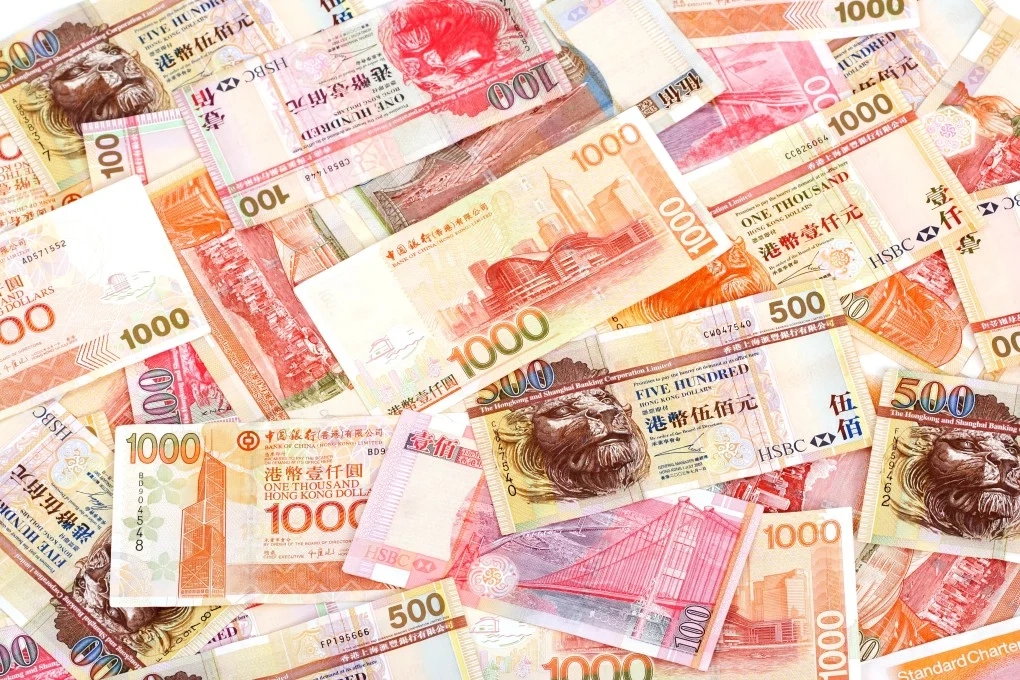
Hong Kong is on the verge of issuing its first stablecoin licenses, with HSBC and Standard Chartered expected to be among the initial recipients. The Hong Kong Monetary Authority (HKMA) has reviewed 36 applications, and both banks are reported to be included in the first batch of licensees. This marks the first official license issuance under the Stablecoin Ordinance, which took effect in August 2025, signaling that Hong Kong's digital asset regulatory framework has entered the execution phase.
HSBC's inclusion is drawing particular attention. Despite not participating in the HKMA-led stablecoin sandbox, the bank has been actively involved in tokenization projects, including digital bond issuance through its proprietary Orion platform. CEO Georges Elhedery has praised Hong Kong's digital asset regulatory environment as "comprehensive and safe," and the bank is reportedly planning to issue a Hong Kong dollar-pegged stablecoin. Standard Chartered has also formalized its intent to issue an HKD stablecoin, with CEO Bill Winters stating that Hong Kong's stablecoin push could usher in a "new era of digital trade settlement." Initial licenses are expected to focus on local currency (HKD)-backed stablecoins, with mutual recognition agreements with other jurisdictions also under consideration.
3.2.1 Moyed (ASA Contributor, Delta Network) – Three Asian Stablecoin Strategies: Same Direction, Different Speeds
Placing the three stories covered in this issue side by side, Korea, Japan, and Hong Kong, reveals a clear picture of Asia's major financial hubs moving toward stablecoins in the same direction but at distinctly different stages. Hong Kong enacted its Stablecoin Ordinance in August 2025, reviewed 36 applications, and is now entering the license issuance phase. Japan established its framework through the 2023 revised Payment Services Act, proceeded to JPYC issuance, and has now entered a competition over distribution, bank deposit linkages, offline payments, and more. Korea, still debating issuer eligibility and regulatory frameworks, is accumulating real-world pilot experience through the detour of foreign-visitor-targeted services.
What stands out in Hong Kong's approach is that HSBC and Standard Chartered, Global Systemically Important Banks (G-SIBs), are among the first issuers. This goes beyond regulatory approval; it signals that global banks are beginning to incorporate stablecoins into their core business domains. HSBC has issued over $3.5 billion in digital native bonds through its Orion platform and delivered Hong Kong's first bank-led blockchain settlement via tokenized deposits. Standard Chartered formed a joint venture, Anchorpoint Financial, with Animoca Brands and HKT, filing for a stablecoin license on the very first day the Ordinance took effect. For these institutions, a stablecoin license is not a standalone business but the base layer of a value chain extending through tokenized asset trading (HKMA's Project Ensemble), cross-border payments, and digital trade finance.
In February 2026, mainland China expanded its crackdown through a joint notice by eight national agencies, extending enforcement to stablecoins and RWA tokenization while explicitly banning unauthorized offshore issuance of yuan-pegged stablecoins. In this context, Hong Kong's stablecoin licenses gain added value as a regulatory arbitrage hub. JD Coinlink (a JD.com subsidiary) and Ant Group are reportedly pursuing HKMA licenses, forming a pathway for Chinese institutional capital, restricted from direct crypto activity on the mainland, to access digital asset markets through Hong Kong. For Korea, the key takeaway is that as Hong Kong and Japan advance in license issuance and use-case development respectively, a prolonged regulatory vacuum risks falling behind in global partnerships and infrastructure buildout.
This section is provided by rwa.xyz. To receive the latest stablecoin and RWA news, join RWA.xyz Newswire.
4.1.1 Visa Expands Stablecoin Card Program to 100+ Countries via Bridge Partnership
Plans to scale stablecoin-linked cards from 18 to 100+ countries by end of 2026, targeting Europe, Asia Pacific, Africa, and the Middle East
Connects crypto wallets like Phantom and MetaMask to Visa's network of 175M merchant locations
Strategic infrastructure integration to maintain control of cross-border payment flows rather than ceding them to blockchain-native solutions
4.1.2 Western Union Partners with Crossmint to Launch USDPT Stablecoin on Solana
USDPT stablecoin, issued by Anchorage Digital Bank, set for H1 2026 launch to streamline international remittances
Western Union's Digital Asset Network connects stablecoins to cash access points across 200+ countries through 360,000+ collection locations
Crossmint provides wallet and payment APIs enabling Solana transaction settlement and local currency conversion
4.1.3 Mastercard Partners with SoFi to Enable Stablecoin Settlement on Global Network
First U.S. bank-issued stablecoin (SoFiUSD) integrated into Mastercard's payment network for 24/7 settlement
SoFi Bank settles its own Mastercard transactions in SoFiUSD, with Galileo platform extending the option to other banks and issuers
Fully regulated, backed 1:1 by cash reserves, issued by an OCC-regulated insured depository institution
4.2.1 Wells Fargo Files 'WFUSD' Trademark, Signaling Stablecoin Development
Trademark covers digital asset trading software, crypto exchange services, and tokenization platforms
Application includes specific provisions for stablecoin transaction processing and blockchain-based payment infrastructure
Follows recent investments in crypto firms like Elliptic and Talos, plus a report classifying digital assets as "investable"
4.2.2 South Korean Firm Comtus Holdings Proposes Won Stablecoin Network Standardization Framework
Presented standardization framework at Open Blockchain & DID Association's technical seminar, focusing on regulatory compliance and system stability
Framework emphasizes user protection, privacy features, and AML monitoring systems for institutional adoption
Plans to develop transfer network based on Sovereign Chain technology, tailored for South Korea's regulatory environment
4.2.3 LINE Launches 'Unifi' Global Stablecoin Platform with Up to 8% APR
Non-custodial wallet accessible through LINE Messenger with social login via LINE, Apple, Google, or Naver accounts
Offers comprehensive stablecoin services including deposits, transfers, and rewards, initially supporting USDT with more stablecoins planned
Features direct stablecoin-to-fiat conversion and bank transfers through SentBe, plus integration with Dapp Portal
4.3.1 Florida House Approves Stablecoin Payment Pilot Program for State Fees
Passes with overwhelming 108-3 vote, allowing voluntary stablecoin payments for state licensing, registration, and renewal fees
Only stablecoins backed by at least $1 billion in reserve assets qualify, with the Department of Financial Services overseeing USD conversion
Launches July 1 if signed by Governor, with annual evaluations starting 2027 to assess expansion potential
4.3.2 Thailand's Bitkub Partners with Ripple to Launch $RLUSD Stablecoin
First major Thai exchange to offer Ripple's $RLUSD stablecoin, strengthening the country's position in Southeast Asia's crypto market
Integration targets cross-border payments, DeFi, and remittances for Thai users with USD-pegged stability
Aligns with Thailand's broader vision to advance financial services and blockchain adoption
4.3.3 Australia Approves First Regulated AUD Stablecoin (AUDD) on XRP Ledger
AUDC Pty Ltd receives ASIC license to issue fully regulated, bank-grade stablecoin for institutional use
Transactions settle in 3-5 seconds at minimal cost, suited for high-volume institutional payments
Part of a broader regulatory framework requiring crypto platforms handling over $10M annually to obtain a financial services license


Dive into 'Narratives' that will be important in the next year


 QFEX
QFEX

