*[ASA News] is a bi-weekly newsletter where we share the most important news related to stablecoin in Asia. (2026.02.17~03.01)
Written by Moyed
Source: Japan's Nomura, Daiwa team with top banks on stablecoin-based trading
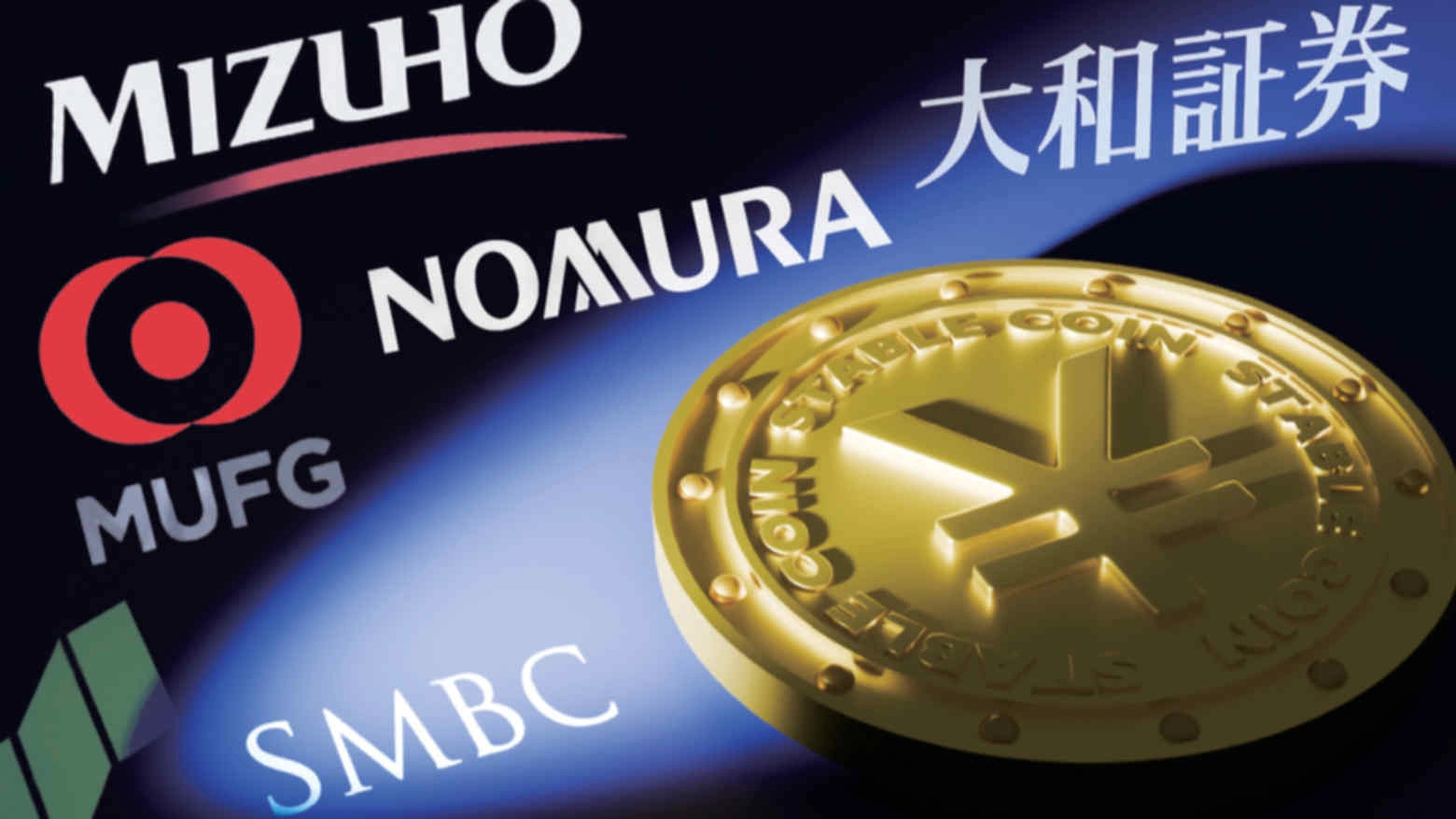
Nomura Holdings and Daiwa Securities Group are partnering with Japan's three megabanks, MUFG, SMFG, and Mizuho, to build a stablecoin-based securities trading framework. The consortium aims to convert stocks, government bonds, corporate bonds, investment trusts, ETFs, and MMFs into digital securities on the blockchain, enabling instant settlement and rights transfer via stablecoins when buy orders are placed. Trials using a yen-pegged stablecoin jointly issued by the three megabanks are expected to begin as early as this month following regulatory notification, with commercial launch targeted within the next few years.
Japan's current securities settlement operates on a T+2 (two business days after trade date) cycle. While the U.S. transitioned to T+1 in 2024 and European and Asian markets are also pushing to shorten settlement cycles, Japan remains divided on the issue due to the additional burden on brokerages caused by time zone differences with overseas markets. If blockchain-based 24/7 real-time settlement becomes a reality, investors both inside and outside Japan could trade regardless of time zones, potentially boosting capital inflows into Japanese markets.
The megabank yen stablecoin will initially be used for internal transactions at Mitsubishi Corp., while Resona Holdings and JCB plan to enable retail payment applications by fiscal year 2027. Meanwhile, Robinhood has already launched blockchain-based "stock token" trading in Europe, fueling concerns among Japanese financial institutions that falling behind in tokenized financial product competition could weaken their ability to attract foreign investors.
1.2.1 Moyed (ASA Contributor, Delta Network) – Japan's 'Full-Stack On-Chain Finance': From Payments to Capital Markets
This consortium signals that Japan's crypto market discourse is shifting from 'stablecoin issuance' to 'stablecoin utilization.' The megabanks' yen stablecoin, SBI-Startale's tokenized securities chain Strium, SMBC's My Number Card-based JPYC retail payment trials, and Sony Bank's dollar stablecoin issuance plans, experiments that had been progressing independently, are now converging around the core use case of securities settlement. A vertical integration structure spanning payment instruments (stablecoins), trading infrastructure (blockchain), and investment products (digital securities) is taking shape across Japan's entire financial system.
What stands out is that this is a joint initiative between securities firms and banks. Globally, tokenized securities trading is largely driven by exchanges (NYSE, Nasdaq) or fintech companies, but in Japan, securities firms (Nomura, Daiwa) and banks (the three megabanks) are moving together from the start. This is partly the product of Japan's regulatory environment, which established a stablecoin issuance framework through the 2023 revised Payment Services Act. Because the issuing entity (banks), distribution channel (securities firms), and settlement instrument (yen stablecoin) are institutionally aligned, such comprehensive collaboration is possible.
The contrast with South Korea is stark. Korea is still mired in a tug-of-war between banks and tech companies over who gets to issue won-backed stablecoins, and the detailed provisions of the Digital Asset Basic Act remain under development. While Japan is simultaneously piloting across issuance, distribution, and utilization, Korea's discourse remains focused on 'who gets to issue.' Korea does have concrete developments, financial groups negotiating SPC establishment, Mirae Asset's digital bond issuance, but it has not yet reached the stage of directly integrating stablecoins into capital market settlement. If Japan's trials proceed successfully, they are likely to become the benchmark for on-chain transformation across Asian capital markets.
Source: SEC makes quiet shift to brokers' stablecoin holdings that may pack big results
The U.S. Securities and Exchange Commission (SEC) has issued guidance allowing broker-dealers to treat stablecoin holdings as regulatory capital. According to a new Question No. 5 added to the SEC's "Broker-Dealer Financial Responsibilities" FAQ, broker-dealers need only apply a 2% haircut to dollar-pegged stablecoins such as USDC and USDT. Compared to the previous de facto 100% haircut that effectively excluded stablecoins from capital calculations, firms can now count 98% of their stablecoin holdings toward regulatory capital.
The implications are significant. Digital Chamber CEO Cody Carbone noted that "while this guidance does not create new rules, it helps reduce uncertainty for firms seeking to operate compliantly under current securities laws." Digital Currency Group board member Tonya Evans analyzed that "stablecoins are now treated like money market funds on a firm's balance sheet." This change applies to all SEC-registered broker-dealers, from Robinhood to Goldman Sachs, making tokenized securities custody, trade intermediation, and liquidity provision economically viable.
However, this guidance is staff-level informal direction, not formal rulemaking. SEC Commissioner Hester Peirce stated she wants to consider how existing rules "could be amended to account for payment stablecoins," but informal guidance is as easy to reverse as it is to issue. The industry is pushing for congressional legislation, such as last year's GENIUS Act (Guiding and Establishing National Innovation for U.S. Stablecoins), to codify the policy into law.
2.2.1 Moyed (ASA Contributor, Delta Network) – 'Capital Recognition' as a Game Changer: The Divergence from Asia's Regulatory Approach
The SEC's move may be just a single FAQ addition in form, but in substance it fundamentally alters stablecoins' standing within U.S. securities infrastructure. The key is 'capital recognition.' For broker-dealers, having stablecoins recognized as regulatory capital means holding them is no longer a financial penalty but a business tool. Entry barriers to tokenized securities custody, on-chain settlement intermediation, and liquidity provision, areas firms had hesitated to enter due to 'capital inefficiency', have been significantly lowered.
Comparing this with Asia's approach reveals an interesting divergence. Asian jurisdictions, Japan, Hong Kong, Singapore, have primarily focused on 'issuer-side regulation,' concentrating regulatory energy on determining who can issue stablecoins and under what conditions. Hong Kong requires issuers to maintain HK$25 million in paid-up capital and liquid capital exceeding 12 months of operating expenses. Japan has established a bank-issuance model through its revised Payment Services Act. The SEC's move, by contrast, is 'user-side regulation', easing capital rules for financial institutions that hold and utilize stablecoins. The difference lies in which side of the equation gets unlocked first: the issuer side or the user side.
This divergence carries meaningful implications. By first removing barriers to broker-dealers' stablecoin utilization, the U.S. has created an environment where existing financial institutions can participate in the tokenized asset market even before issuer regulation (GENIUS Act) is finalized. If Japan is following a sequential path of issuance (megabank yen stablecoin) followed by utilization (securities settlement), the U.S. is opening up the utilization environment first and letting issuer regulation follow. For South Korea, both models are worth studying. Rather than getting bogged down in issuer debates alone, there is value in concurrently exploring a capital regulatory framework that enables financial institutions to practically utilize stablecoins.
Source: Regional Banks Team Up for Tokenized Deposits
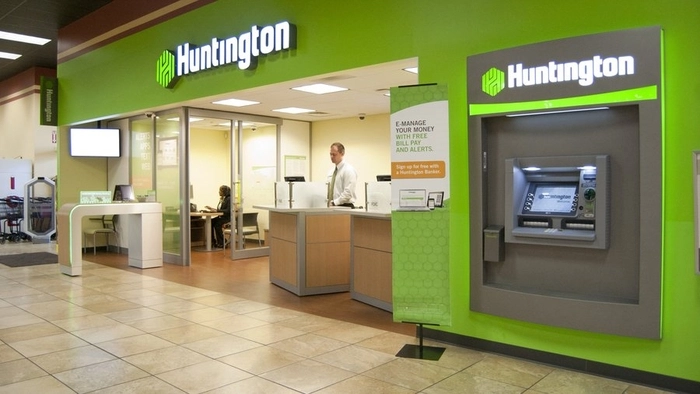
Five U.S. regional banks, Huntington Bancshares, First Horizon, M&T Bank, KeyCorp, and Old National Bank, are partnering with blockchain platform Cari Network to commercialize a tokenized deposit network by year-end. The plan calls for a minimum viable product (MVP) in March, a pilot in Q3, and full commercial rollout by year-end. Tokens issued on this network will offer speed and transferability comparable to stablecoins while retaining the legal status of traditional bank deposits and remaining eligible for FDIC insurance.
Initially, the platform will support money movement only among customers of participating banks, with plans to expand interoperability with other payment networks for 24/7 instant settlement. Cari Network is led by former U.S. Comptroller of the Currency Gene Ludwig, who stated: "Tokenized deposits, built on sound blockchain infrastructure, can modernize payments while keeping insured deposits at the core of economic activity."
This move reads as a strategic play by mid-sized banks to maintain competitiveness against global financial institutions and fintech. As stablecoin and digital asset players encroach on traditional banking territory with 24/7 payments and programmable money, regional banks are using tokenized deposits to defend their core deposit business while absorbing blockchain's technological advantages.
3.2.1 Moyed (ASA Contributor, Delta Network) – Tokenized Deposits vs. Stablecoins: Implications for Asia
Tokenized deposits and stablecoins may look similar as 'on-chain dollars,' but they are structurally entirely different financial products. Stablecoins follow a 'bearer instrument' model where the issuer holds reserve assets separately and circulates tokens, possession equals ownership, and issued funds are locked outside the banking system (in treasuries, custodial accounts, etc.). Tokenized deposits, by contrast, are an 'account-based' model that remains on the bank's balance sheet. The bank controls the ledger, FDIC insurance applies, and banks can use the funds for lending and liquidity management. In short, stablecoins drain liquidity from the banking system, while tokenized deposits maintain liquidity while upgrading functionality.
In Asia, these two models are evolving differently based on each country's financial structure and regulatory philosophy. Japan is pursuing both tracks in parallel. The three megabanks' yen stablecoin is classified as an 'electronic payment instrument' under the Payment Services Act, while separately, DCJPY (Digital Currency Japanese Yen) operates as a tokenized deposit model, with Japan Post Bank and others planning to use it for securities settlement in 2026. South Korea remains in early stages for both, but the Bank of Korea's recent move to restrict won-stablecoin issuance to licensed banks and require banks to hold at least 51% of any stablecoin issuer reads as a signal favoring a model closer to tokenized deposits.
The message from U.S. regional banks to Asia is clear: tokenized deposits are a pragmatic path for banks to defend against disintermediation in the blockchain era while still embracing innovation. If stablecoin issuance is dominated by non-bank entities, banks' deposit bases risk erosion, but tokenized deposits preserve the deposit franchise while adding 24/7 settlement, programmable money, and cross-border clearing capabilities. The same logic underlies the competition among Asian banks, particularly Korean commercial banks, for stablecoin issuance leadership: protecting their deposit base. The caveat is that if tokenized deposits remain confined to closed interbank networks, they will struggle to match the openness and interoperability of stablecoins. Expanding the participant base and enabling cross-network connectivity will ultimately determine this model's success or failure.
This section is provided by rwa.xyz. To receive the latest stablecoin and RWA news, join RWA.xyz Newswire.
4.1.1 Bank of Korea Restricts Won-Stablecoin Issuance to Licensed Banks Only
Only licensed commercial banks may issue won-backed stablecoins under the Digital Asset Basic Act; banks must hold at least 51% of any stablecoin issuer
Aimed at preventing money laundering, protecting financial stability, and blocking foreign firms from dominating Korea's stablecoin market
Reserve holding requirements for stablecoins establish a bank-centric issuance model
4.1.2 Tether Discontinues Chinese Yuan Stablecoin CNHT, Announces One-Year Redemption Window
All new minting of CNHT tokens on Ethereum and Tron networks halted; redemptions available until early 2027
Low market adoption and insufficient usage scale relative to operational costs drove the decision
Allows Tether to focus resources on core USDT infrastructure and new tokenized asset initiatives
4.1.3 Hong Kong's Stablecoin Framework Focuses on Fiat-Referenced Assets, Excludes Gold-Backed
Stablecoin regulations effective since August 2025 apply only to fiat-referenced stablecoins, requiring 100% high-quality reserve assets
Gold-backed stablecoins excluded from current framework due to price volatility and complexity concerns
HKD stablecoins expected to trade on licensed Virtual Asset Trading Platforms (VATPs), serving as bridges between virtual assets and fiat currencies
4.2.1 Stablecore Partners with Jack Henry to Enable Digital Asset Services for 1,670+ Banks
Enables stablecoin accounts, digital asset custody, and crypto-backed loans through existing core banking systems
Supports 24/7 stablecoin payments, fiat on/off ramps, and staking rewards functionality
Compatible with major platforms including SilverLake System and Symitar; no changes to banks' underlying technology required 4.2.2 Brazil's Central Bank Unveils Institutional Crypto Licensing Framework Through 2027
B2B crypto infrastructure providers (custody, settlement, tokenization platforms) must obtain formal authorization within 270 days
Framework specifically targets institutional service providers, not retail exchanges
Phased implementation between 2026-2027, with parallel initiative planning 3.5% tax on certain stablecoin transactions
4.2.3 Modern Treasury Adds Stablecoin Support to Traditional Payment Platform
Platform now supports USDG, PAXOS, and USDC stablecoins alongside traditional ACH and wire transfers, with USDT integration planned
Eliminates need for separate vendors or technical setups for crypto and fiat payments, lowering barriers for business adoption
Follows GENIUS Act passage and 50% growth in stablecoin market, which recently surpassed $300 billion total value
4.3.1 Japan Tests Stablecoin Payments Using National ID Card System
SMBC Card launches pilot enabling JPYC stablecoin payments through existing payment terminals using My Number Card as digital wallet
One-time verification eliminates need for separate crypto wallets or apps; payments made by simply tapping national ID card
Plans to expand beyond sports venues to tourist sites and public services, with future support for foreign visitors using global stablecoins like USDC
4.3.2 RD Technologies Showcases OristaPay and Web3 Payment Solutions at Major Hong Kong Events
Joint networking reception with Ripple attracted 200+ institutional participants from digital assets and PayFi sectors
Participated in Consensus Hong Kong 2026 and Next-Gen Payment Summit, focusing on cross-border payments and stablecoin regulations
Positions OristaPay as bridge between traditional finance and Web3 applications, emphasizing trust and compliance
4.3.3 BitGo to Issue FYUSD Stablecoin Targeting Asian Institutional Market
Compliant with GENIUS Act framework, requiring 1:1 USD backing and strict AML/KYC protocols
Introduces 'Fypher' infrastructure suite enabling programmable settlement for AI agent transactions
Total stablecoin market cap currently at $295B, down from $300B peak amid increased USDT redemptions


Dive into 'Narratives' that will be important in the next year


 QFEX
QFEX
