*[ASA News] is a bi-weekly newsletter where we share the most important news related to stablecoin in Asia. (2026.03.16~03.30)
Written by Moyed
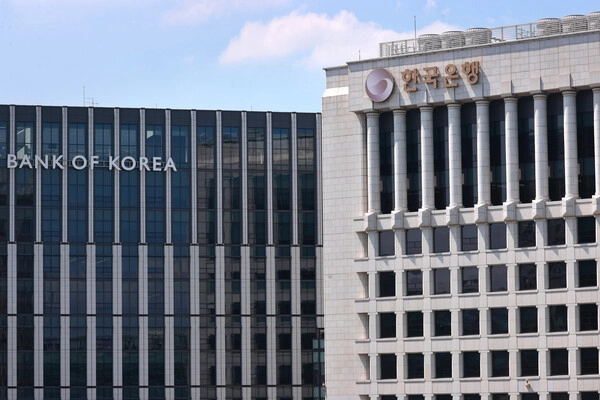
The Bank of Korea has officially launched Phase 2 of Project Hangang, its initiative to build next-generation payment and settlement infrastructure based on a wholesale central bank digital currency (wCBDC) and deposit tokens. Phase 1, which ran from October 2023 to August last year, built a blockchain-based digital currency system and verified functionality across the full lifecycle of manufacturing, issuance, circulation, redemption, and disposal. A live-transaction pilot conducted from April to June last year saw 81,000 participants (by digital wallet count) process a total of 114,880 transactions.
Phase 2 expands participating banks from seven (KB Kookmin, Shinhan, Woori, Hana, IBK Industrial Bank of Korea, NH Nonghyup, and Busan Bank) to nine, with BNK Kyongnam Bank and iM Bank joining. Merchant coverage will also widen from small businesses to large enterprises, with a focus on demonstrating fee savings from deposit token payments. A peer-to-peer remittance function will be newly introduced, along with biometric authentication access and automatic conversion between bank deposits and deposit tokens. Digital voucher applications will expand as well, and the technology will be applied to an EV charging infrastructure project linked to a government pilot for blockchain-based execution of national treasury funds. The Bank of Korea also said it will continue researching the potential use of deposit tokens as payment instruments in AI agent services and in tokenised bond and stock transactions.
1.2.1 Moyed (ASA Contributor, Delta Network) – Deposit Tokens and Stablecoins: Different Design Philosophies Toward the Same Destination
To understand the essence of Project Hangang Phase 2, one must first examine why the Bank of Korea chose the path of "deposit tokens" rather than private stablecoins. Deposit tokens are tokenised commercial bank deposits, a structure that preserves the existing banking system's credit creation function and depositor protection framework while adding programmability. Stablecoins, by contrast, are pre-funded models where an issuer holds reserves to maintain a 1:1 peg. Both operate onchain, but their positions within the monetary system are fundamentally different. Deposit tokens achieve final settlement in central bank reserves, guaranteeing "singleness", the principle that tokens issued by any bank are exchangeable at par. Stablecoins, however, can fluctuate in value depending on the issuer's credit risk.
The Phase 1 live-transaction pilot demonstrated that this design can work technically. More notable than the raw numbers, 81,000 participants, 114,880 transactions, is that seven banks successfully issued and circulated interoperable deposit tokens on shared infrastructure. The addition of P2P transfers, biometric authentication, and automatic conversion in Phase 2 reads as an effort to raise the user experience to banking-app level and lower adoption barriers. The expansion into public-sector applications such as digital vouchers and treasury fund execution is also significant, serving as proof cases that the value of programmable money lies not just in payments but in conditional execution.
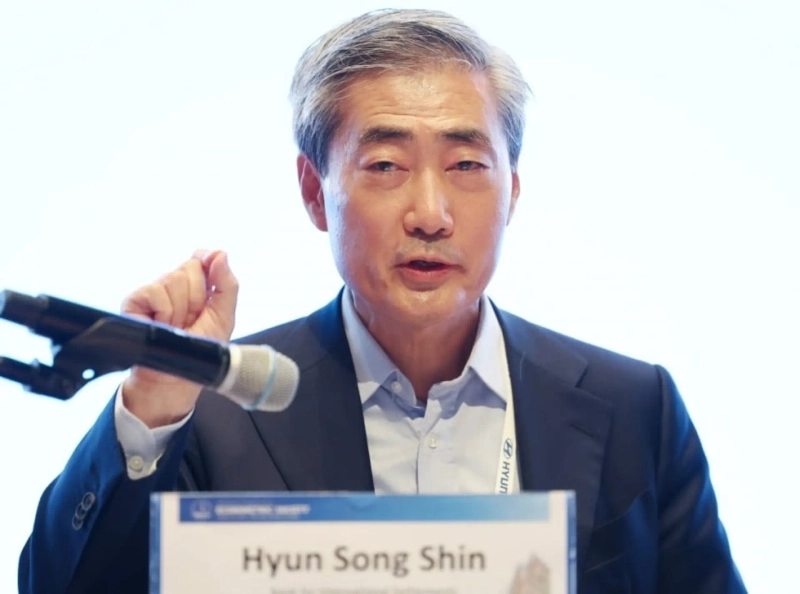
President Lee Jae-myung has nominated Shin Hyun-song (67), director of the Monetary and Economic Department at the Bank for International Settlements (BIS), as the next governor of the Bank of Korea. The nomination comes as current Governor Rhee Chang-yong's term expires on the 20th of next month. Ryu Yeon, senior presidential secretary for public relations, described Shin as "a world-renowned authority in international finance and macroeconomics who combines academic depth with practical insight," citing his career at Princeton University, the IMF, and the Federal Reserve Bank of New York. Shin will be formally appointed after a parliamentary confirmation hearing, with a four-year term.
Shin is also recognised as having expertise in central bank digital currencies. He is known to hold a conservative stance on stablecoins, arguing that it is "difficult to maintain 1:1 value in a crisis."
2.2.1 Moyed (ASA Contributor, Delta Network) – What It Means for the Architect of BIS's 'Next-Generation Monetary System' to Join the BOK
Shin's nomination is more than a personnel story, it reads as a strong signal about the direction of Korea's digital currency policy. As head of BIS's Monetary and Economic Department, he has directly led the institution's core research on central bank digital currencies and tokenised financial infrastructure. Notably, Chapter 3 of the 2025 BIS Annual Economic Report, 'The Next-Generation Monetary and Financial System', was produced by his department. The report systematically analyses the structural limitations of stablecoins and presents a model of placing tokenised central bank reserves and commercial bank money on a "unified ledger" as the blueprint for the next-generation monetary system.
In the report, the BIS concluded that stablecoins struggle to meet three core requirements of a sound monetary system: singleness, elasticity, and integrity. As bearer instruments, stablecoins can trade at varying exchange rates across issuers, breaking singleness. Their fully pre-funded structure leaves no room for credit creation, limiting elasticity. And as bearer assets on borderless blockchains, they carry inherent risks of illicit use. The alternative presented is the unified ledger model, operating tokenised deposits and CBDCs on a single infrastructure, with BIS Innovation Hub projects such as Project Agora (seven jurisdictions, 43 financial institutions) and Project Pine (smart contract-based monetary policy execution) serving as proof of concept.
Should an individual with these views assume the BOK governorship, it is likely that Project Hangang's momentum will strengthen further. Project Hangang shares effectively the same design philosophy as the BIS unified ledger concept. At the same time, in the ongoing domestic debate over who should be permitted to issue KRW stablecoins and under what regulatory framework, Shin's appointment could add weight to the "bank-led deposit tokens + CBDC" model. Of course, the BOK governor does not unilaterally determine regulatory direction, policy coordination with the Financial Services Commission and the National Assembly remains essential.
Source: SBI Crypto Arm Introduces USDC Stablecoin Lending Service for Japan's Retail Savers
SBI VC Trade, the digital asset subsidiary of SBI Holdings, has launched a USDC lending service in Japan. The product enables retail investors to earn yields on dollar-pegged stablecoins through a domestically licensed platform. An introductory annualised rate of 10% is offered for a fixed 12-week term, with plans to maintain approximately 5% going forward, still above typical US dollar time deposit rates of 0.01% to 4%.
Each offering is capped at 5,000 USDC, with interest earnings classified as miscellaneous income for tax purposes. Small-scale participants whose total annual miscellaneous income stays below 200,000 yen can remain tax-exempt. SBI VC Trade has clarified that the service constitutes a loan rather than a deposit, meaning participants bear direct counterparty risk without bank-style asset segregation. The borrowed USDC may be re-lent as part of SBI VC Trade's regular operations, and funds cannot be withdrawn during the fixed 12-week term. SBI VC Trade began handling USDC in March 2025 as the only platform in Japan licensed to distribute and trade stablecoins to the public.
3.2.1 Moyed (ASA Contributor, Delta Network) – SBI's Full-Stack Stablecoin Strategy: From Distribution to Yield Products
Viewed in isolation, SBI VC Trade's USDC lending service is a straightforward yield product. But placed alongside SBI Group's recent moves, it reads as one pillar of a strategy to vertically integrate Japan's entire stablecoin and tokenised finance ecosystem. Since securing its position as Japan's sole USDC public distribution licensee in March 2025, SBI VC Trade has been driving USDC adoption and digital finance applications through a joint venture with Circle (established August 2025). This lending service represents an expansion from "distribution" to "yield generation." By adding interest income as a holding incentive to a platform that previously supported only spot trading (buy/sell), SBI is creating long-term holding-based stablecoin demand rather than speculative trading activity.
In parallel, SBI Group is moving aggressively at the infrastructure layer. This week, SBI Holdings invested $63 million in Singapore-based blockchain infrastructure firm Startale Group alongside Sony Innovation Fund. Startale is building "Strium," a platform for trading tokenised securities and real-world assets, in collaboration with SBI, while also developing the yen stablecoin JPYSC and dollar stablecoin USDSC. With plans to launch tokenised securities linked to Japanese equities this year, a structure is taking shape in which stablecoins function not merely as payment instruments but as the settlement layer for tokenised assets.
The 10% introductory rate clearly carries a marketing element, but the planned 5% ongoing rate is still competitive against US dollar time deposits. For retail investors seeking dollar-denominated returns in Japan's ultra-low interest rate environment (yen deposit rates around 0.02%), this represents a meaningful option. However, as SBI VC Trade has disclosed, this is a loan contract rather than a deposit, and the re-lending structure introduces additional credit risk. The fact that it is offered through a regulated platform does not fully eliminate risk, but it does provide a lower barrier to entry for retail investors compared to DeFi protocols in terms of accessibility and transparency.
This section is provided by rwa.xyz. To receive the latest stablecoin and RWA news, join RWA.xyz Newswire.
4.1.1 Mastercard Acquires BVNK for $1.8B to Bridge Crypto-Fiat Payments
Leveraging stablecoins to accelerate B2B cross-border payment and remittance growth without cannibalising core card business
Aims to become the primary "network connector" for stablecoin-to-fiat conversions, expanding beyond traditional payment services
Building crypto ecosystem with 85+ partners including Binance, Circle, and Ripple; participating in Solana Developer Platform
4.1.2 Western Union Partners with Crossmint to Launch USDPT Stablecoin on Solana
Integrating Solana-based USDPT stablecoin into Digital Asset Network, connecting 200+ countries and 360,000+ cash collection points
Maintaining positive 2026 outlook with projected 5-8% revenue growth and EPS of $1.50-1.60 while accelerating digital transformation
Opening Global Capability Center in Hyderabad with HCLTech to enhance payment infrastructure and digital experiences
4.1.3 Revolut Crosses $1.2B in Onchain Transactions on Polygon Network
Leveraging Polygon's cost structure: 426x cheaper than Ethereum, 4x cheaper than Solana
Total stablecoin payment volumes across all chains grew 156% YoY in 2025, reaching $10.5B
Filing for US national bank charter while piloting GBP stablecoin through UK's FCA regulatory sandbox
4.2.1 Five US Regional Banks Building Tokenised Deposit Network 'Cari Network' on ZKSync
Huntington, M&T Bank, KeyCorp, and two other regional banks participating, targeting 2026 launch
Deposits remain FDIC-insured and on banks' balance sheets, differentiating from traditional stablecoins
Built on Matter Labs' private permissioned blockchain "Prividium," meeting regulatory privacy and compliance requirements
4.2.2 North Dakota Approves First State-Backed Bank-to-Bank Stablecoin Project
Ten local banks to participate in "Roughrider Coin" pilot, launching September 2026
USD-pegged stablecoin restricted to bank-to-bank transactions, not available for public trading
Partnering with Fortune 500 fintech Fiserv; expected to be cost-neutral due to transaction cost savings
4.2.3 EDXM to Launch First Blockchain-Based Korean Won Futures Trading
Competing with the $27B daily KRW non-deliverable forwards market, offering 50-75% lower costs and instant settlement
Using KRWQ stablecoin issued by Cayman Islands-based Brainpower Labs, paired with USDC
Launch expected in early April, marking EDXM's first expansion beyond crypto into traditional currency markets
4.3.1 Euro-Backed Stablecoins Capture 80% of Non-USD Digital Currency Market
Total supply reaches $1.2B, with EURC leading at $506M in circulation
80% of transactions support real business use cases including payroll, treasury, and international payments
Integration with Visa and Mastercard networks bridges traditional finance; MiCA regulation framework provides legal clarity
4.3.2 Kenya Publishes Draft VASP Rules with Focus on Stablecoin Reserves and Licensing
Stablecoin issuers must maintain 30% of funds in Kenyan banks, with remaining reserves in approved low-risk assets
New fee structure introduces 0.05% transaction fee for token platforms and 0.5% levy on initial virtual asset offerings
Expanding VASP licensing to include limited liability partnerships; mandating biennial system audits by certified IT auditors
4.3.3 Ripple Expands Crypto and Payment Services in Brazil
Launching integrated platform combining cross-border payments, crypto custody, brokerage, and treasury tools
Several Brazilian firms already using Ripple's network, including Banco Genial for USD transfers and Braza Bank for stablecoin issuance
Plans to apply for VASP license with Brazil's central bank amid rapid global expansion following $2.25B+ in recent acquisitions


Dive into 'Narratives' that will be important in the next year


 Mastercard

