Hashed Open Finance, a subsidiary of Hashed, has announced Maroo, a KRW-stablecoin-focused Layer 1 blockchain.
“Maroo(마루)” is a pure Korean word referring to the most fundamental space supporting the entire traditional Korean house (Hanok), as well as an open space connecting the inside (room) and the outside (yard).
The name is well chosen. It captures what a platform is meant to be: foundational, connective, and enabling.
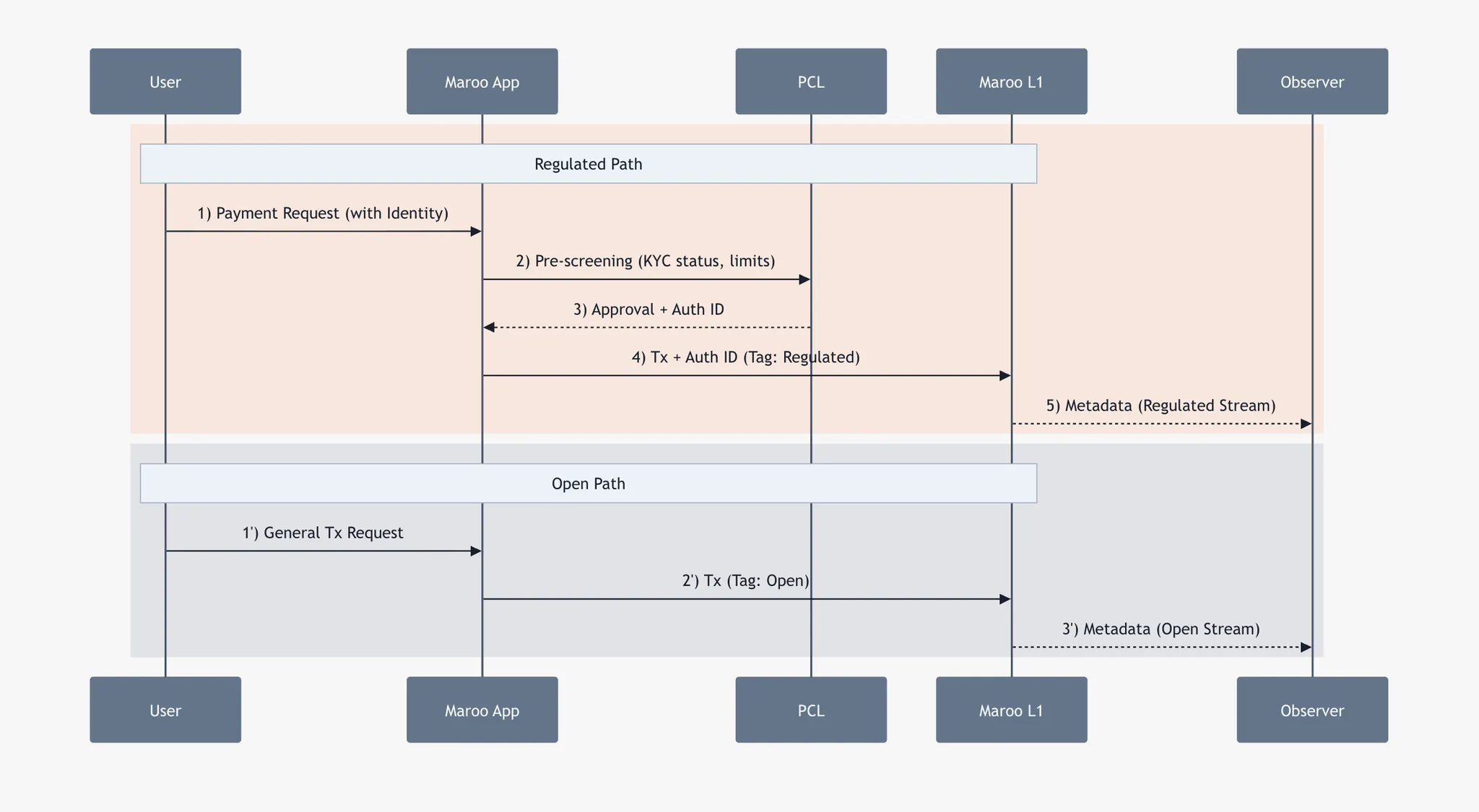
Maroo is designed with OKRW as its native gas token, embeds regulation-compliant features aligned with Korean legislation, and introduces two distinct rails - regulated path where only KYC/KYB/KYAd user can accesss, and open path where any users can access.
In many ways, this is a good example of how a country-specific Layer 1 should be architected.
Last week, Korea’s National Assembly passed amendments to the Capital Markets Act and the Electronic Securities Act (commonly referred to as the STO/RWA bill), with implementation expected early next year. A critical caveat, however, is that the bill only permits the tokenization of securities on private blockchains.
More analysis on this:
https://x.com/xparadigms/status/2011733607518470379?s=20
At the same time, multiple drafts of a KRW stablecoin bill are circulating, with a formal proposal expected later this year.
While the legislative direction is becoming clearer, there remains a deep gap in understanding among non-crypto incumbents. For regulators, government agencies, and financial institutions, today’s public blockchain infrastructure still feels like the “Wild Wild West.” Questions around how public chains operate, and how KRW stablecoins could be issued and managed compliantly on them, remain largely unanswered.
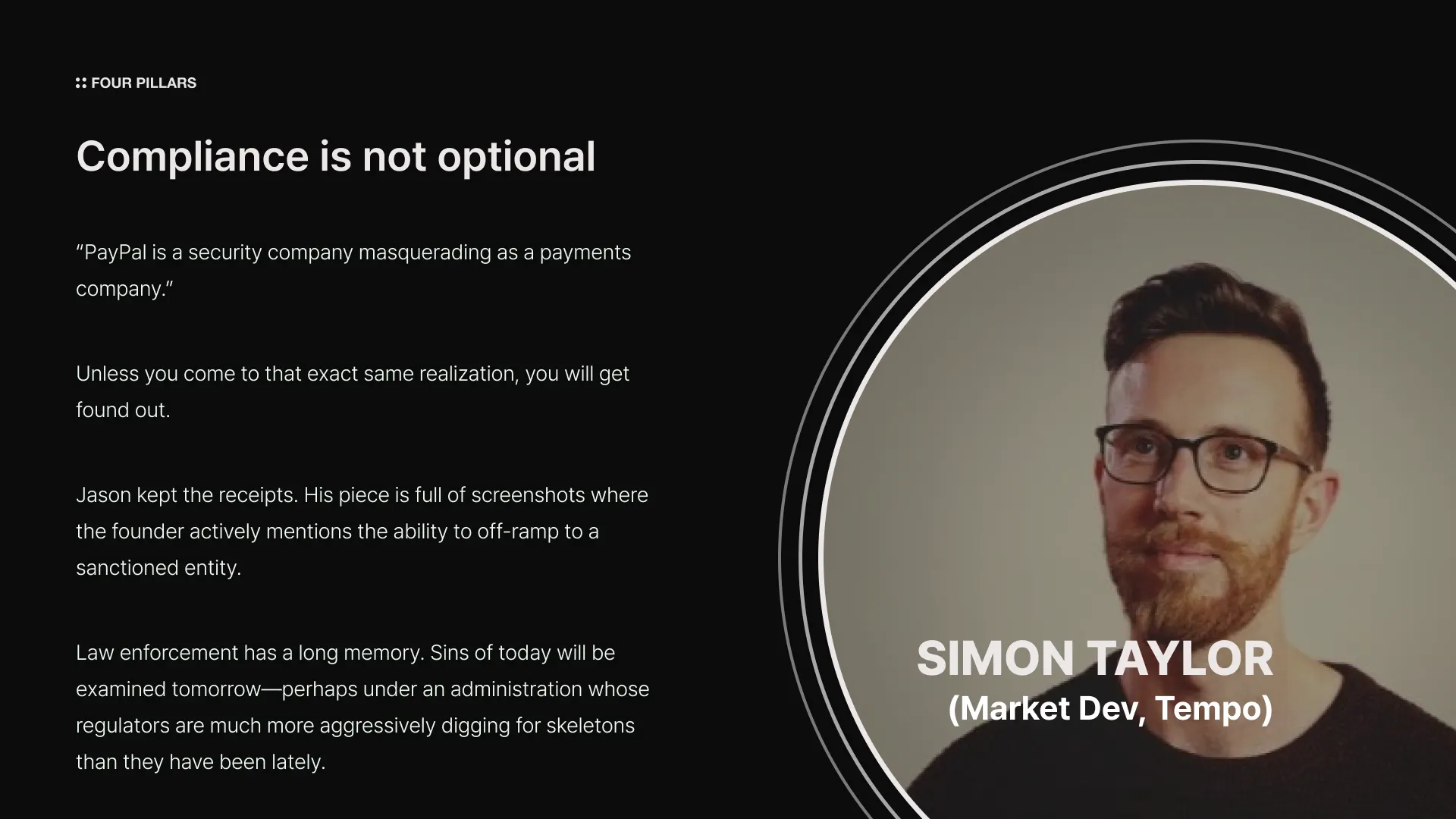
As Simon Taylor succinctly put it, “Compliance is not optional.” When the compliance framework itself is unclear, a controlled testbed becomes essential. Without one, the risk is not just regulatory friction, but over-correction: overly restrictive legislation that stifles innovation for years, followed by endless amendments to undo the damage.
Source: 🧠 The Stablecoin Industry is on Notice
I am fundamentally optimistic about public blockchains. Most meaningful innovation and collaboration will, and should, happen in open manner.
That said, regulators, governments, and financial institutions do not simply “arrive” on public chains. They operate under strict internal rules, minimum operational requirements, and risk frameworks that sometimes demand capabilities such as transaction reversibility in the event of a critical failure or exploit.
This gap is particularly big in Korea and across East Asia. Since many foundational crypto projects were developed outside the region, public-sector and regulated financial institutions have struggled to engage deeply with them. The challenge is not technological sophistication, but institutional alignment: answering how public blockchains function, how risks are managed, and how compliance can be enforced in a way regulators can trust.
In that context, chains like Maroo can play a crucial intermediary role. They offer a middle ground where institutions and legislators can experiment, learn, and observe the tangible benefits of crypto infrastructure in an environment that speaks their language. If successful, these systems can later interoperate with public blockchains, rather than compete with them.
Source: Maroo Litepaper
Will this approach succeed? That will depend heavily on the execution capabilities of the team building and governing the network.
But strategically, it is a meaningful step forward: one that demonstrates crypto’s value without scaring them.
One final note: I don't think these L1s should have their own native tokens beyond the local currency. If there's a separate token, it creates the perception that participating institutions and legislators are promoting a specific asset.


