
The business model of stablecoin issuers is simple. They buy T-Bills with the dollars users deposit, and the interest income goes to the issuer. Tether (USDT) recorded over $10B in net profit, and Circle posted $2.7B in annual revenue in 2025. Users hold a wrapped dollar token, nothing more. They have no access to the yield their dollars generate.
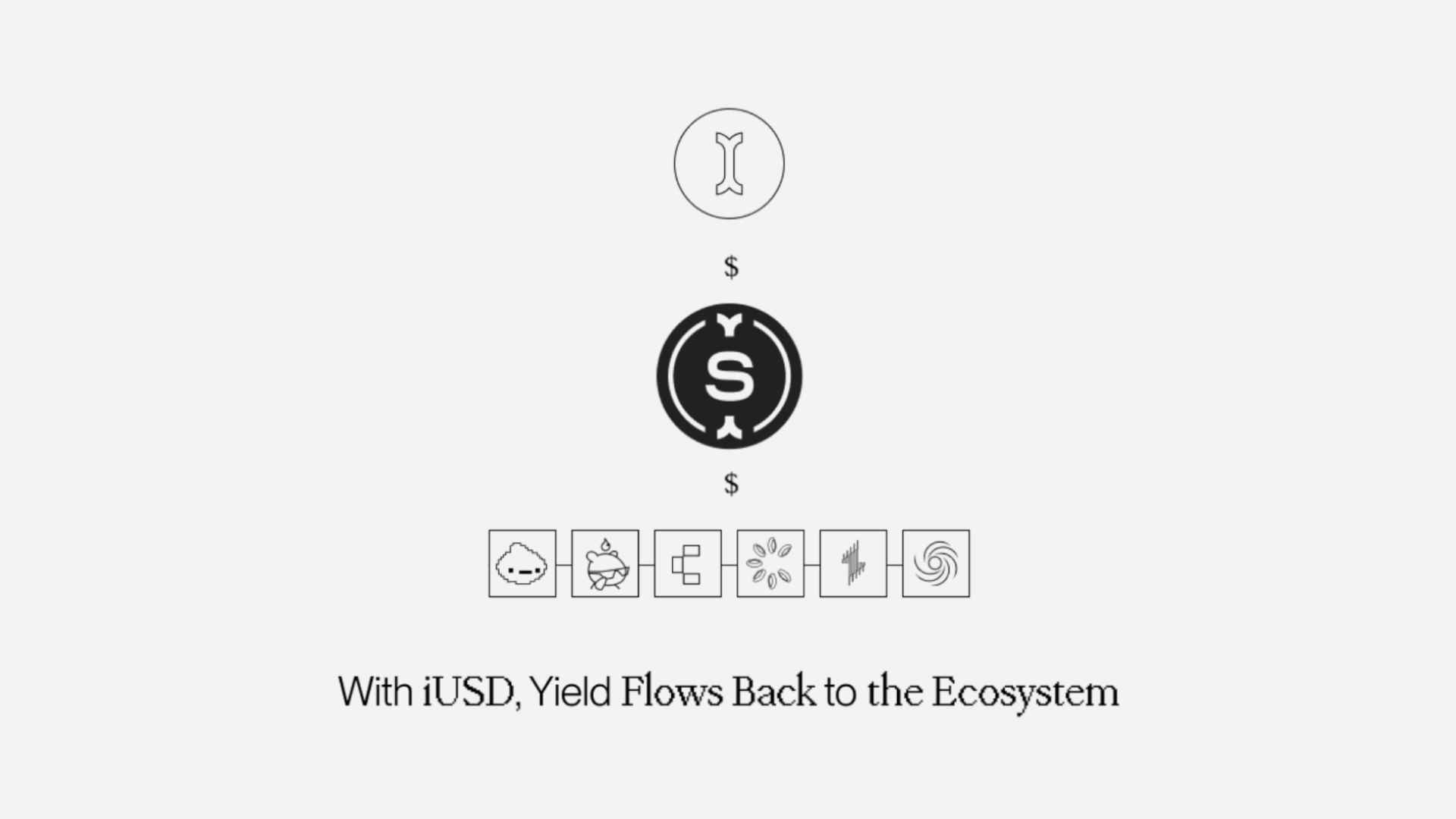
iUSD, the native stablecoin recently launched by Initia, starts from the same problem. The design principle of iUSD is to redirect reserve yields, previously monopolized by issuers, back into the ecosystem as incentive capital.
Source: X(@initia)
iUSD is a stablecoin based on Agora's AUSD, bridged to the Initia network via LayerZero.
AUSD's reserves consist of dollar-denominated assets such as short-term U.S. Treasuries and USDC. Reserve management is handled by VanEck, and custody by State Street. Where Agora differs from other issuers is in how reserve yields are distributed. USDC and USDT absorb reserve interest as issuer revenue, while Agora shares reserve yields with partners and the broader ecosystem.
iUSD is AUSD wrapped on the Initia network. When a user deposits USDC into the Initia bridge, the process completes in a single signature: swap to AUSD on Ethereum, bridge via LayerZero, and mint iUSD 1:1. The reverse path (iUSD to USDC) follows the same route.
One point worth flagging. Simply holding iUSD does not generate interest. While AUSD reserve yields do flow back to Initia as a funding source, they are not distributed directly to users. Users must actively participate in the ecosystem through LP provision, lending, vault deposits, and other activities to receive yields as incentives.
From chain launch, Initia has consistently designed its VIP system to concentrate incentives on ecosystem contribution rather than passive holding. The same principle applies to iUSD.
Source: X(@initia)
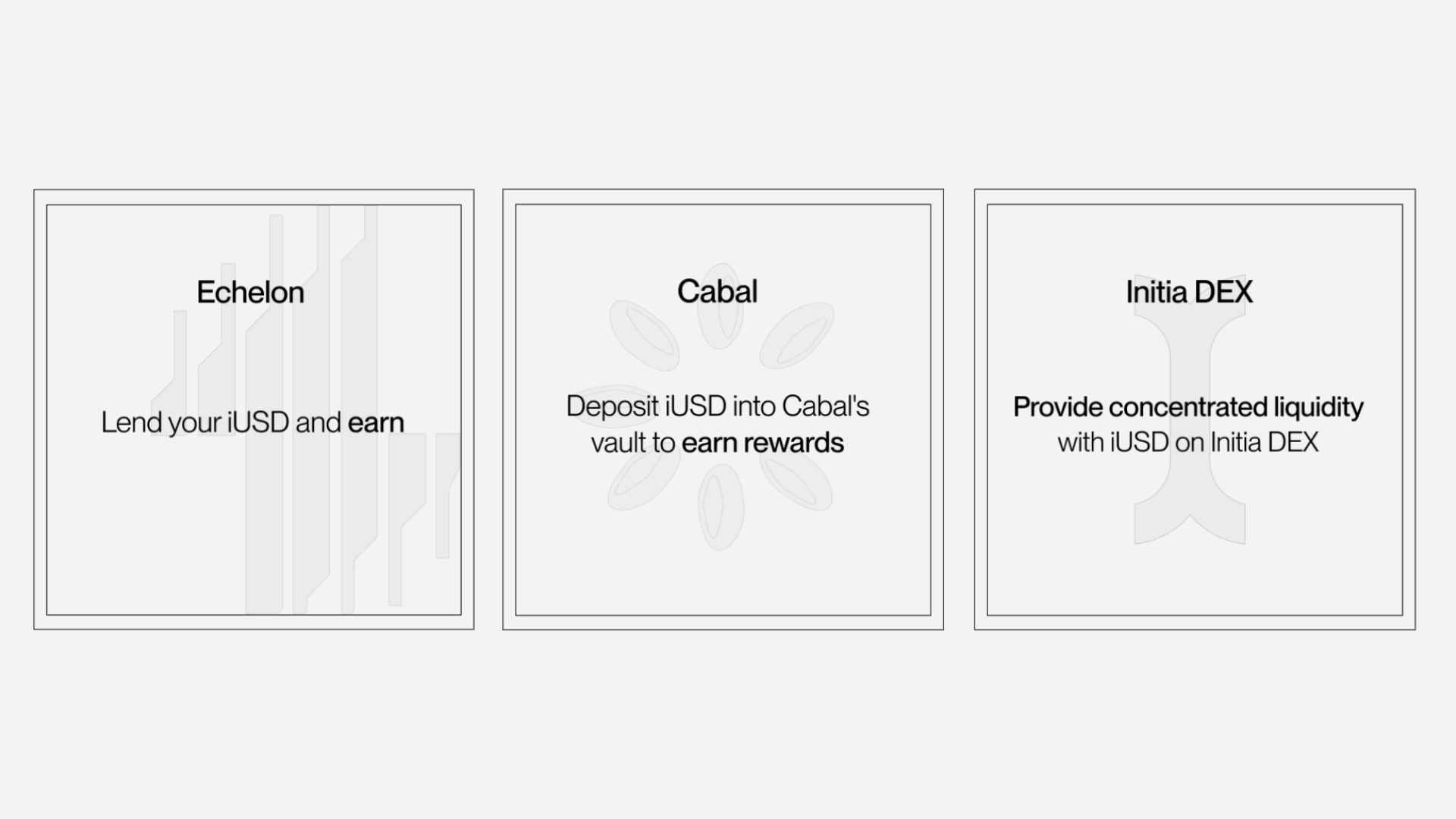
The total supply of iUSD currently sits at about $1.26M. Still early stage, but three primary participation paths are already open.
Initia DEX LP Provision
Users can supply liquidity to the iUSD-USDC pool and the INIT-iUSD pool on the Initia DEX.
Echelon Looping
Users can execute iUSD supply and looping strategies on Echelon, an appchain within Initia. Two looping scenarios are presented:
INIT/iUSD 3x Loop: Supply INIT, borrow iUSD, swap back to INIT, and re-supply. Because iUSD's current borrow rate is negative (borrowers receive rewards), post-loop APR reaches about 545%.
iUSD/USDC 10x Loop: Activate E-Mode (93% LTV), then repeat the cycle of supplying iUSD, borrowing USDC, and re-supplying iUSD. Both sides are stablecoins, enabling high leverage. Post-loop APR is 70.61%.
Echelon is also running a dedicated iUSD incentive campaign. A total of $25,000 in iUSD is being distributed as incentives, with half allocated to iUSD net supply and the rest to INIT/sxINIT collateral borrowing.
Cabal Vault
Cabal recently opened a vault dedicated to iUSD. Depositing iUSD into the Cabal vault allows Cabal to deploy it across various onchain strategies, including staking, liquidity provision, and lending, to generate yield.
Chains issuing their own stablecoins is by now a familiar playbook. Sui launched USDsui and uses reserve yields for SUI buybacks and DeFi incentives. Jupiter created JupUSD backed by Ethena's USDtb, converting $750M in existing USDC liquidity. Hyperliquid introduced USDH, and MegaETH is also preparing a native stablecoin.
iUSD is part of this same wave. The underlying motivation is identical: relying on USDC or USDT means reserve yields leak externally, and the goal is to internalize them within the ecosystem. However, issuing a native stablecoin and using it as the chain's base currency is not enough on its own. How the recaptured yields are deployed matters more than the act of internalizing them.
Initia designed iUSD to connect with its existing VIP system and appchain ecosystem, incentivizing active participation while layering multiple yield sources to structurally exceed U.S. short-term Treasury yields.
Base yield generated from AUSD reserves. The roughly 4% U.S. short-term Treasury rate forms the foundational funding source for ecosystem incentives.
Protocol revenue generated within DeFi. Echelon's lending interest and Cabal's strategy yields fall into this category. DeFi yields, of course, embed slippage, interest rate volatility, and liquidation risk. They are far from a risk-free rate.
VIP incentives distributed to the Initia ecosystem every two-week epoch. Lending participation on Echelon qualifies for VIP reward eligibility.
With these three layers combined, iUSD is not a stablecoin that distributes reserve yields in a flat manner. It is a structure where yields vary according to the depth of ecosystem participation.
If this structure holds, iUSD's yield going forward will be indexed not to the rate cycle but to the growth of the Initia. The growth trajectory that begins with this incentive campaign is one to watch.


 Initia
