Today, ether.fi announced its migration from the Scroll mainnet to the OP Mainnet. If this is viewed simply as a typical case of a dApp migrating to another mainnet, that would be a mistake. When you understand the impact of crypto neobanks and ether.fi, this represents a major win for Optimism.
A crypto neobank can become the core engine of a mainnet. Because a single app handles Store, Spend, Borrow, and Grow, a crypto neobank is critical from the perspective of a mainnet, as it can achieve all the key KPIs such as TVL, transaction count, real world use cases, and number of users.
This article examines the impact ether.fi currently has on the Scroll mainnet and analyzes what kind of influence it could have after migrating to the OP Mainnet.
Today, there was one piece of good news and one piece of bad news for the Optimism ecosystem.
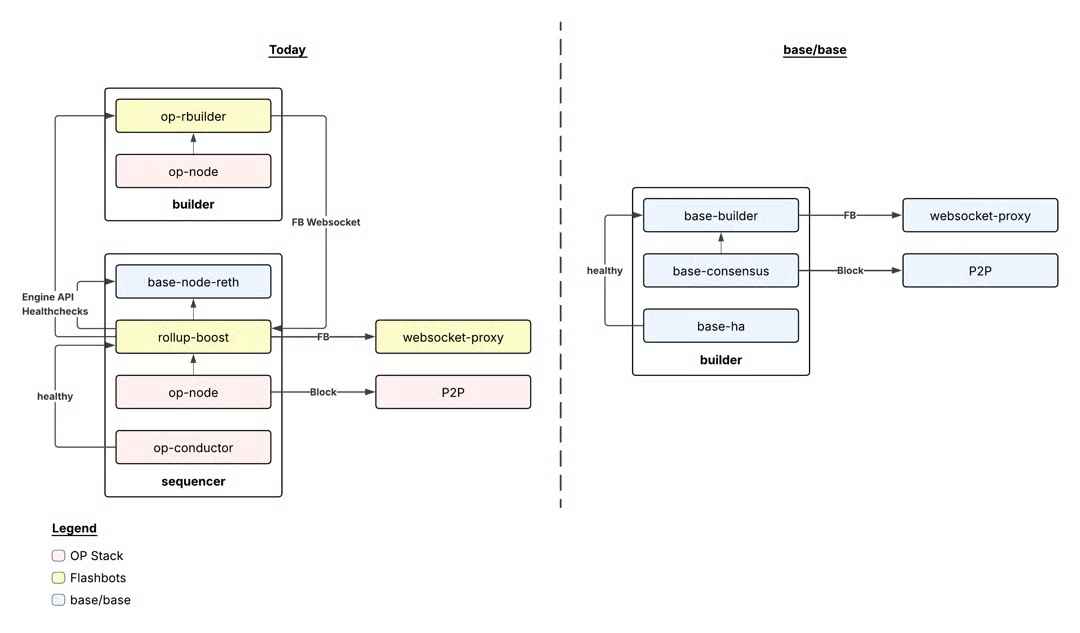
First, the bad news. The Base network, which has been the most active and has generated the highest revenue within the Optimism ecosystem, announced that it will migrate its core technology stack from the OP Stack to Base’s own proprietary stack.
The exact details have not yet been disclosed, but if Base were to leave the Superchain, the Optimism ecosystem would suffer a massive blow, losing as much as 94% of its ecosystem revenue.
Source: ether.fi
Now, the good news. ether.fi, one of the largest crypto neobanks, revealed plans to migrate to the OP Mainnet and enter the Optimism ecosystem. ether.fi is expected to bring more than 300,000 accounts and over $160M in TVL into the Optimism ecosystem.
As a result, the Optimism ecosystem has lost one mainnet and gained one dApp. On the surface, this may appear to be a net loss for the ecosystem. But is that really the case?
The onboarding of ether.fi to the OP Mainnet could be dismissed as just another dApp migration. However, when you understand the scale of ether.fi’s impact, it becomes clear that this is far more than a simple dApp migration.
It could serve as a catalyst for explosive growth on the OP Mainnet.
What criteria can be used to evaluate the success of a mainnet? There are numerous metrics such as TVL, number of users, number of transactions, and fees. Looking at past playbooks, mainnets have made significant efforts to onboard various dApps in order to increase these metrics.
For example, if a mainnet aims to increase TVL, it onboards lending and liquid staking protocols. If it wants to create the perception of being closely connected to real world finance, it onboards RWA protocols. If it wants to increase user count and transaction volume, it brings in NFTs, perpetual DEXs, meme coin launchpads, and similar applications.
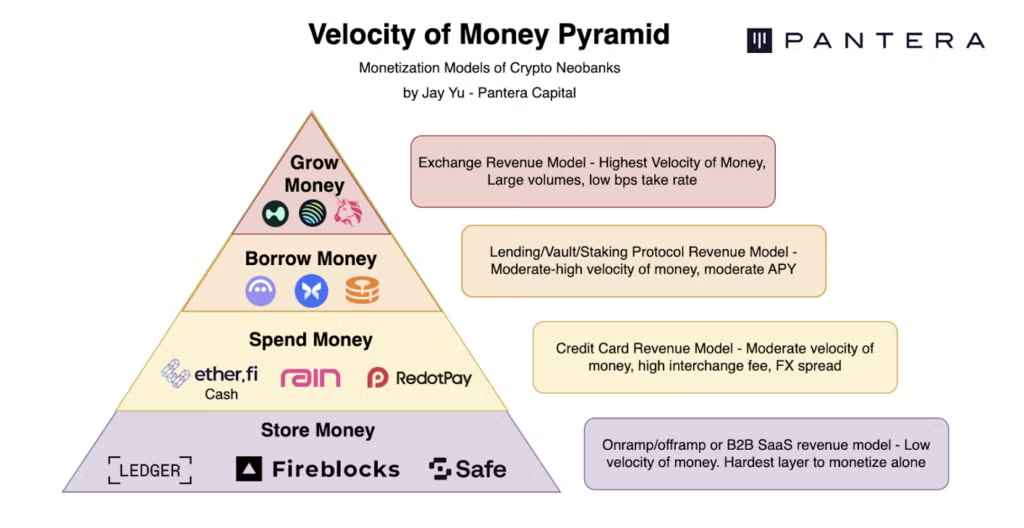
This remains a meaningful playbook today. However, as the stablecoin and payments sectors have grown rapidly, a new type of application has emerged that can simultaneously address all major KPIs. That application is the crypto neobank.
Source: Pantera
What is a neobank? A neobank is a bank or financial service provider with no physical branches. All banking services are conducted exclusively through web or mobile applications. Representative examples include SoFi in the United States, Nubank in Brazil, and Toss in South Korea.
A crypto neobank, as the name suggests, is a neobank that operates with crypto assets. Users can store crypto assets within a crypto neobank app and use them for payments or investment.
The four core functions of a crypto neobank are as follows:
Store: Securely store crypto assets → Increase chain TVL
Spend: Use crypto for real world payments → Secure real world use cases and increase transaction count
Borrow: Borrow crypto using held crypto as collateral → Increase chain TVL and improve retention
Grow: Invest crypto assets to generate returns → Increase DeFi activity
In other words, a single crypto neobank app can contribute to every major KPI a mainnet seeks to achieve, including TVL, transaction volume, real world use cases, user growth, and DeFi activity.
This is why ether.fi onboarding onto the OP Mainnet represents a major win for the Optimism ecosystem.
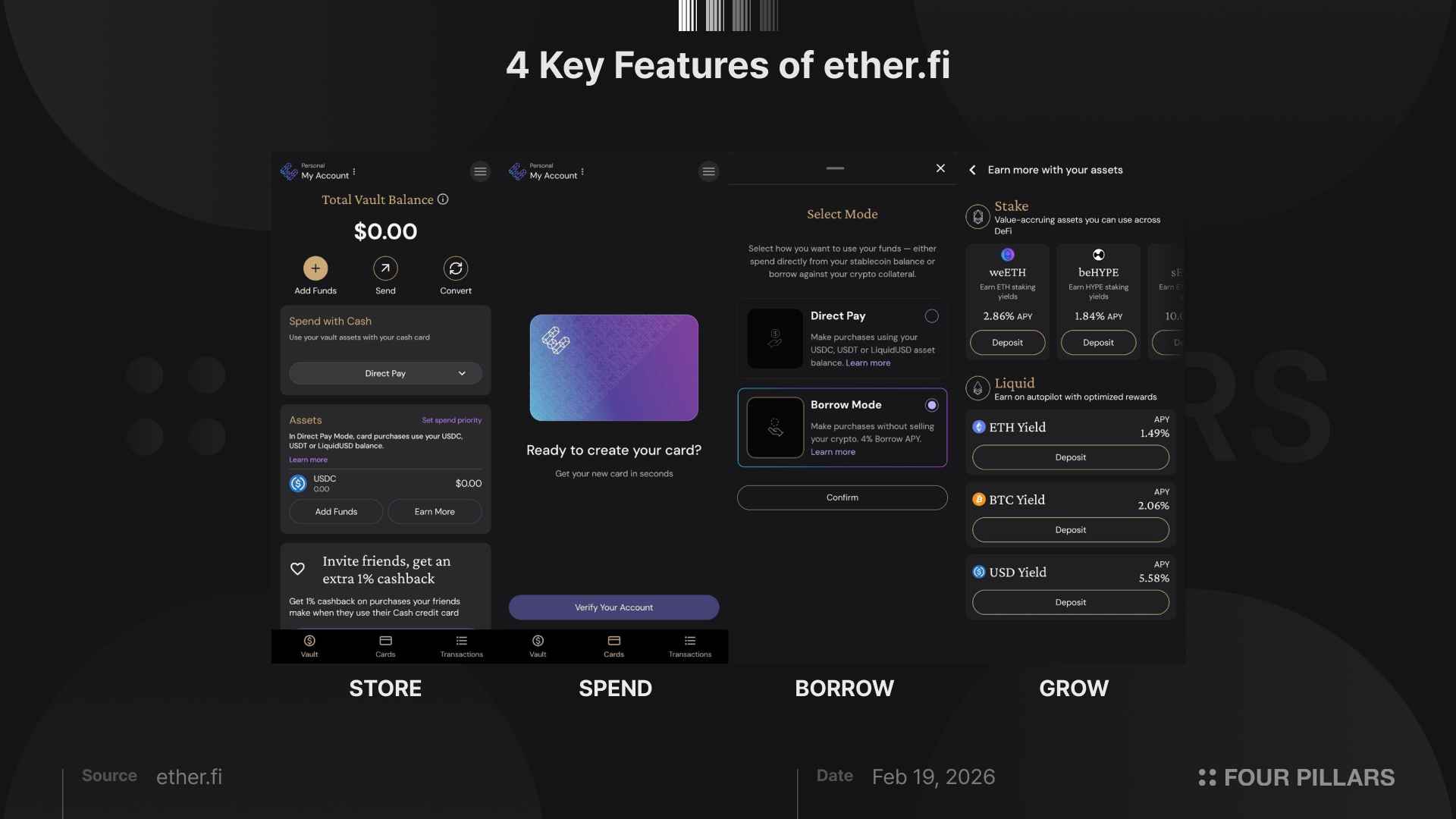
For example, let us take a look at the ether.fi Cash service. If you run the app yourself, you can see that the UI and UX are well structured around each core function.
Let us examine each function of ether.fi and its impact on the Scroll mainnet.
2.2.1 Store
Source: ether.fi
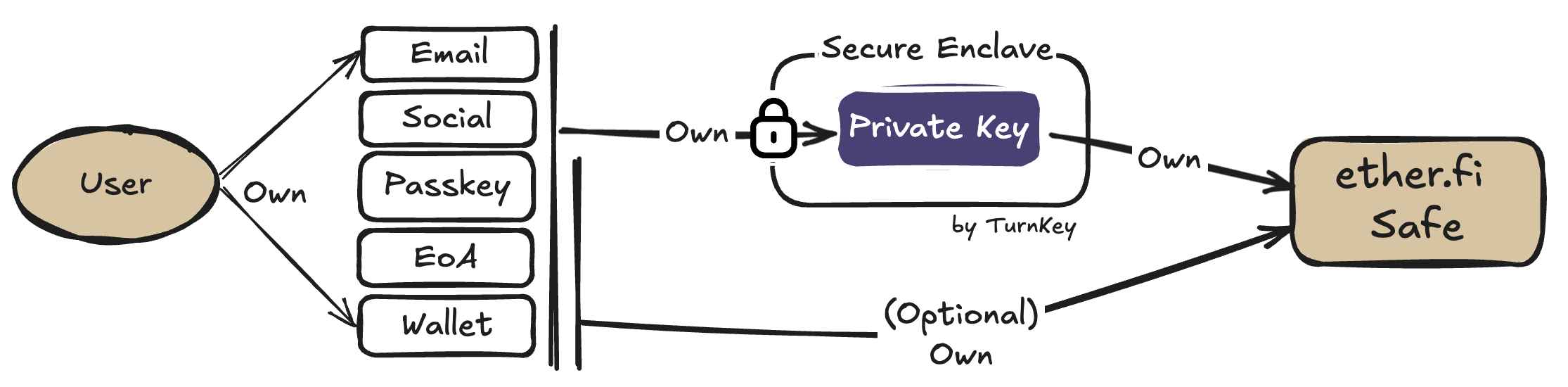
When a user creates an ether.fi Cash account, a dedicated smart contract wallet for that user, referred to as a vault, is automatically generated. This is not an EOA but a smart contract based non custodial wallet. The vault’s key management is securely handled through a TEE based system provided by the wallet infrastructure company Turnkey.
All vaults are deployed on the Scroll network. Users can deposit funds from various networks such as Ethereum, Base, and Scroll, but deposited assets are almost instantly and automatically bridged to the user owned vault on the Scroll mainnet.
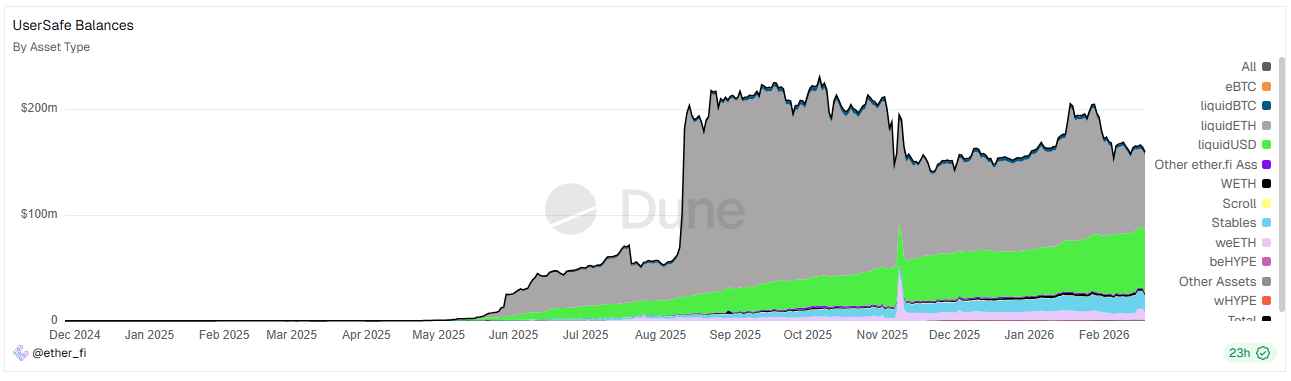
Source: Dune (@ether_fi)
The Store function of a neobank serves as a major driver of mainnet TVL.
Interestingly, the total TVL of the Scroll mainnet is ~$191M, with ether.fi Cash accounting for roughly 83% of Scroll’s total TVL.
Since ether.fi Cash users utilize the service for actual usage rather than short term incentives, its TVL remains relatively stable compared to other types of DeFi protocols.
2.2.2 Spend
Source: Dune (@ether_fi)
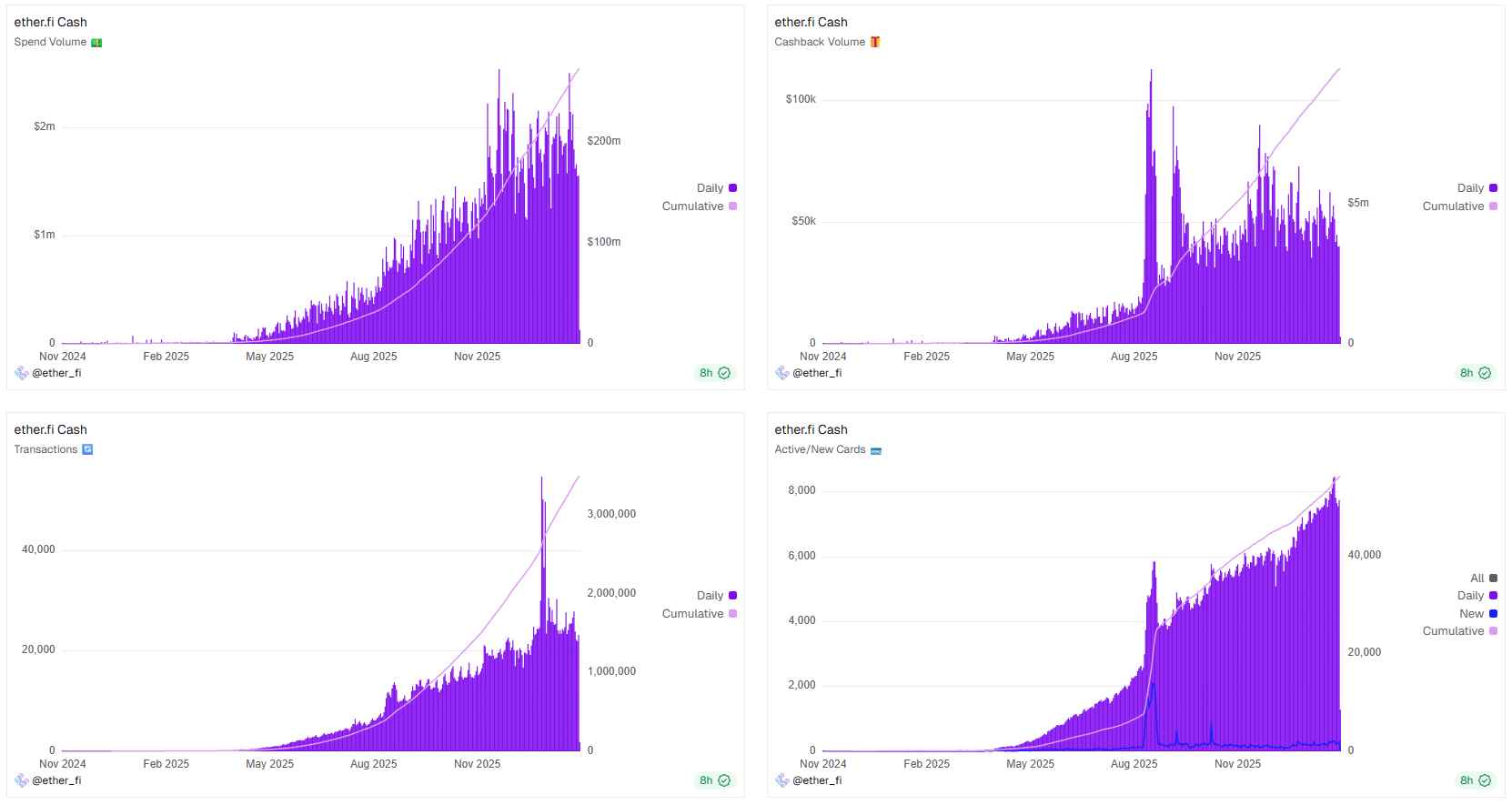
Users can use the ether.fi card in real life to spend the crypto assets held in their vault. Users receive 3% cashback on the amount they spend.
The average daily spending volume through the ether.fi card currently ranges between $1M-2M
The average daily number of transactions generated by payments has recently reached around 23,000, indicating significant activity.
Considering that the Scroll mainnet typically records 50,000 to 80,000 daily transactions, ether.fi has a substantial impact on the network’s overall transaction count.
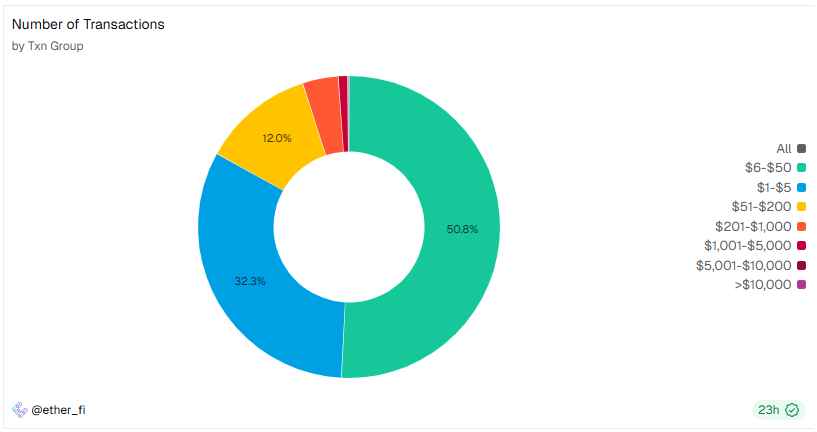
Over 80% of payment amounts fall within the 1 to 50 dollar range, indirectly demonstrating that users are genuinely using the ether.fi card for everyday transactions.
2.2.3 Borrow

Source: Dune (@ether_fi)
Users can directly spend the crypto assets held in their vault. However, by switching modes, they can choose not to consume their holdings and instead borrow crypto against their vault assets as collateral, use the borrowed funds for payments, and repay later.
The total amount of borrowed crypto within ether.fi Cash is currently ~$18.7M, representing about 11.7% of total ether.fi Cash TVL, which reflects a healthy utilization level.
2.2.4 Grow
Source: ether.fi
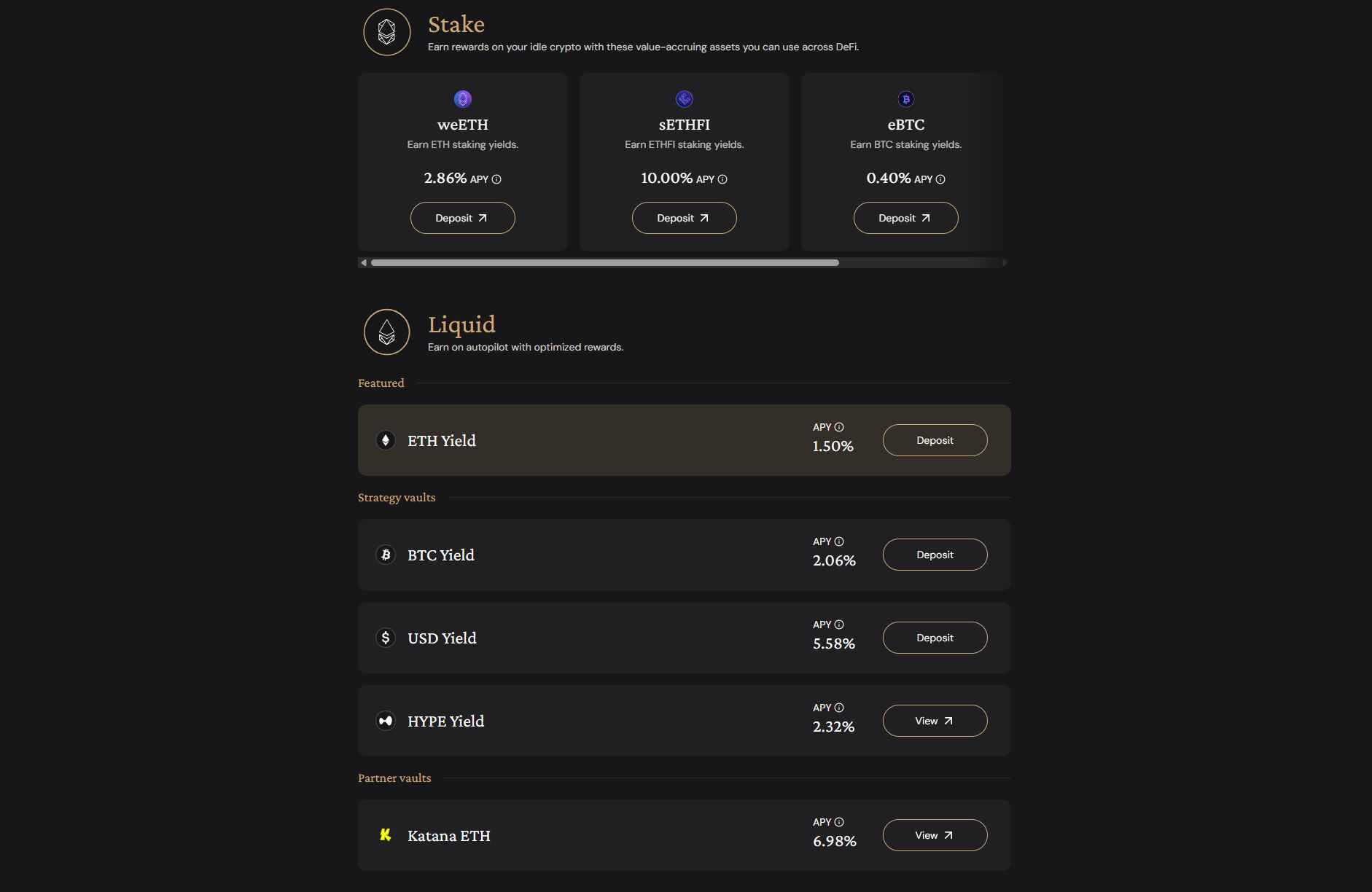
Users can not only hold crypto assets in their vault but also allocate assets across various products to generate passive yield. Yield strategies include staking as well as lending protocols and other approaches.
Assets allocated to various strategies are operated across multiple networks such as Ethereum, Katana, and HypeEVM rather than solely on the Scroll mainnet. Therefore, the analysis of the Grow function’s impact on the Scroll mainnet will be omitted here.
Source: L2Beat
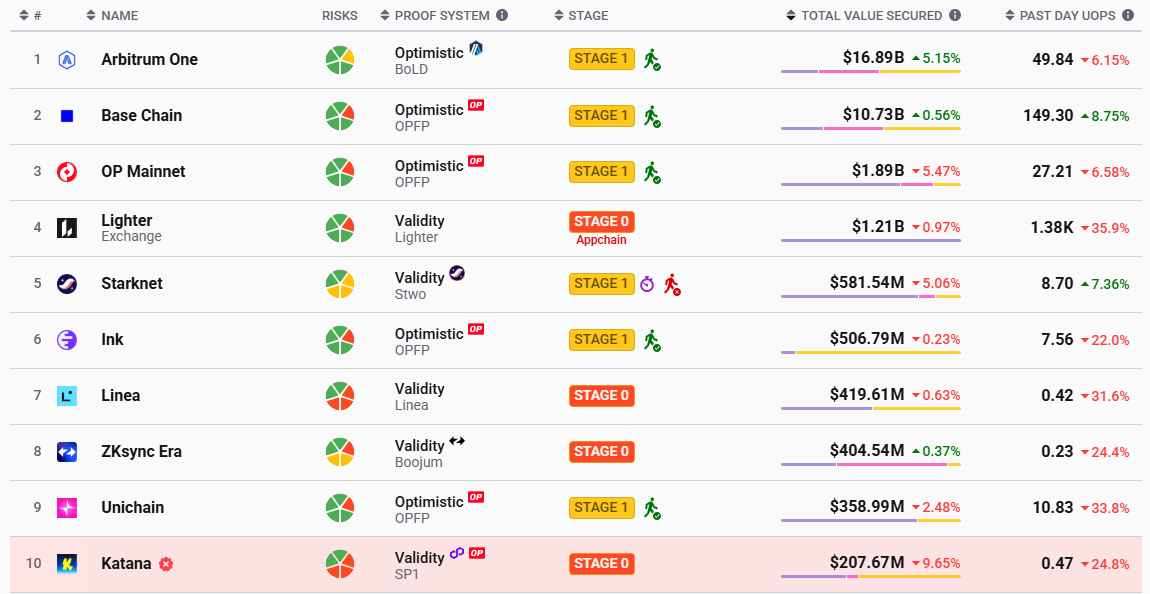
No one can deny the impact that Optimism has had on the crypto ecosystem. Optimism was the first general purpose rollup on Ethereum, and its open sourced OP Stack has become the technical backbone for numerous Ethereum L2s in existence today.
However, despite the broad ecosystem impact brought by Optimism, the performance of the OP Mainnet itself, which serves as its origin, has been quite underwhelming. The total value of assets on the network is ~$1.89B, but only about $214M is utilized within DeFi. This figure is lower than other OP Stack based networks such as Katana, Ink, Mantle, and Base.
However, there is a positive catalyst ahead. ether.fi is coming to the OP Mainnet. ether.fi is expected to bring the following impacts to the OP Mainnet:
75% increase in TVL: The OP Mainnet’s DeFi TVL stands at $214M. If ether.fi Cash’s $161M is onboarded, this would result in a 75% increase.
Becoming the largest dApp on the OP Mainnet: Currently, the dApp with the highest TVL on the OP Mainnet is Aave, which holds $56.3M. ether.fi Cash holds roughly three times that amount.
Revitalization of the Optimism DeFi ecosystem: ether.fi provides various vaults that allow users to deposit crypto assets and earn passive yield. Although it is not yet clear whether this will be implemented, ether.fi could help activate the broader Optimism ecosystem by operating vaults on the OP Mainnet or other networks connected through the Superchain.
Securing real world use cases: Unlike OP Stack based networks such as Base and Mantle, which are integrated with exchanges, the OP Mainnet has not had a clear point of contact with real world use cases. ether.fi is a representative crypto neobank app that enables real world payments and has the potential to become the flagship use case of the OP Mainnet.
It would not be an exaggeration to say that the crypto neobank sector is currently one of the fastest growing sectors. The evolution of finance has always moved in parallel with improvements in accessibility, and from this perspective, the growth of crypto neobanks is inevitable.
Large scale crypto neobanks like ether.fi are likely to continue emerging. From the perspective of mainnets, this category of dApps has strong potential to become the top priority for onboarding.
Will ether.fi’s onboarding onto the OP Mainnet lead to a revitalization of the Optimism ecosystem? If successful, it could serve as a compelling playbook reference for other mainnets.


Dive into 'Narratives' that will be important in the next year
 Bitcoin
 Arch
Arch


 Solana


 Ether.fi