*[ASA News] is a bi-weekly newsletter where we share the most important news related to stablecoin in Asia. (2025.10.27~11.09)
Written by Moyed, Heechang
Source: KRWQ launches as first Korean won stablecoin on Base
IQ and Frax Finance have jointly developed KRWQ, a stablecoin pegged 1:1 to the Korean won (KRW), and launched it on Base, the Layer-2 network backed by Coinbase. KRWQ adopts LayerZero’s OFT (Omnichain Fungible Token) standard and the Stargate bridge, enabling cross-chain transfers and liquidity across multiple blockchains. This marks the first serious attempt to bring the Korean won into the on-chain economy.
However, KRWQ is not being distributed or sold to Korean residents. Since Korea has yet to establish clear legal and regulatory frameworks for stablecoins, issuance and redemption rights are limited to specific institutional participants. As a result, the project remains in a Proof-of-Concept (PoC) phase rather than full commercial deployment, with broader adoption likely only after the regulatory environment matures.
1.2.1 Moyed (ASA Contributor, Delta Network) – Momentum and Challenges of the Korean Won Stablecoin
The past week marked a new phase for the Korean-won stablecoin market. Alongside KRWQ’s debut on Base, Busan-based digital asset custodian BDACS gained attention for collaborating with Circle’s Arc network on its own won-denominated token, KRW1. Together, these moves signal Korea’s intent to expand the won’s presence in a USD-dominated stablecoin landscape while linking domestic and global liquidity.
Despite this progress, regulatory uncertainty remains a key obstacle. The Bank of Korea has consistently warned that non-bank stablecoin issuers could accelerate capital outflows. Meanwhile, discussions in the National Assembly on the Digital Asset Basic Act and related stablecoin legislation remain unresolved, keeping most projects in a proof-of-concept stage.
For KRW stablecoins to become functional in payments, remittances, and DeFi, structural advances beyond simple 1:1 pegs are needed. Stable liquidity, legal issuance/redemption frameworks, and a real demand-driven ecosystem must evolve in parallel. The current momentum is promising, but closing the gap between regulation and market viability will ultimately determine success.
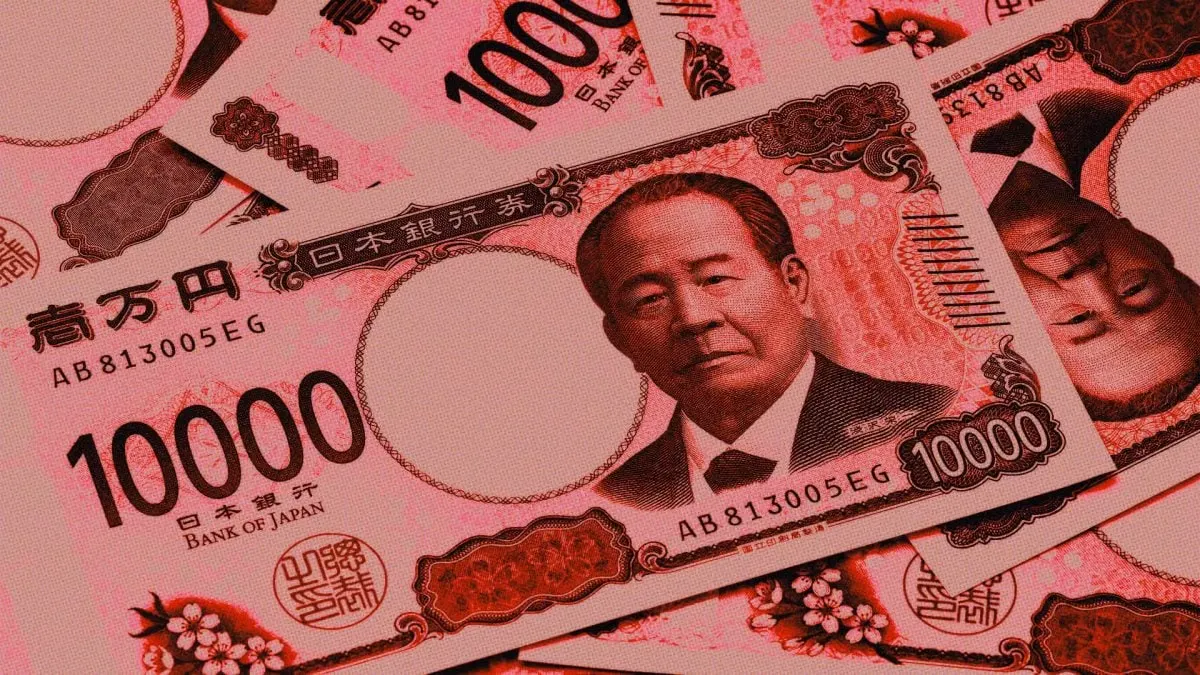
Source: Japan’s JPYC launches country’s first yen-denominated stablecoin
Japanese fintech firm JPYC Inc. has officially launched JPYC, the country’s first legally authorized yen-backed stablecoin, after registration with the Financial Services Agency (FSA). Fully backed by yen deposits and Japanese government bonds, JPYC operates across Ethereum, Polygon, and Avalanche, with issuance and redemption managed via its in-house platform JPYC EX. Users can deposit yen and receive JPYC after completing MyNumber-based identity verification.
At launch, roughly 130 million JPYC (about ¥13 billion) were deployed on-chain. As of November 8, holdings were distributed as follows: 66.5 million JPYC on Polygon, 32.3 million on Avalanche, and 31.2 million on Ethereum, with approximately 4,394 holders. For an early-stage stablecoin, this reflects exceptional decentralization and adoption.
2.2.1 Moyed (ASA Contributor, Delta Network) – JPYC and the Next Phase of Stablecoin Utility
JPYC’s launch shows that Japan has moved beyond experimentation and into the practical digitization of fiat currency. With its combination of full collateralization, multi-chain issuance, and self-managed redemption, JPYC achieves balance between compliance and innovation. More importantly, it is already being used in the real economy.
The healthcare app Sense It Smart rewards user activity with JPYC, while Hamanako Farm allows purchases of physical products like quail eggs in JPYC. In DeFi, Secured Finance is building fixed-rate lending products and on-chain benchmarks based on JPYC. These early integrations show how the token bridges real-world commerce and on-chain finance, positioning JPYC as a utility-first stablecoin.
For Korea, JPYC serves as a reference case, illustrating how legal structure, transparency, and utility can converge. The path to a true digital won requires more than issuance; it demands ecosystem design and actual demand creation. Japan’s model offers valuable insight, but Korea’s success will depend on how it adapts those lessons into its own framework.

Source: Western Union’s Dollar-Backed Stablecoin Is Coming to Solana, Here’s the Rollout Plan
Global remittance leader Western Union plans to launch a USD-pegged stablecoin, the USD Payment Token (USDPT), on the Solana blockchain in the first half of next year. The token will be issued by Anchorage Digital Bank, a federally chartered digital asset bank, and fully backed by USD deposits and short-term Treasuries.
The company aims to lower remittance fees and drastically improve transaction speed by leveraging Solana’s high throughput and low-cost infrastructure. This blockchain-based model is designed to overcome traditional settlement delays and currency volatility while increasing transparency and operational efficiency. Users will be able to buy, transfer, and redeem USDPT via partner wallets and exchanges, with immediate local-currency conversion.
Western Union also plans to connect its 200-country retail network to serve as a fiat on/off-ramp, allowing users to exchange cash for stablecoins and vice versa. This integration could expand stablecoin use into cash-based economies, bridging the digital-physical divide and driving real-world adoption of blockchain finance.
3.2.1 Moyed (ASA Contributor, Delta Network) – Beyond Issuance: Retail Infrastructure as a New On/Off-Ramp
Western Union’s stablecoin launch symbolizes the erosion of boundaries between traditional finance and blockchain. A company long synonymous with physical remittances is now introducing a stablecoin built on a public chain, signaling not just product innovation but a structural shift in financial infrastructure.
Crucially, the firm’s plan to link its retail presence directly with stablecoin networks represents an inflection point. By integrating its massive global cash network, Western Union is effectively transforming its outlets into blockchain gateways. Stablecoins are no longer confined to exchange liquidity; they are becoming operational currencies within the real economy.
This section is powered by rwa.xyz. Join “RWA.xyz Newswire” to receive the latest updates on stablecoins and RWA.
4.1.1 Canada Accelerates Work on Stablecoin Framework
Government officials are in advanced talks with regulators and industry participants, with a potential announcement expected on November 4.
A regulatory gap may trigger capital flight to the U.S., where the Genius Act already provides a clear framework.
The lack of Canadian regulation could weaken monetary control, as 99% of stablecoins are USD-pegged and fund U.S. debt.
4.1.2 Bank of England Calls for Stronger UK-US Stablecoin Collaboration
The BoE will release new stablecoin consultation papers on November 10 with softened proposals.
Oversight will focus on “systemic” payment stablecoins, while others will fall under lighter FCA regulation.
Part of the broader U.S.–UK digital assets task force initiative announced in September.
4.1.3 Hong Kong’s Digital Dollar Moves Toward 2026 Rollout
Phase-2 pilot successfully tested tokenized asset settlement, programmability, and offline payments.
Initial rollout targets wholesale and interbank use, with retail deployment to follow.
HKMA to introduce standardized tokenization protocols for programmable digital money.
4.2.1 Zelle Explores Stablecoin Integration for Cross-Border Payments
Major U.S. payment network Zelle aims to incorporate stablecoins for cross-border transactions.
Operator Early Warning will unveil detailed implementation plans in the coming months.
Marks a key shift as traditional banking infrastructure begins adopting digital assets.
4.2.2 Coinbase and Apollo to Develop Institutional Stablecoin Credit Products
Plans include over-collateralized loans and tokenized credit holdings for institutional investors.
Products will follow Genius-Act standards with 1:1 reserves and transparent audits.
Integration combines Apollo’s credit expertise with Coinbase’s blockchain transparency.
4.2.3 Revolut Launches 1:1 USD–Stablecoin Swaps
Users can swap up to $578,630 every 30 days between USD and stablecoins (USDC, USDT) with no fees.
Service enabled by MiCA license from Cyprus regulator, covering 30 EEA countries.
Platform absorbs spread costs to maintain a 1:1 rate across multiple chains.
4.3.1 PDAX and Codex Build Stablecoin Remittance Network for the Philippines
Codex to provide stablecoin swap and liquidity support to streamline U.S.–Philippines remittances.
Focused on lowering costs and increasing transaction speed for overseas Filipino workers.
Positioned as a real-world use case of blockchain-based remittance.
4.3.2 Flutterwave and Polygon Partner on Pan-African Stablecoin Payment Network
Integration enables instant, low-cost payments across 30+ African countries for firms like Uber and Audiomack.
Aims to solve issues of 8%+ transfer fees and delayed settlements.
Enterprise rollout begins in 2024, followed by consumer remittance via the Send App in 2026.


Dive into 'Narratives' that will be important in the next year


 Mastercard

