Pudgy Penguins has evolved from an NFT project to a global IP powerhouse in just three years, generating over $50 million in annual physical merchandise sales across 7,000+ retail locations including Walmart and Target. This marks the first major success story of a Web3 project breaking into mainstream retail, building a sustainable business model beyond crypto dependency.
The brand has achieved top-tier social media engagement across Instagram, GIPHY, and other platforms, building brand value through powerful meme culture and viral marketing. With 300 million views of Pudges Penguin content are generated every day, this organic, community-driven growth was achieved without traditional advertising or marketing.
Pudgy Penguins' business model realizes the ideal of "community as company" by providing NFT holders with tangible economic value through IP licensing royalties, commercial usage rights, and PENGU token airdrops. Unlike traditional centralized IP ownership models like Disney's, this creates a virtuous cycle where fans become partial IP owners and directly benefit from ecosystem growth.
Pudgy Penguins is evolving beyond a simple character brand into a platform business through Abstract Chain launch, Pudgy World metaverse development, and game creation. Through expansion across Web2 and Web3 domains, Pudgy Penguins is positioned to transcend Web3 adoption and emerge as a world-class IP.

Sources: Mezha Media
What brands come to mind when you think of successful intellectual property? Most people would immediately think of Disney, Pokémon, or Hello Kitty. Disney's market cap stands at approximately $200 billion as of 2024, while Pokémon has surpassed $100 billion in cumulative revenue. What's the source of this massive value? Is it theme park rides or streaming service technology? No; it's the characters themselves.
Take Pokémon as a prime example: game sales account for just 17% of total revenue, with the remainder coming from character merchandise ($61 billion), trading cards ($10.4 billion), and animation/movies ($2 billion).
The common thread among successful IPs is clear: they've leveraged IP scalability to expand beyond simple character-based cartoons or videos into diverse business verticals. Marvel has reshaped the film industry with thousands of character IPs, Nintendo has dominated gaming for decades with Mario and Zelda, and LINE FRIENDS grew from messenger emoticons into a global character brand.
In 2025, a chubby penguin character called Pudgy Penguins is following in these giants' footsteps. Started as an NFT project in 2021, these rotund penguins have landed in Walmart and Target stores nationwide within just three years, garnered over 100 billion views on social media, and built a community of over one million fans. They're generating over $50 million in annual toy sales, and major asset managers like VanEck are seriously considering ETF applications.
While many marvel at Pudgy Penguins' rapid growth, a closer look reveals this success was inevitable, not accidental. Pudgy Penguins compressed the success formula that Disney and Pokémon built over decades while adding new elements suited for the digital age. Their community-driven growth strategy leveraging Web3 technology transcends the limitations of traditional IP businesses.
Pudgy Penguins represents a living textbook on Web3-era IP possibilities and success methodologies. This article explores how these chubby, flightless penguins became a global IP and why they have the potential to surpass established IP giants.
Most NFT projects failed because they remained trapped within the Web3 ecosystem. Projects that boasted multi-billion dollar market caps during the NFT boom ultimately couldn't escape dependence on NFT trading fees and token prices. They formed exclusive clubs on Discord and X, communicating only among NFT holders while disconnecting from the outside world.
Pudgy Penguins was different. Immediately after Luca Schnetzler acquired the project in April 2022, physical economy entry became the top priority.
Source: Pudgy Penguins
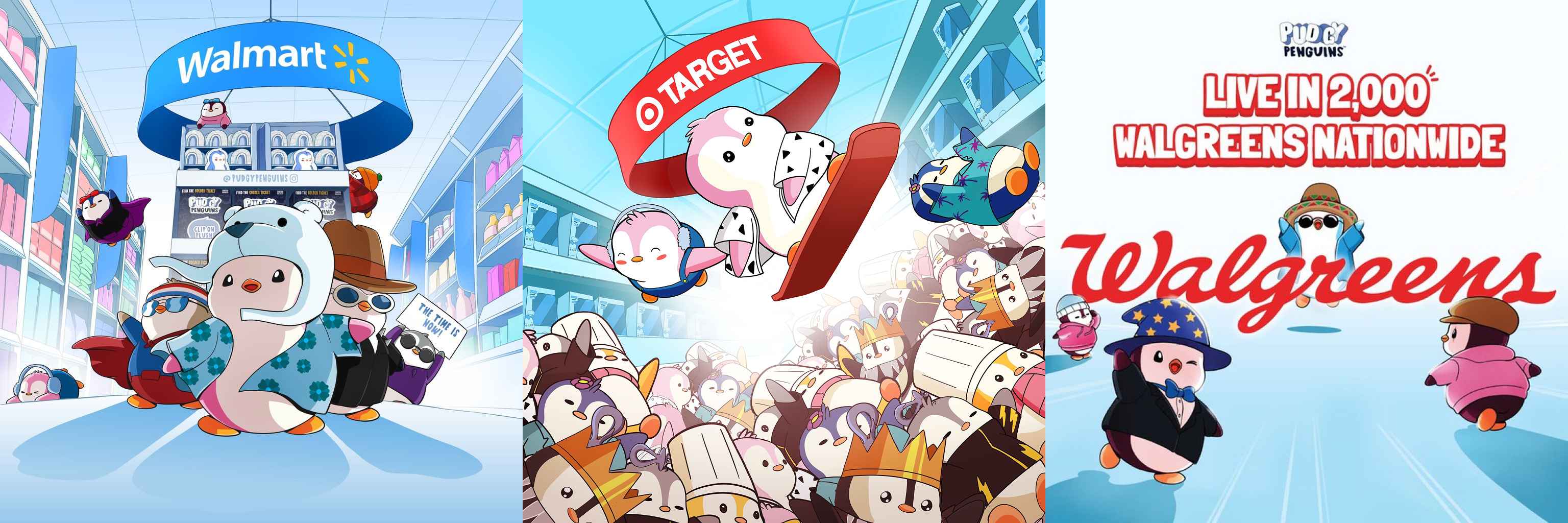
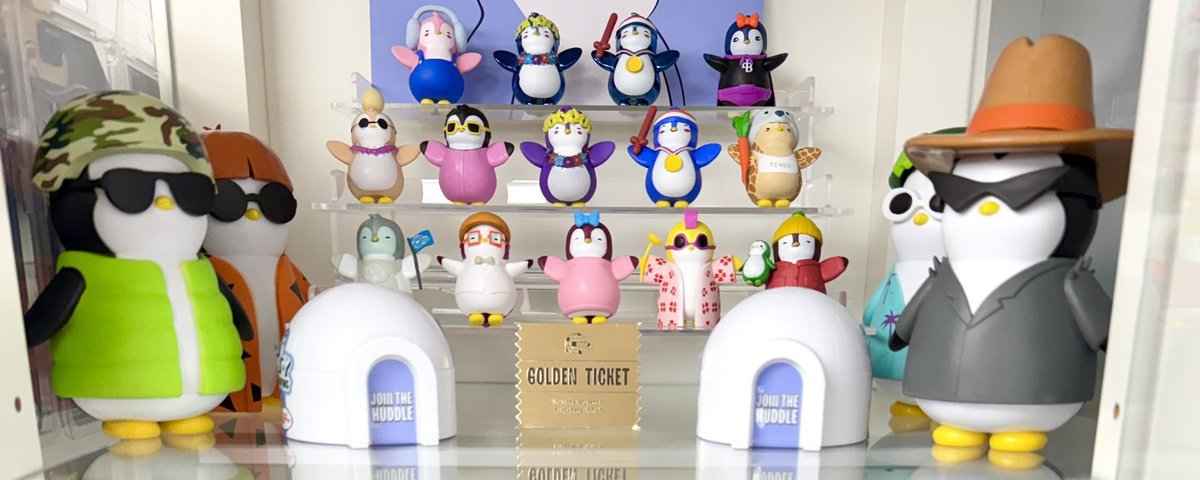
The result was Pudgy Toys' success. Launched in May 2023, Pudgy Toys generated over $500,000 in sales during its first weekend alone and topped three Amazon categories. By September that year, they had entered 2,000 Walmart stores nationwide, expanding to Target and Walgreens in 2024 for a total of 7,000+ retail locations.
Source: Pudgy Toy Owners Group
Notably, Pudgy Toys was selected for Walmart's Pallet Program, which provides premium display placement for brands with high sales potential. Pudgy Toys sold over one million units in 2024, generating over $13 million in revenue. The Toy Insider publication named Pudgy Toys among the best summer and winter toys of 2023, reflecting high praise for both the IP and product quality.
This physical economy success extends beyond revenue generation to significantly boost brand recognition and trust. To mainstream consumers, Pudgy Penguins is no longer a Web3 NFT project but a cute toy brand available at Walmart, a model case of Web3 successfully entering mainstream markets.
Source: Pudgy Penguins, as of 2025-08-21 14:40 KST
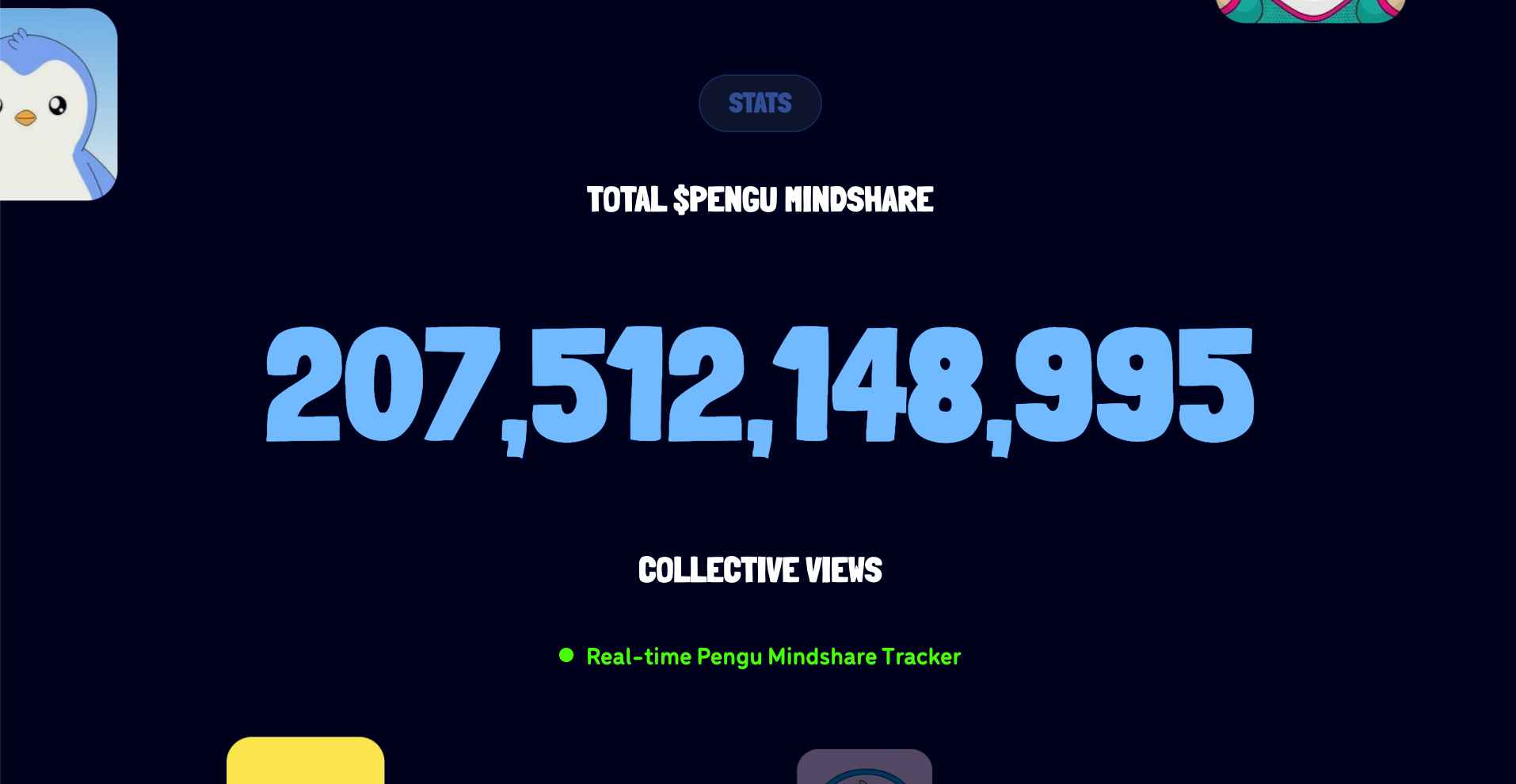
Another revenue stream for Pudgy Penguins comes from brand value creation through social media. As of August 2025, Pudgy Penguins content has been viewed over 200 billion times across all platforms. Pudgy Penguins contents generate over 300 million daily views—numbers that would make most traditional media companies envious.
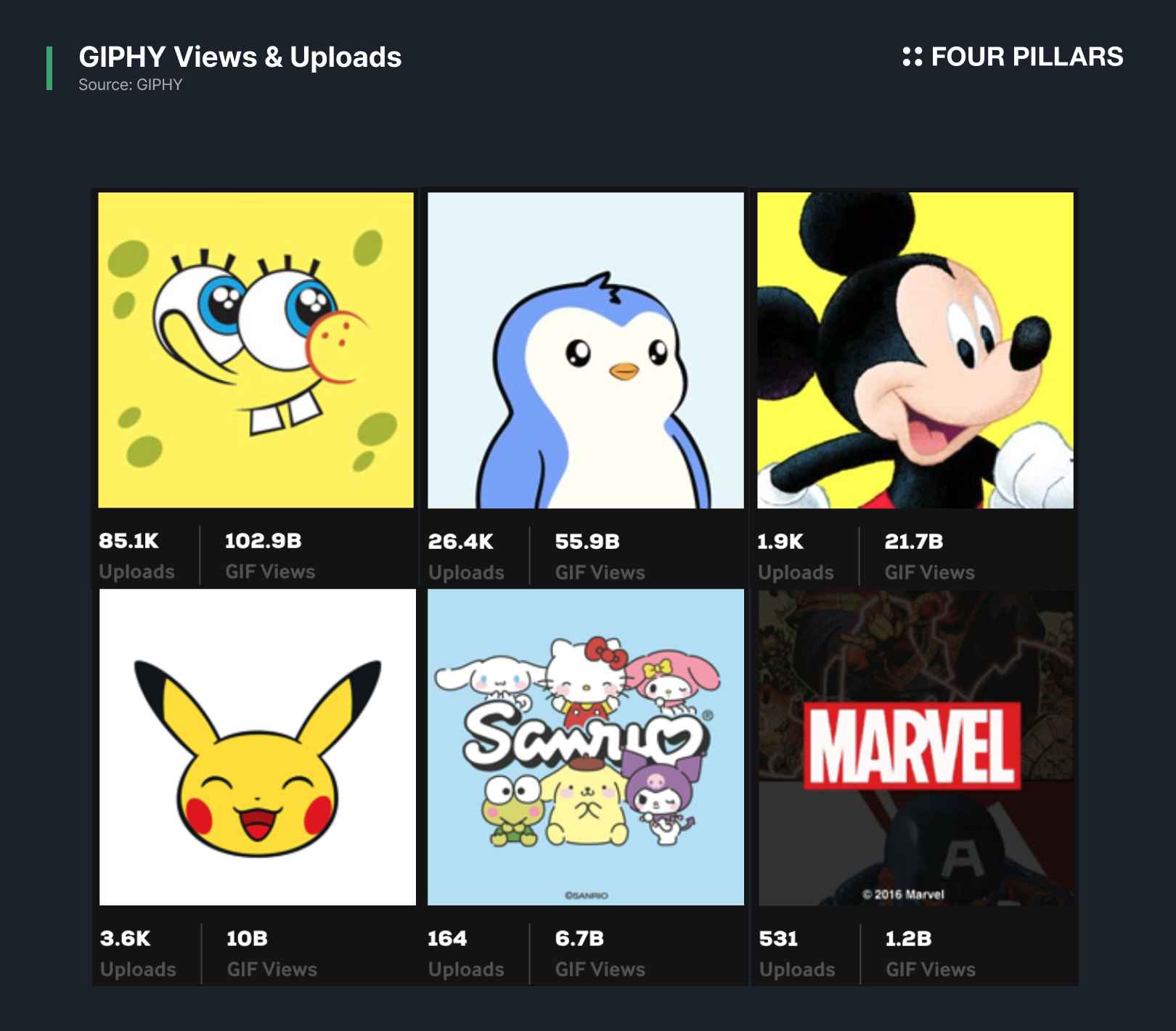
Their GIPHY performance is particularly remarkable. GIPHY is the leading GIF platform, with uploaded GIFs integrated into major social platforms like X for content creation. Pudgy Penguins has created over 26,000 GIFs on GIPHY, accumulating over 55.9 billion views; second only to SpongeBob among character IPs and 2-8 times more than famous characters like Snoopy, Disney, Pokémon, and Hello Kitty. This indicates extremely high brand recognition among the general public.
On Instagram, Pudgy Penguins boasts over 2 million followers, contrasting sharply with most NFT projects that focus solely on crypto communities like X.
This massive social media exposure holds potential for direct advertising revenue conversion. Pudgy Penguins recently began embedding PENGU token logos in all GIPHY GIFs, creating natural brand exposure while laying groundwork for future brand partnerships and sponsorships.
Source: Penguin Random House
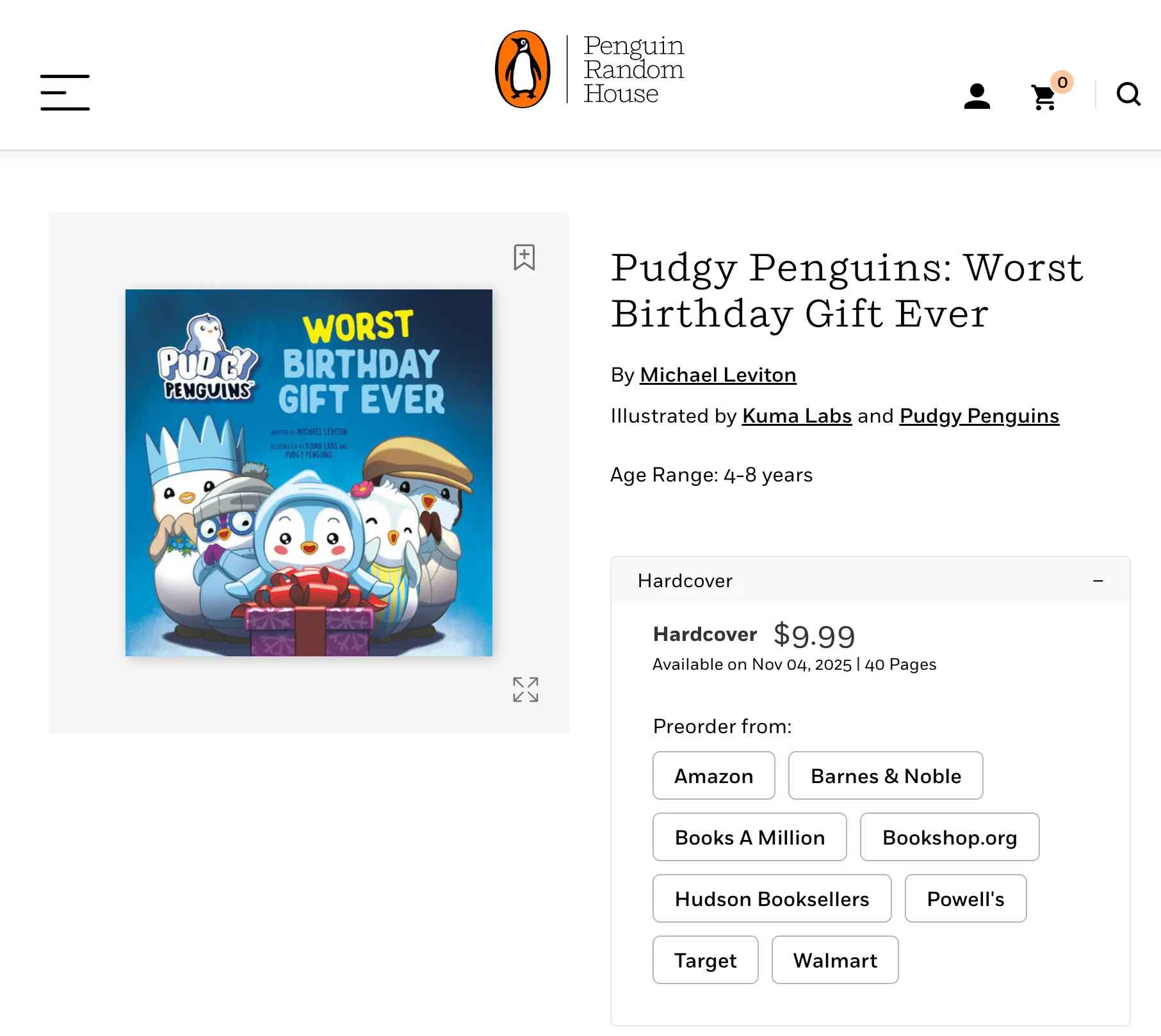
Furthermore, Pudgy Penguins is exploring various content monetization possibilities. They're producing "Lil Pudgy Show," a children's YouTube animated series, and have published picture books in collaboration with Random House Kids. This represents a long-term strategy to expand content IP across various media, similar to Disney or Pokémon.
What fundamentally differentiates Pudgy Penguins from other NFT projects is providing real economic value to holders. While most NFT projects disappointed holders with empty roadmap promises, Pudgy Penguins created concrete, measurable utility.
Source: @Berko_Crypto
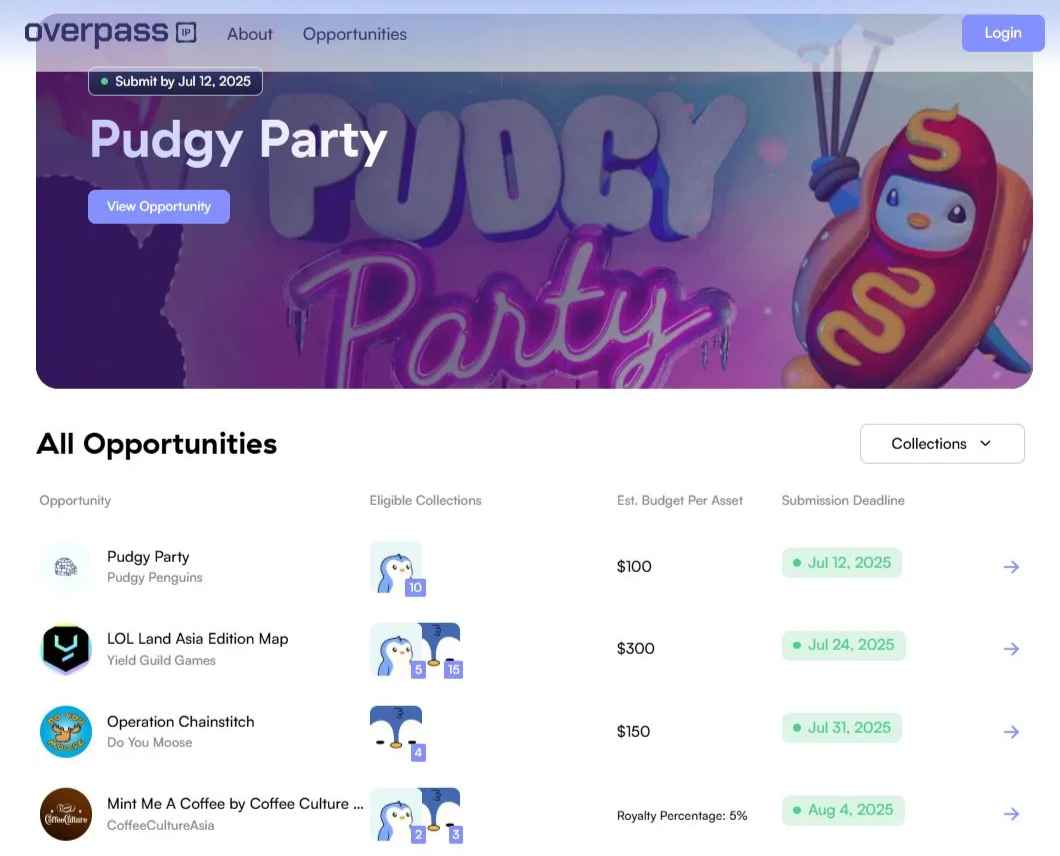
Pudgy Penguins' core utility is its revenue-sharing model through licensing. They launched the OverpassIP platform in January 2024, enabling NFT holders to easily license their NFTs. Projects wanting to use Pudgy Penguins IP, including the Pudgy team itself, upload contracts to OverpassIP, where holders can submit bids for their IP and sign on-chain. When projects accept holder proposals and produce toys or merchandise, royalties are automatically distributed to holders.
Through OverpassIP, Pudgy Penguins has registered licenses for over 88 Pudgy Penguins and Lil Pudgys across two toy collections. NFT holders receive regular royalty payments, creating a virtuous cycle where physical economy success translates to holder revenue, increasing community loyalty.
Beyond team-initiated licensing deals, Pudgy Penguins grants holders commercial usage rights within defined parameters. NFT holders can commercially utilize their penguins up to $500,000 annually without permission, with extended licenses available through Igloo contracts for revenue exceeding $500,000.
Additionally, the December 2024 PENGU token launch provided massive value to holders. Each Pudgy Penguins NFT holder received an average of 1.7 million PENGU tokens (worth approximately $75,000 at launch), with various soulbound tokens (SBTs) rewarding long-term holders through past activities.
Source: @chefgoyardi
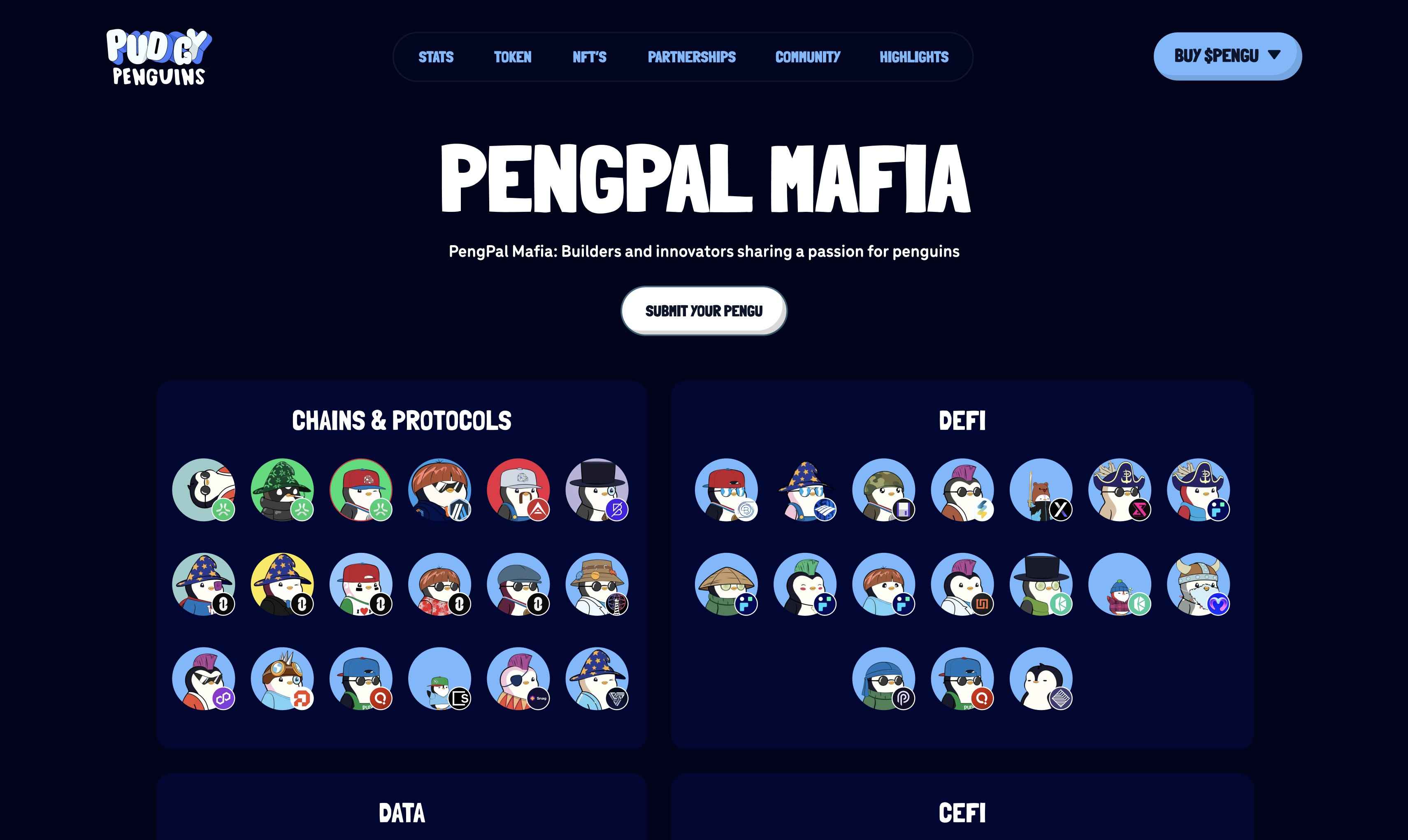
What makes the Pudgy Penguins community special is that it consists not merely of investors or fans, but actual Web3 ecosystem builders. Founders and core developers from prominent projects like LayerZero, Nansen, Dune Analytics, and Magic Eden are long-term Pudgy holders. The community calls them the "Pengpal Mafia" (a play on PayPal Mafia), encouraging active collaboration and community contribution among builders.
Source: @ali_charts
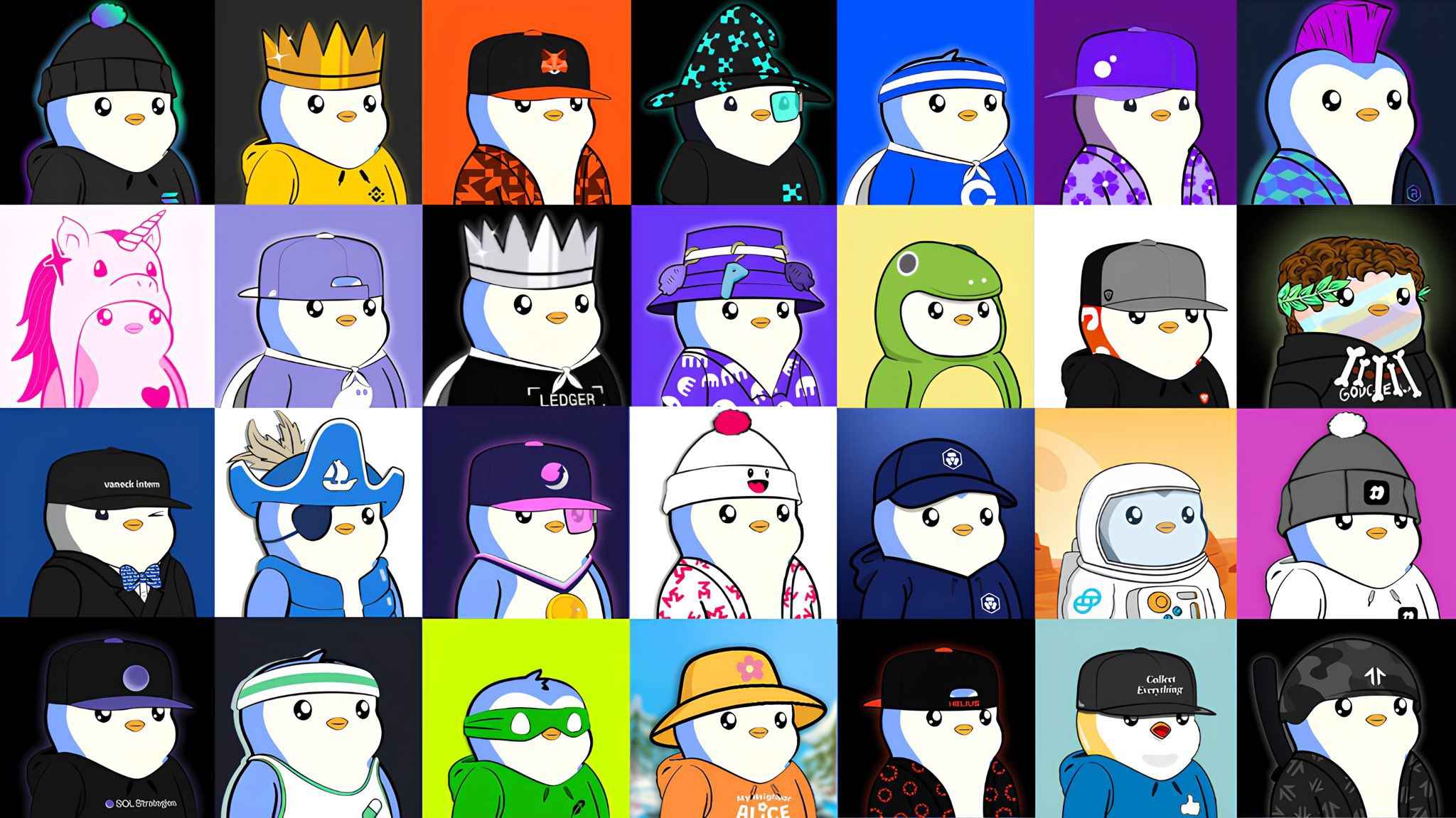
These builders go beyond simply holding NFTs to actively integrate Pudgy Penguins into their projects. Dozens of Web3 projects feature Pudgy Penguins as mascots or partners, creating natural brand proliferation. During PENGU token launch and recently when traditional finance figures like Tom Lee joined, major Solana and Ethereum projects simultaneously changed their profiles to Pudgy Penguins-based characters.
This builder community provides Pudgy Penguins with strong technical background and network effects. When developing new features or services, they receive immediate feedback and technical support from the community, with partnerships and integrations occurring naturally—invaluable assets money can't buy.
Continuous, transparent communication with holders also bonds the Pudgy Penguins community. Luca Netz and the core team conduct bi-weekly "Inner Igloo" sessions on Discord, sharing project updates and communicating with 300+ holders. This openness builds community trust and makes holders feel like genuine project partners.
The fundamental reason for Pudgy Penguins' inevitable long-term success is the character's universality and expandability. Penguins are globally beloved animals without any political or controversial elements. They're cute, friendly, and family-oriented, appealing to all age groups.
Pudgy Penguins actually has a broad fanbase from children to adults and even institutional investors. For kids, they're cute toys; for teenagers, they're social media memes for expressing emotions; for adults, they're investment assets and community. This multi-layered appeal is common among successful character IPs like Disney's Mickey Mouse or Sanrio's Hello Kitty.
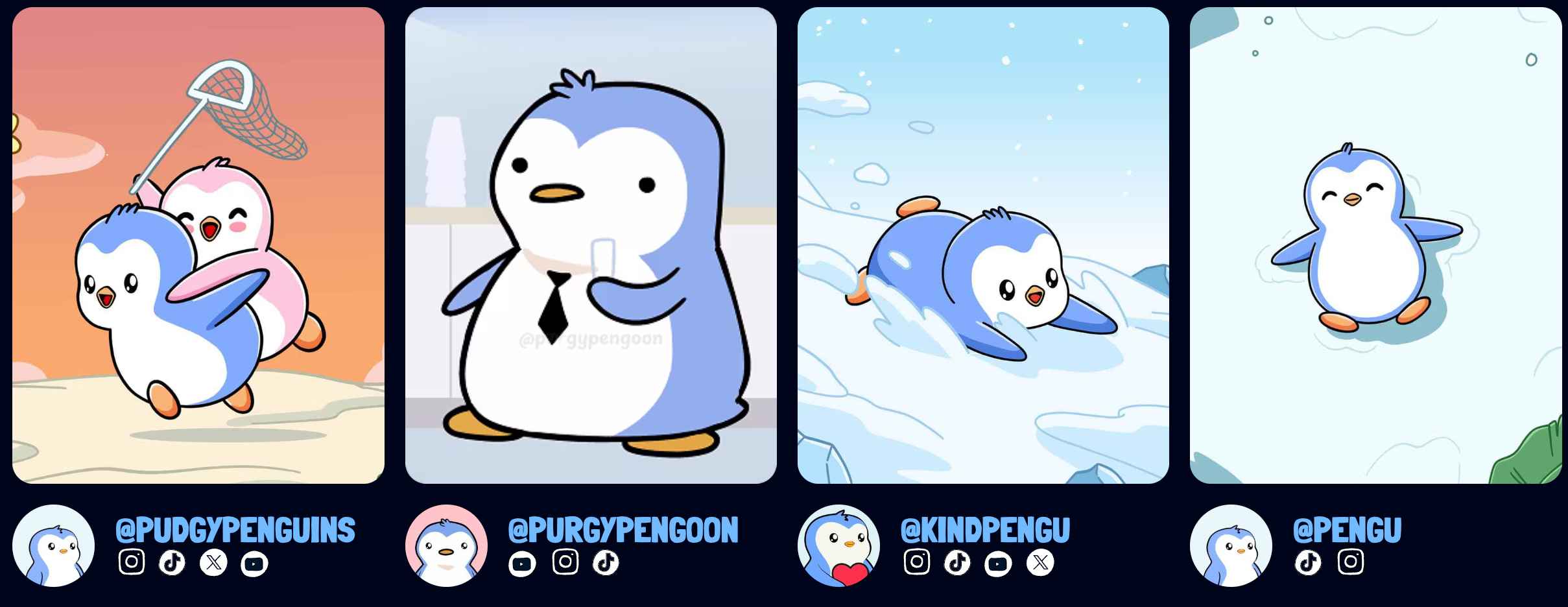
Crucially, Pudgy Penguins are animal rather than human characters. Human characters have specific race, gender, and age constraints limiting emotional or situational expression. Penguin characters are free from such constraints. They can express all human emotions—love, sadness, joy, anger—in cute, humorous ways, offering infinite content creation possibilities.
Source: Pudgy Penguins
Pudgy Penguins' social media content clearly demonstrates these advantages. Couple quarrels, memes, heartwarming content—they target diverse audiences without feeling forced or awkward. These expressions often resonate more and are easier to share than human-like characters.
Cultural universality is another Pudgy Penguins strength. Penguins aren't species bound to specific countries, and their inherent cuteness works universally regardless of cultural background. This explains Pudgy Penguins' global spread without special localization, similar to Pokémon's expansion from Japan worldwide.
Abstract Chain's launch best demonstrates Pudgy Penguins' future growth potential.
Abstract is optimized for mainstream user experience beyond crypto communities. Users can log in with just email without complex wallet setup or seed phrase management, supporting gasless transactions through account abstraction with passkey and social recovery features. This creates an ideal environment for naturally onboarding mainstream users from Pudgy Penguins’ Web2 business into Web3.
Importantly, Abstract serves as an infrastructure layer for Pudgy Penguins. PENGU token was adopted for tipping Abstract streamers and as primary currency for ecosystem projects, with Pudgy characters appearing across various apps and services. This is the digital equivalent of Disney building physical infrastructure like theme parks, cruises, and hotels.
Source: Pengu Clash
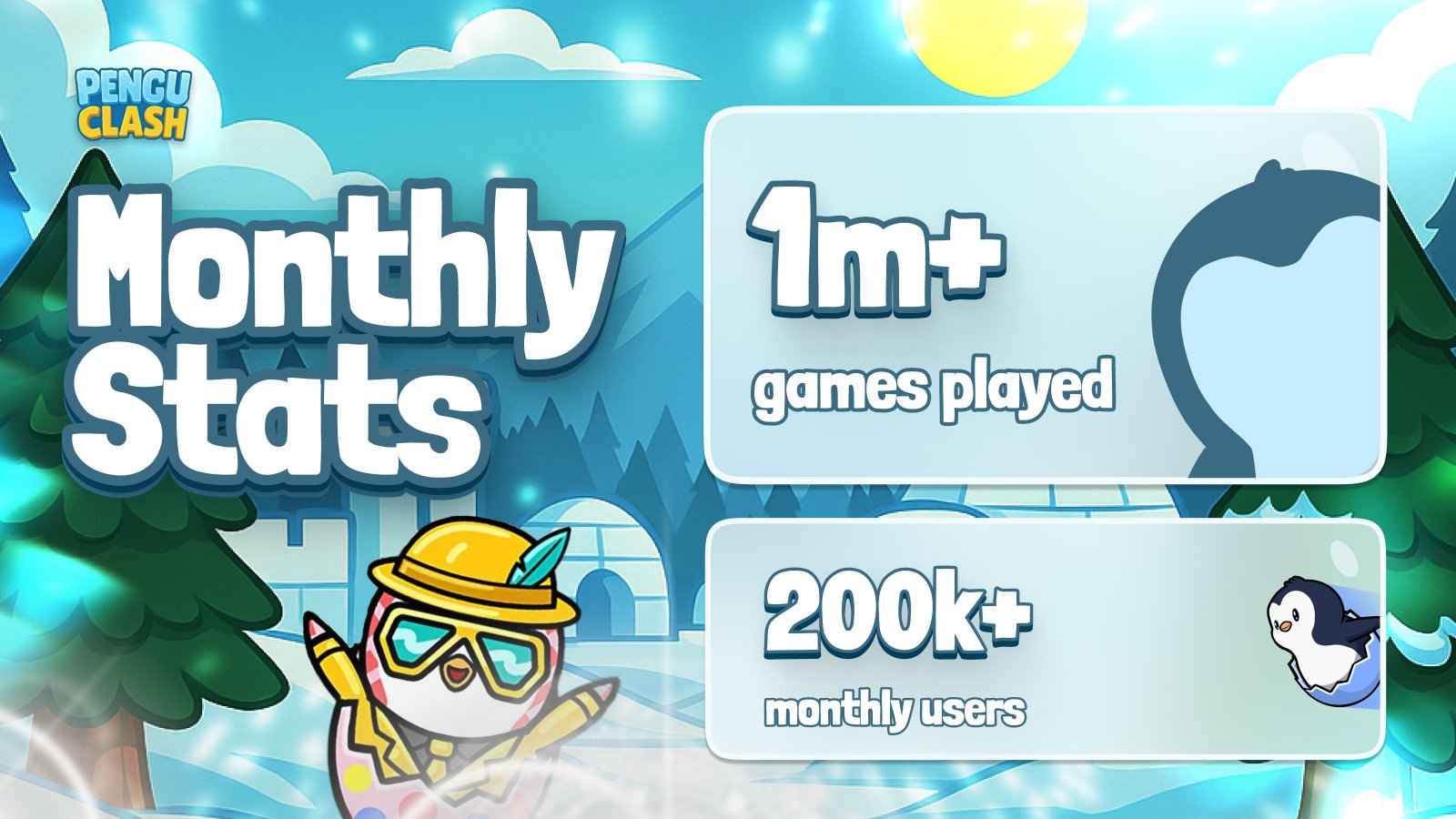
Additionally, the Pudgy team recently developed and deployed Pengu Clash, a Pudgy IP-based game on Abstract, designed to bring broader user bases into the ecosystem through mobile casual gaming.
This infrastructure development shows Pudgy Penguins evolving beyond a simple character brand into a platform business, enabling long-term revenue generation from all economic activity within their ecosystem, similar to Apple's App Store or Google's Play Store model.
Luca Netz has stated in various podcasts that the team's goal is onboarding billions to crypto through a brand known and loved by hundreds of millions. While this number might seem absurd, Pudgy Penguins is rapidly compressing and catching up to the journey taken by established IP giants.
The reason Pudgy Penguins' success won't end as just another success story is clear: they're changing the fundamental rules of IP business. Traditional IP business was a one-way structure where centralized companies owned all rights and fans merely consumed. Disney monopolizing Mickey Mouse copyright for nearly 100 years and taking all revenue was considered normal.
But Pudgy Penguins presents a completely different model. NFT holders actually own part of the IP, have commercial usage rights, and share licensing revenue. Community-created content and memes wield greater influence than official marketing, and PENGU tokens provide direct economic benefits from ecosystem growth. This is the first large-scale success story realizing Web3's ideal of "community as company."
Soon, we might watch Pudgy Penguins animations on major streaming sites, buy Pudgy collaborations at franchise restaurants, and someday visit Pudgy Penguins theme parks with our families. By then, "companies used to monopolize IP" will sound as outdated as "we used to listen to music on CDs."
The Pudgy Penguins story has just begun. The future these fat, flightless little birds will create will be far grander than we imagine. And this history will be written by the community's hands, in a way anyone can participate.


Dive into 'Narratives' that will be important in the next year


 Pudgy Penguins
 Pumpfun
 Layer3