*[ASA News] is a bi-weekly newsletter where we share the most important news related to stablecoin in Asia. (2025..01.05~01.18)
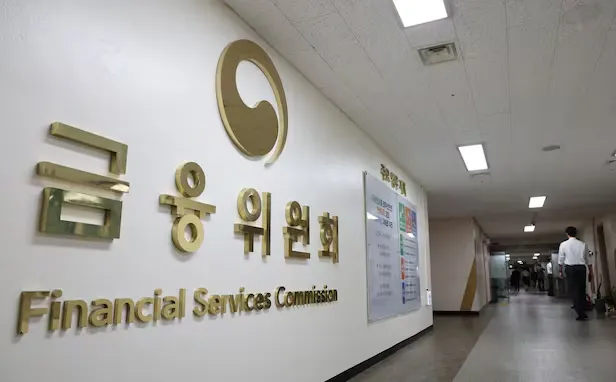
Source: FSC proposes bank-led stablecoin issuance and exchange governance reforms in Korea
The Financial Services Commission (FSC) has included provisions in its Digital Assets Basic Act draft to prioritize bank-centered consortiums (50%+1 ownership) as issuers of won-denominated stablecoins. However, the framework also recognizes structures where technology companies can secure majority shareholder status, with plans to further expand tech company participation going forward. The FSC will specify that issuers must be corporations meeting shareholder composition requirements set by presidential decree, with details to be reflected in enforcement decrees during the legislative process.
Regarding the formation of a "unanimous-agreement body" among agencies for stablecoins, authorities are reviewing a "consultative body" format given that the Ministry of Economy and Finance and Bank of Korea already participate as FSC commissioners. The FSC has also included exchange governance reforms, designating exchanges as "core distribution infrastructure" and applying governance standards comparable to alternative trading systems (ATS). Fit-and-proper tests for major shareholders and ownership caps of 15-20% are also being pursued.
Additional measures include explicitly stating a specialization principle for exchanges, mandating business rule establishment, and expanding capital requirements. The minimum capital requirement for stablecoin issuers will be set at 5 billion won or more, with future increases under review. To strengthen accountability for incidents such as hacks, authorities are considering IT stability standards comparable to financial companies, no-fault liability for damages, and punitive penalty surcharges (10% of revenue).
1.2.1 Moyed (ASA Contributor, Delta Network) – Beyond the Issuance Structure Debate: The Race for Usability Begins
The key takeaway from the FSC's framework is that while mandating bank participation, it leaves room for tech companies to become majority shareholders. This reads as a compromise seeking to leverage both bank credibility and tech company innovation capabilities. More notably, financial authorities are reportedly considering adding "stablecoin issuance" as a permitted subsidiary business for banks. which would enable individual banks to establish wholly-owned issuers.
Currently, securities firms, crypto exchanges, fintechs, and banks are forming various consortium combinations, creating a competitive landscape. As recognition spreads that securing use cases rather than issuance qualifications will determine winners, participants are moving to secure as diverse a partner base as possible. This reflects the market's judgment that stablecoins must function as payment and settlement infrastructure, not merely financial products.
Compared to international examples, Japan has adopted a bank-led structure with trust banks and exchanges sharing roles, while Singapore takes a model where fintechs and banks compete on equal footing based on MAS licenses. Korea's "bank-centered consortium + tech company majority allowed" approach sits between these two models, and it remains to be seen which direction it converges toward as the regulatory environment and market mature.

Source: Digital yuan morphs from CBDC into digital bank deposits to rival stablecoins
China has transformed its retail CBDC model into a commercial bank deposit-based solution through the Digital Yuan 2.0 upgrade effective January 1, 2026. Retail balances are now treated as liabilities of the holding institution (whether bank or non-bank payment provider), and banks can utilize these deposits for fractional reserve banking. Balances are covered by deposit insurance, while non-bank providers must maintain full reserves.
Major state-owned banks have announced they will pay interest on digital yuan deposits at the same rate as existing demand deposits (0.05% for most banks). People's Bank of China Deputy Governor Lu Lei explained that this approach addresses stablecoin risks, namely that stablecoins could cause bank fund outflows, carry risks from collateral asset (such as Treasury bonds) value fluctuations, and that this approach supports full integration with existing systems.
This direction was foreshadowed following remarks by Mu Changchun, head of the PBOC's Digital Currency Research Institute, in September 2025, and has now been officially confirmed. The transformation from CBDC to tokenized deposits is interpreted as a strategic pivot acknowledging the limitations of the direct central bank issuance model and choosing to operate digital currency within the existing financial system.
2.2.1 Moyed (ASA Contributor, Delta Network) – China Embraces Deposit Tokenization While Rejecting RWAs: Signals of a Conservative Tokenization Path
China's Digital Yuan 2.0 represents a pragmatic choice between the ideals and realities of CBDCs. By relieving the central bank of the burden of directly processing all retail transactions and leveraging commercial banks' existing infrastructure and deposit insurance systems, the intent appears to be securing both financial stability and scalability simultaneously. While utilizing blockchain technology, the assets running on it are strictly limited to bank deposits within regulatory purview.
What's interesting is that while China is proactive on deposit tokenization, it shows strong resistance to real-world asset (RWA) tokenization. Recently, seven major financial industry associations, including the Asset Management Association of China, National Internet Finance Association of China, China Banking Association, Securities Association of China, China Futures Association, China Association for Public Companies, and China Payment Clearing Association, reclassified RWAs from "new technology" to "risky business model." They categorized RWA tokenization alongside stablecoins, worthless tokens, and mining as prohibited cryptocurrency activities, citing "multiple risks including fraudulent assets, operational failure, and speculative hype."
Synthesizing the CBDC-to-deposit-token transformation with the explicit rejection of RWAs, China appears to be strictly controlling the scope of tokenization rather than rejecting the technology itself. This "selective tokenization" path, allowing deposits while blocking asset tokenization, represents China's unique course between financial innovation and control, forming a stark contrast with other Asian countries pursuing open token economies.

Source: Japan's finance minister backs exchanges as gateway for digital assets
Finance Minister and Financial Services Minister Satsuki Katayama emphasized the role of exchanges and market infrastructure as the gateway for blockchain-based assets at the Tokyo Stock Exchange's New Year opening ceremony. Minister Katayama defined 2026 as Japan's "first year of full-scale digitalization," stating that exchanges and market infrastructure are essential for citizens to benefit from digital assets.
These remarks align with the Financial Services Agency's policy to transfer crypto asset oversight from the Payment Services Act to the Financial Instruments and Exchange Act. According to plans announced by the FSA on December 10, 2025, crypto asset issuance and trading will be brought under securities-style regulations, applying strengthened disclosure requirements, insider trading prohibitions, and expanded enforcement against unregistered overseas platforms. Tax reform is moving in the same direction, on December 2, the Japanese government and ruling coalition backed plans to convert crypto profit tax rates from up to 55% to a flat 20% rate equal to stocks and funds.
This policy direction has already translated into enforcement. In February 2025, regulators asked Apple and Google to remove apps for unregistered exchanges including Bybit, MEXC, and KuCoin. In December, Bybit announced it would phase out services for Japanese residents starting 2026, citing regulatory requirements.
3.2.1 Moyed (ASA Contributor, Delta Network) – Korea, China, Japan: Three Different Paths Converging on 'Institutional Integration'
Japan's move is a declaration to redefine crypto assets from payment instruments to investment products and fully integrate them into the existing securities regulatory framework. Setting exchanges as the sole gateway for digital assets and actively blocking unregistered platforms sends a clear signal: "trading will only be permitted on regulated rails." The flat 20% tax rate serves as the carrot in this integration strategy, providing incentives for regulatory compliance.
Comparing this to Korea and China reveals interesting patterns. Korea is moving toward mandating bank participation in stablecoin issuance and strengthening exchange governance toward securities-style standards. China has chosen a closed path, transforming its CBDC into tokenized deposits while completely blocking private stablecoins and RWA tokenization. Japan is pursuing an "open integration" model that permits private stablecoins (JPYC, SBI yen stablecoin, etc.) and tokenization while absorbing them into the existing securities law framework.
All three countries are heading toward the common direction of "institutional integration," but their paths are distinctly different. Korea offers a bank-fintech collaboration structure, China a state-controlled deposit token, and Japan securities law-based market infrastructure as their respective solutions. For companies looking to enter the stablecoin and tokenization industry, the differences between these three regulatory models will directly impact market strategy and partner selection.
This section is provided by rwa.xyz. To receive the latest stablecoin and RWA news, join RWA.xyz Newswire.
4.1.1 BVNK Secures Direct SEPA Access, Combining Instant Euro Payments with Stablecoin Settlement
Enables 24/7 instant euro payments with sub-10-second settlement through Bank of Lithuania's CENTROlink system
Eliminates intermediary banks, giving direct control over settlement speed and operational standards
First platform to offer both direct SEPA payments and stablecoin settlement in a single interface
4.1.2 Polygon Labs Launches Open Money Stack for Global Stablecoin Payments
Provides orchestration tools, compliance systems, and cross-chain settlement capabilities in a unified framework
Polygon network stablecoin supply reaches three-year high of $3.3B, with over $2T total value processed since launch
Yield earning, identity integration, and regulatory compliance features already live through partnerships
4.1.3 Remitly Partners with Coins.ph for Stablecoin-Powered Remittances to Philippines
Targets 4 million overseas Filipino workers in US and Canada, which account for 45% of Philippine remittances
Near-instant settlement via stablecoins allows recipients to receive PHP in Coins.ph wallet or bank accounts
Aims to reduce traditional remittance costs and waiting times through regulated crypto infrastructure
4.1.4 KAST Adds GBP, EUR and 9 New Currencies to Global Stablecoin Payouts
Expands coverage to 200+ countries, adding GBP, EUR, CAD and APAC currencies including IDR, VND, PHP, THB, MYR
Enables direct stablecoin-to-local currency conversion within app, reducing reliance on traditional exchanges and off-ramps
Temporarily waives fees on SWIFT payouts above $5,000
4.2.1 Zodia Custody Becomes First Global Custodian to Support Australian AUDM Stablecoin
Institutional clients can now store AUDM in Zodia's cold-storage solutions, backed by Standard Chartered and Northern Trust
AUDM is Australia's first licensed stablecoin, issued by Macropod under Australian Financial Services License (AFSL)
Provides institutional access to programmable settlement, tokenized cash instruments, and real-time cross-border transactions
4.2.2 Barclays Invests in Ubyx to Build Tokenized Money Infrastructure
Ubyx is developing a global clearing network to enable interoperability between regulated stablecoins and bank-issued tokenized deposits
Aims to address institutional adoption barrier of fragmented blockchain ecosystems and wallet infrastructures
Building a common acceptance layer for regulated digital money with banks ensuring par-value redemption and regulatory compliance
4.2.3 RAKBank Receives UAE Central Bank Approval for Dirham-Backed Stablecoin
Maintains 1:1 backing with UAE dirham in segregated regulated accounts, ensuring par-value redemption
Second UAE regulated dirham stablecoin following Zand's approval in November 2025
Global stablecoin market cap exceeds $308 billion, led by USDT and USDC
4.3.1 ADI Foundation Partners with M-Pesa to Onboard 60M+ African Mobile Money Users to Blockchain
Provides blockchain services across eight African countries leveraging M-Pesa's established mobile money infrastructure
Supports ADI Foundation's goal to onboard 1 billion people to blockchain by 2030, focusing on emerging markets
Enables stablecoin transactions, cross-border payments, and expanded digital financial services through ADI Chain's regulatory-compliant Layer 2 network
4.3.2 Dogecoin Foundation Expands to Japan Through House of Doge Partnership
Partners with abc Co. and ReYuu Japan to develop regulated tokenization and payment solutions in Japanese market
Focus on gold-backed stablecoins and RWA tokenization under Japan's "green list" framework
Marks strategic shift from meme-based appeal to practical utility and regulated financial products
4.3.3 Key Senate Crypto Bill Negotiations Show Progress Ahead of Committee Vote
Stakeholders report "constructive" talks on DeFi regulatory carveouts between SIFMA and crypto industry representatives
Banking groups pushing to close GENIUS Act "loophole" that currently allows stablecoin issuers to offer yield to holders
Vote scheduled for January 15th, though some insiders worry the accelerated timeline could threaten bipartisan support needed for passage


Dive into 'Narratives' that will be important in the next year


 Mastercard
