It has been roughly 250 days since x402 entered the world. The defining theme in crypto in 2026 is, without a doubt, AI agents. Thanks to the "Vibe-coding" wave led by Claude, we have entered an era where anyone can build SaaS (Software-as-a-Service). But in regulatory environments like Korea, payments are still a major barrier. x402 is moving into that gap. So where, exactly, does x402 stand today?
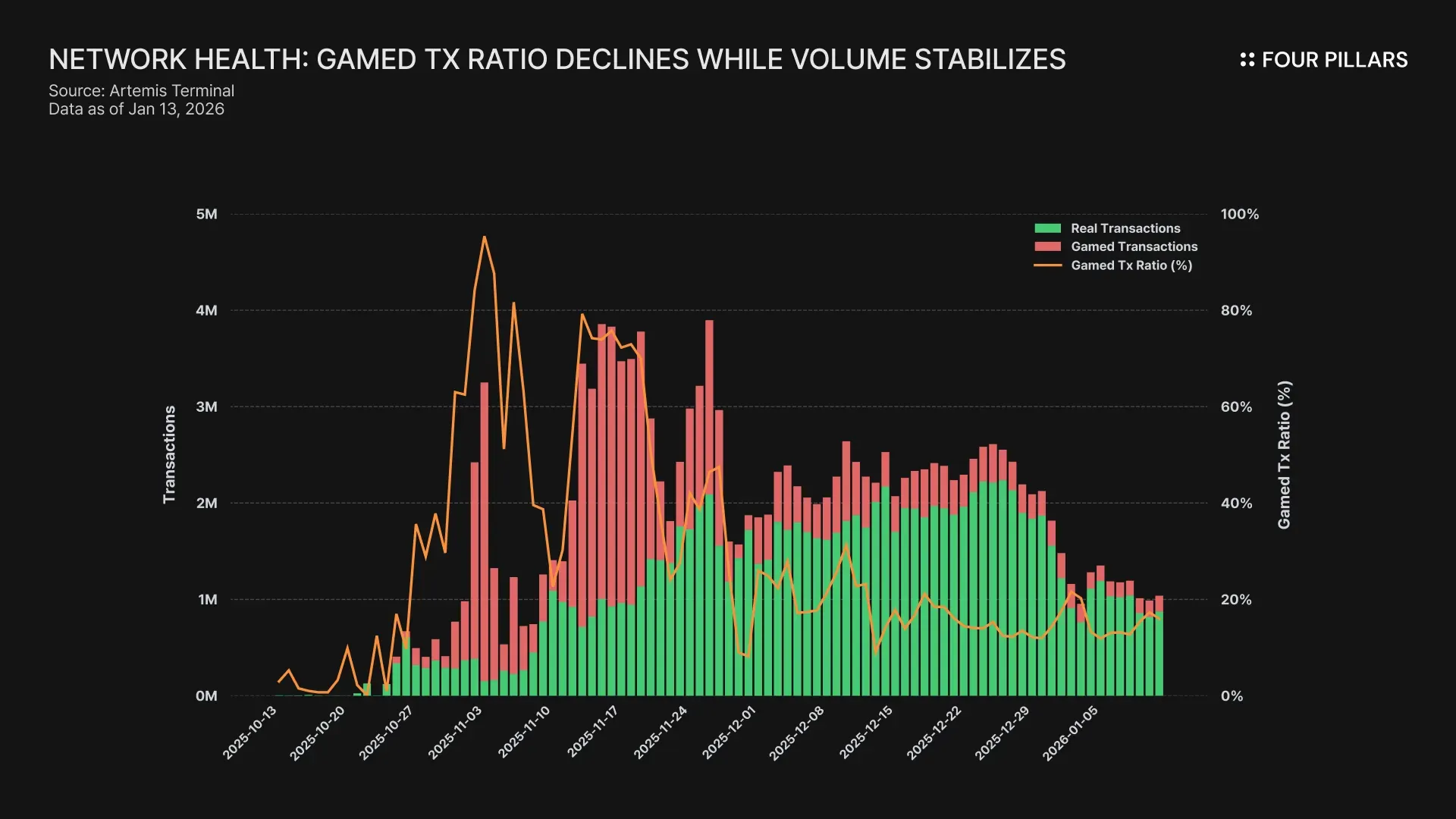
Overall transaction counts have fallen. But the mix has gotten healthier. According to Artemis (@artemis), the share of artificial activity such as wash trading and other gamed transactions has dropped from around 90% in the early days to the 20% range today. That is a sign that real economic activity is starting to fill the network.
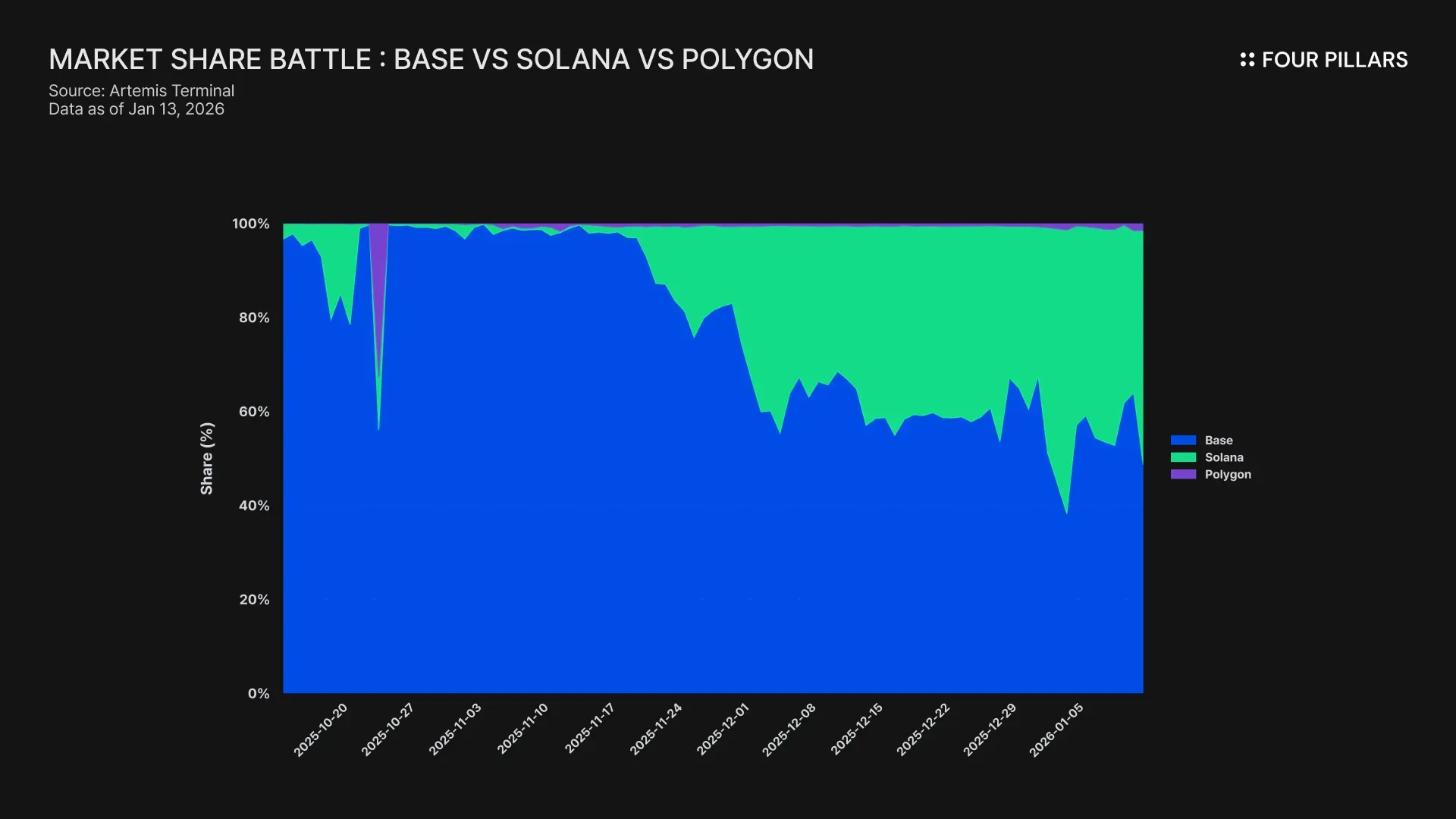
No one stays number one forever. When transactions exploded late last year, it was essentially Base (@Base) running the show. But the tide turned starting in December. Solana (@solana) surged aggressively, and in early January it briefly flipped market share, forming a new competitive landscape. Base still holds a large overall slice, but the fight for leadership is back to square one.
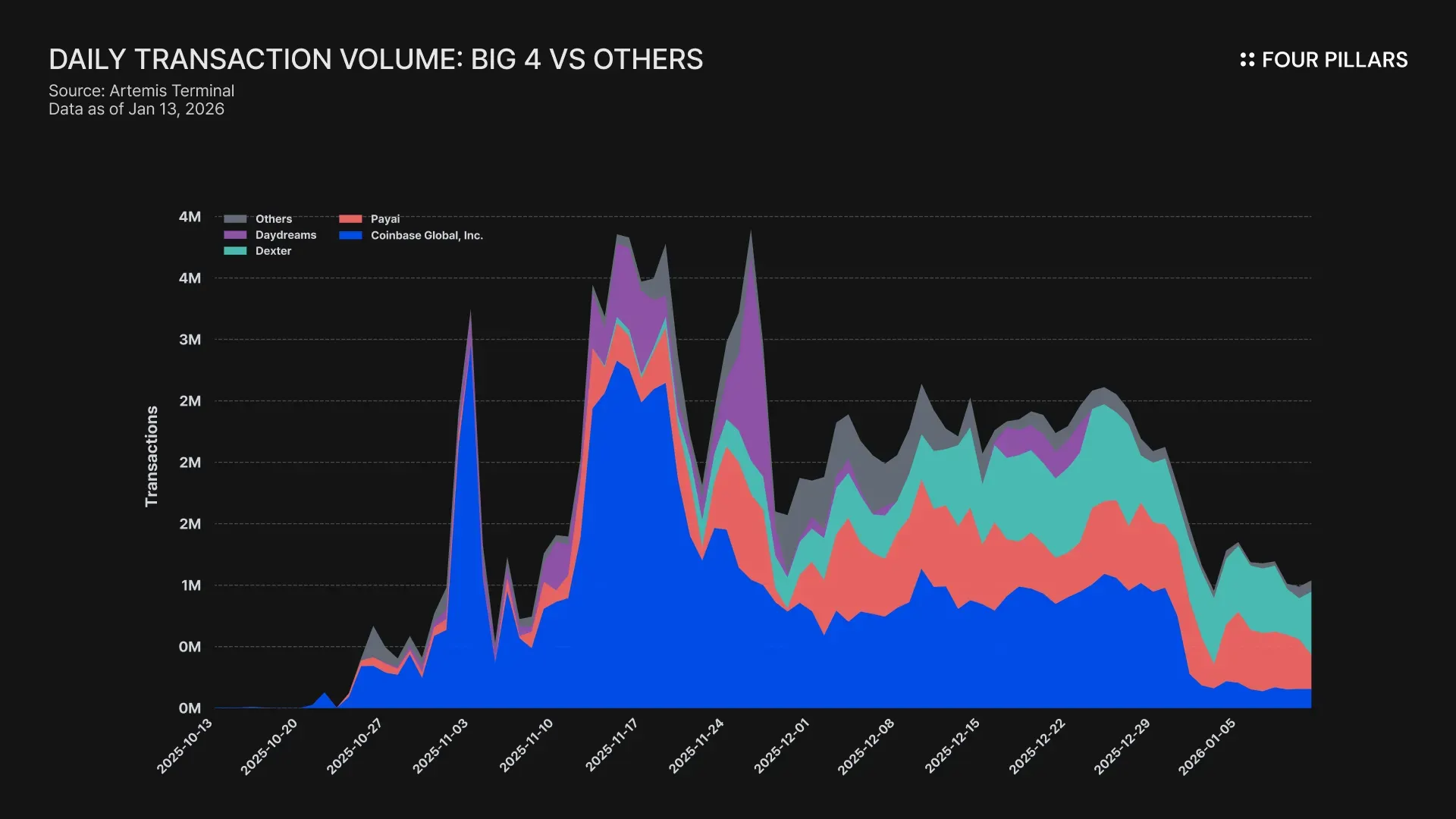
The meta has changed. Early on, the x402 ecosystem was mostly about meme coin launches like $Ping. Rather than real economic activity, it could have looked like a short-lived craze that would pass by, much like the inscriptions boom.
Today, the ecosystem looks very different. Dexter (@dexteraisol) and PayAI (@PayAINetwork) now account for an overwhelming share of activity. This suggests something beyond simple token issuance: the potential for an "A2A micropayments" market, where AI agents hire one another and settle payments between themselves. In other words, it is a signal that an agent-driven autonomous economy is starting in earnest.
Google’s UCP announcement is a powerful catalyst. That is because AP2, which includes x402, has been officially integrated into this protocol. As a result, developers can build a standardized payment environment that any agent can use with a single integration. The barrier to entry drops, and accessibility improves dramatically.
But let’s stay clear-eyed. x402 is still a challenger going up against massive payment networks. To truly open the agent economy, it needs to prove far larger real-world economic flows than it has today. The key question is whether breakthrough projects will emerge fast enough to shorten that proof cycle, or whether x402 will end up as just another passing meta. That is why x402’s second act is worth watching.