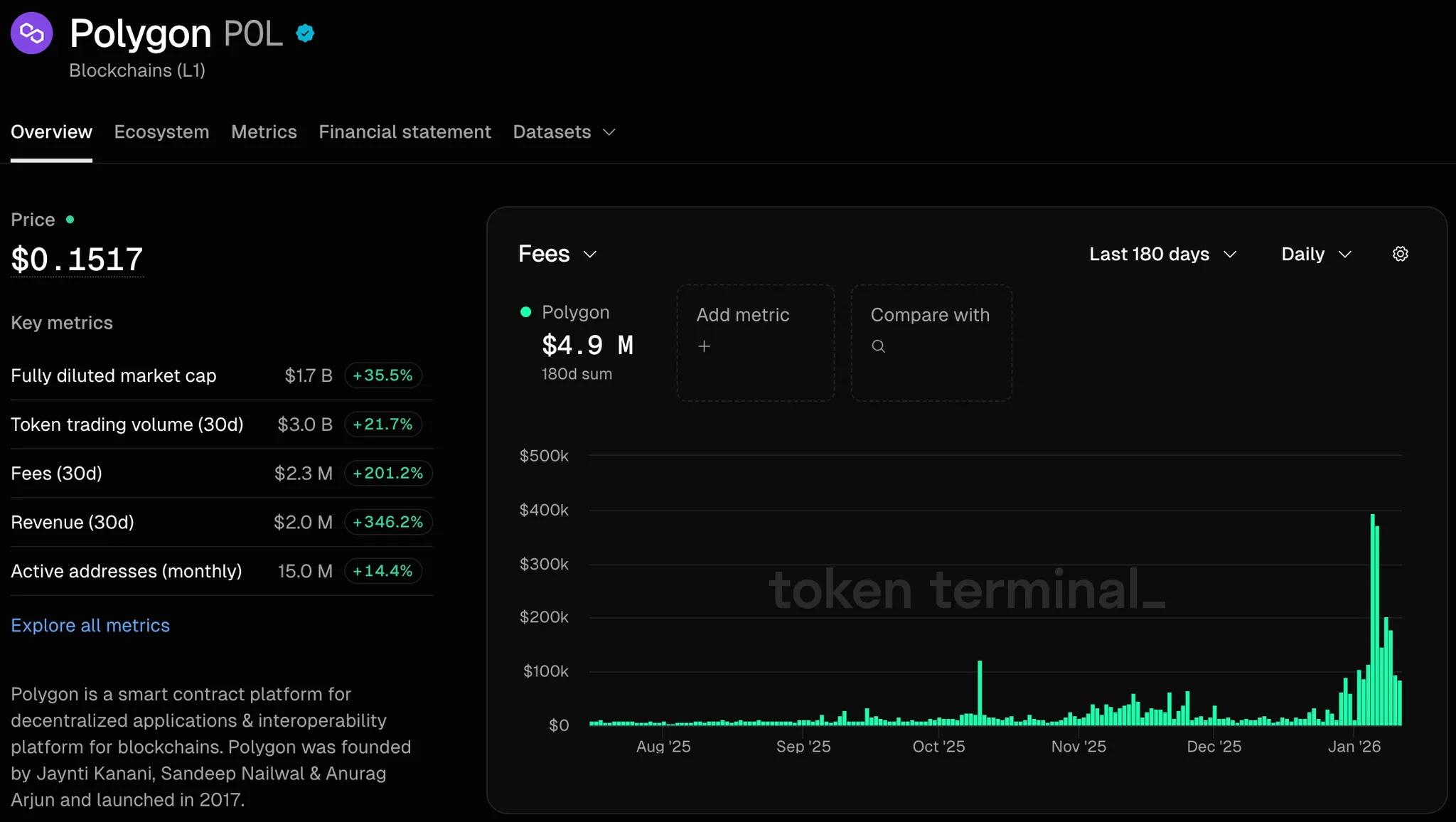
Recently, especially since November this year, Polygon's metrics have been surging. According to Token Terminal, network fees on Polygon have increased by over 200% in the past 30 days alone, now exceeding $2 million.
However, opinions differ on the cause. Some in the community attribute this to transaction volume centered around Polymarket, along with attempts to capture MEV opportunities arising from it. Meanwhile, Polygon team member @GianTheRios suggested that "Polymarket doesn't generate as much on-chain activity as on-chain payment services," lending weight to the payment services narrative.
So where exactly is the recent surge in Polygon's metrics, particularly in transaction fees, coming from?
To find out, I examined the on-chain data.
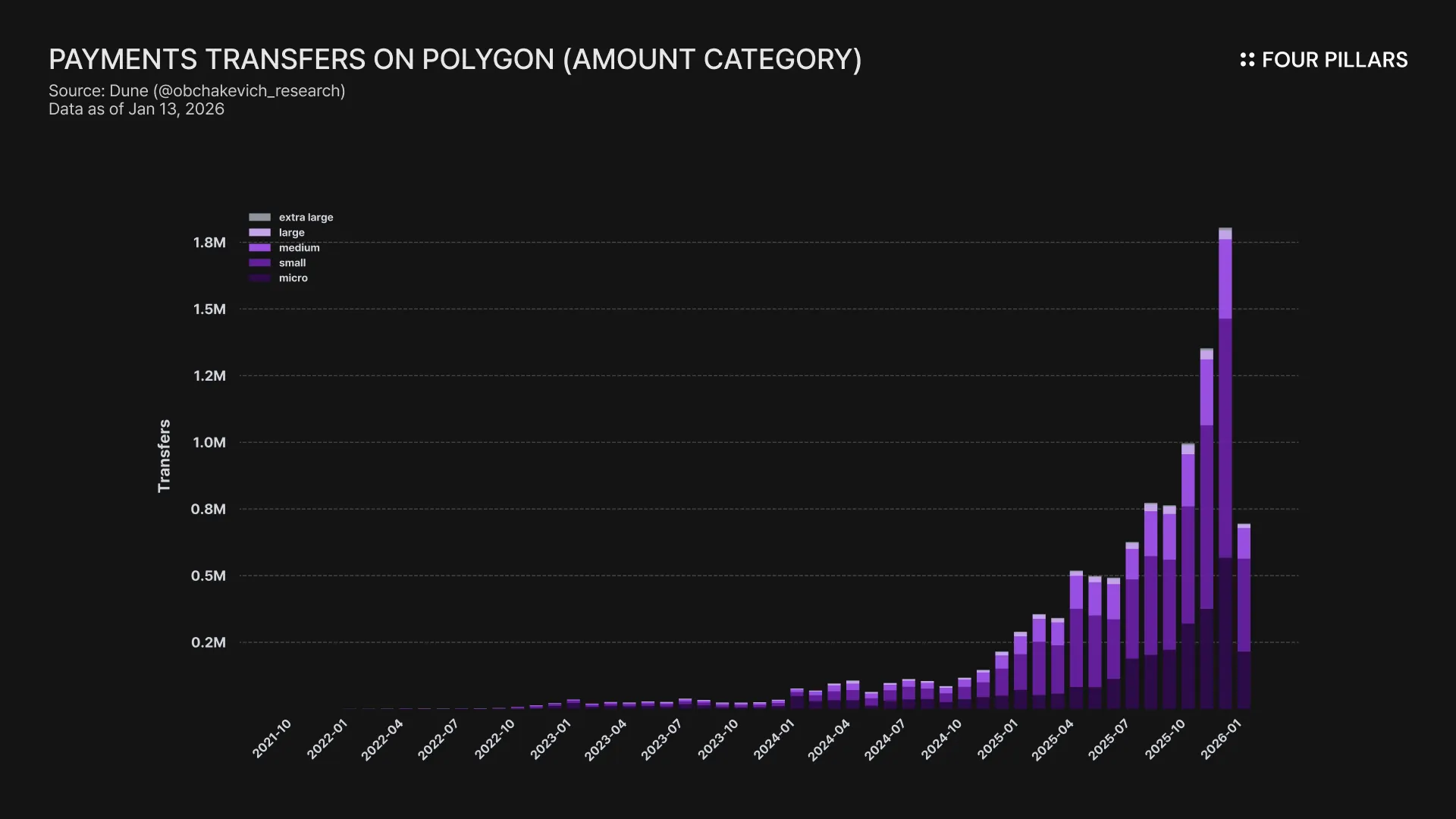
First, I looked at payment service trends. According to @obchakevich_'s Dune dashboard, since October 2025 when Polygon's metrics began their steep climb, the number of payment transactions has increased by approximately 80%, from 996K to 1.8M. What's particularly noteworthy is that small-scale transfers, or micropayment transactions, have been driving this growth. During this period, micro and small transactions accounted for 76-80% of all transactions (760K to 1.46M).
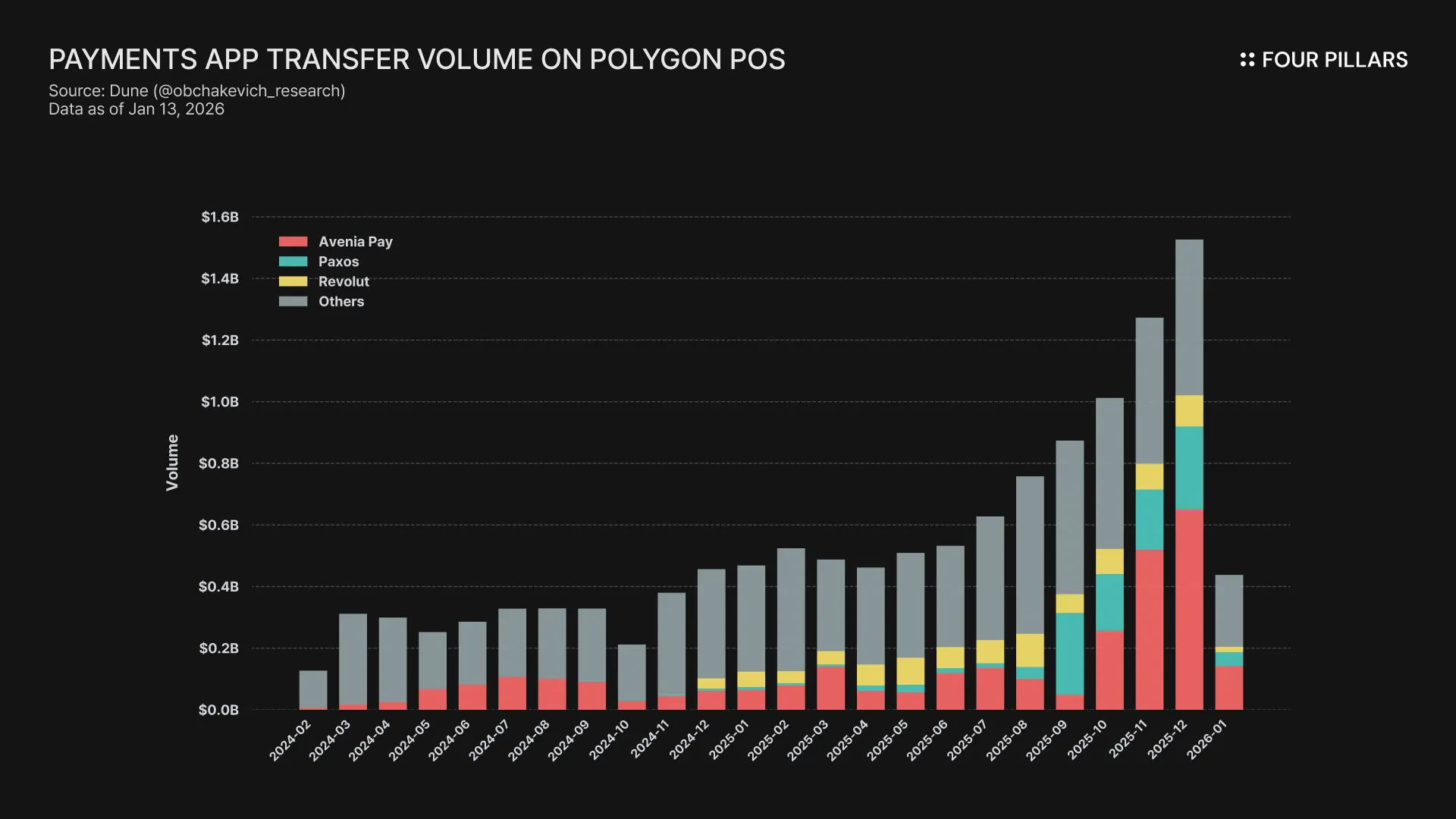
The service leading this volume increase has been Avenia Pay, a Brazil-based payment service. They utilize a stablecoin pegged to the Brazilian Real (BRLA), integrated with Pix, the local payment system.
Paxos has also contributed significantly to payment volume on Polygon since September, though the exact reason for Paxos's sharp volume increase on Polygon after September remains unclear.
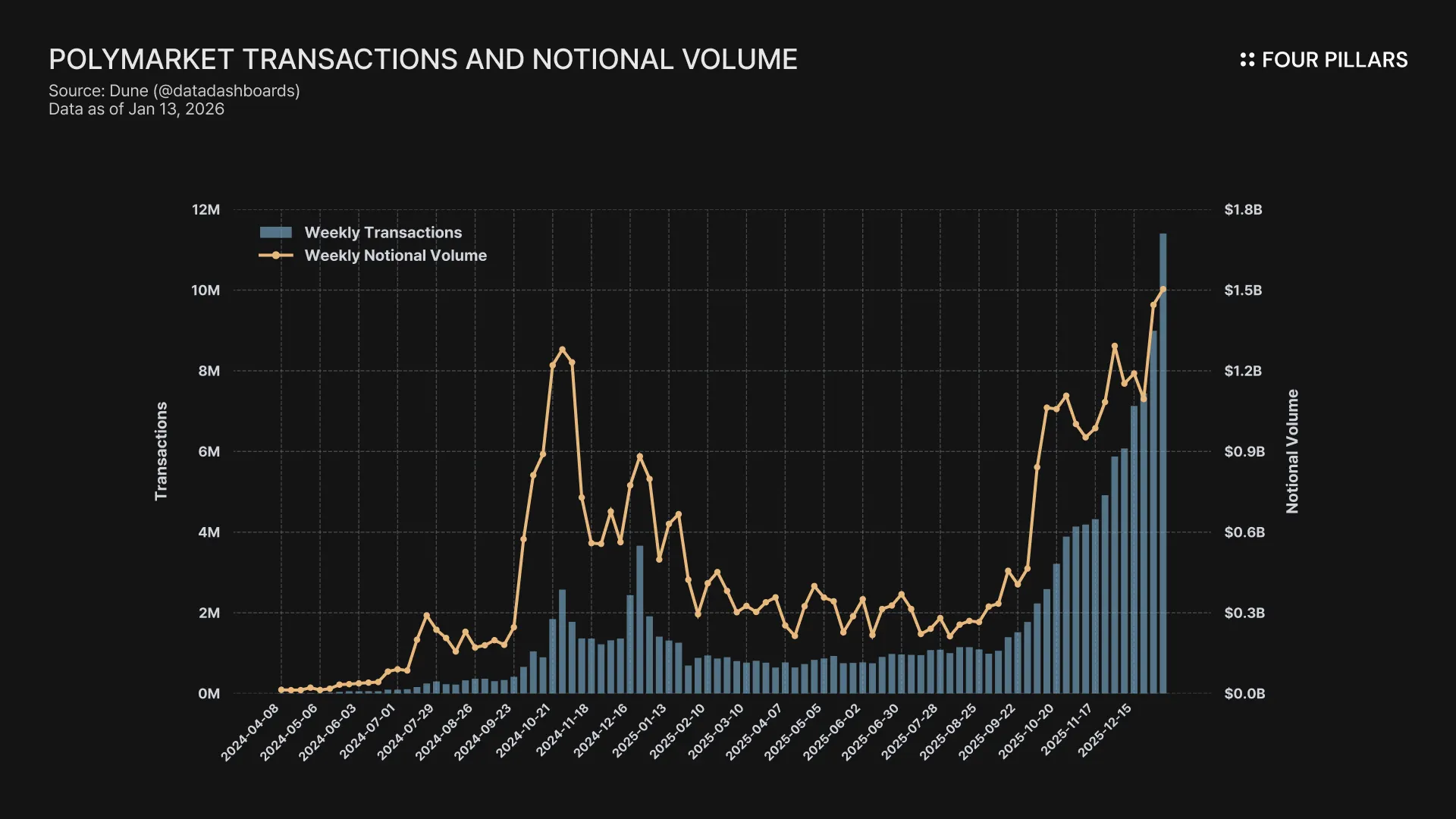
What about Polymarket?
Polymarket has also shown tremendous growth. Since September 1, Polymarket's weekly transaction volume has increased nearly fivefold, while the number of transactions has grown more than 11.5 times.
So how should we interpret Polygon's metric surge over the past two to three months?
Various data sources point to Polymarket's steep rise in transaction count and volume, but this doesn't actually align with Polygon's revenue trends. While Polymarket's volume began its significant ascent in early September, fees and revenue on Polygon only started showing meaningful upward momentum in November. Considering these metrics, the more likely conclusion is that payment services have contributed more directly to the current REV surge.
Some may wonder how transactions from payment services could generate more fees than those from a prediction market.
Payment transactions can involve more than simple transfer calls. They may include gas sponsorship through account abstraction, batch transactions that bundle multiple transfers into one, and meta-transactions. In such cases, they can collectively incur higher gas fees compared to simple transfers. This also applies when swaps between fiat currency and stablecoins occur through integration with local payment systems. Payment-related transactions don't necessarily consume less gas.
Polygon has recently been emphasizing its role as payment infrastructure, seeking new opportunities through the Open Money Stack, a modular framework designed for payment services. Amid increasingly fierce competition in the payments market, Polygon's recent metrics are certainly encouraging, and it will be worth watching whether they can maintain their lead going forward.



 Polygon
