

The driving force behind crypto adoption—alongside improvements in scalability—has been the rise of the abstraction stack. Infrastructure innovations that remove complexity across multiple layers—wallets, asset and interaction representations, multi-chain management, and integrations with the Web2 stack—have made real-world Web3 usage possible, sparked new classes of applications, and accelerated entry from both enterprises and institutions. Wallet abstraction layers like Privy and Turnkey, protocol-native features provided by Sui and Solana, LayerZero’s OFT-based multi-chain token standard, and Rialo’s full-stack architecture are all emblematic examples of this broader shift.
Ultimately, the competitiveness of next-generation smart contract platforms will hinge on the maturity of their native ecosystems. As infrastructure performance rapidly converges upward, technical superiority alone is no longer enough to sustain meaningful differentiation. Instead, only ecosystems where long-standing developer communities, broad user bases, distinct cultures, stable liquidity, and strategically operated foundations lock together to produce compounding effects will be able to maintain long-term momentum. In that sense, Ethereum and Solana have already carved out defensible moats and established themselves as robust, self-sustaining ecosystems.
Among the emerging players, Hyperliquid and MegaETH stand out. Their ecosystems remain small in absolute size, yet both have already demonstrated the potential to build self-contained communities grounded in a clear shared philosophy - Hyperliquid has cultivated a powerful trader-centric user base through user-first design and a feedback-driven, community-returning incentive model. MegaETH, meanwhile, has combined ultra-high-performance infrastructure with its “MegaMafia” strategy—curating use cases that can only exist on MegaETH and granting exclusive advantages to a small, contribution-based community—to secure a rapidly growing and highly loyal following. Whether these networks ultimately evolve into major ecosystems will depend on how consistently their communities uphold the protocol’s core philosophy, how effectively they generate synergy among participants, and how reliably they can sustain this execution over time.
Who could have confidently predicted that, after the sudden AI boom of 2024, the crypto landscape in 2025 would be dominated by stablecoins and institutional adoption? The crypto market has a way of making time feel unusually compressed. Narratives once believed to define the future can vanish overnight, while unexpected new themes suddenly emerge and capture explosive attention in a matter of weeks.
Yet, when you think about it more carefully, this volatility isn’t entirely a bad thing. It signals that the boundless potential of Web3 is being continually rediscovered by a diverse set of actors — and that new experiments are constantly taking place on top of the technologies and lessons accumulated so far.
For that reason, while it’s tempting to chase whatever “topic of the moment” is trending, it’s equally important to occasionally take a step back and revisit the broader trajectory from a more macro perspective. By understanding which ecosystems ultimately endured, and which larger currents have shaped adoption across the industry, we gain a clearer and more expansive view of where things are heading.
Accordingly, this article shifts away from short-term, topic-specific perspectives and instead focuses on how we should dissect the abstraction stacks that—despite playing (or being poised to play) a crucial role in driving adoption—have not received the attention they deserve. In parallel, it examines what conditions enable certain smart contract platforms to sustain momentum in an increasingly competitive landscape. In short, the discussion turns toward a deeper exploration of infrastructure.
“Translating sensory experience into text and language; distilling natural patterns into mathematics and physics; encoding logical reasoning into computers.”
Humanity has continually expanded the unit of thought—and advanced civilization itself—through the act of abstraction: simplifying the complexity of the world and uncovering the rules and principles beneath it.
The last two decades of the IT industry represent perhaps the most dramatic example of this. In the early days, developers had to manage memory manually and control computation step by step. But as communication networks evolved, and as higher-level abstraction layers such as operating systems, high-level languages, cloud infrastructures, and APIs emerged, complexity faded into the background. More people were able to engage with IT intuitively, and the speed of service innovation accelerated exponentially.
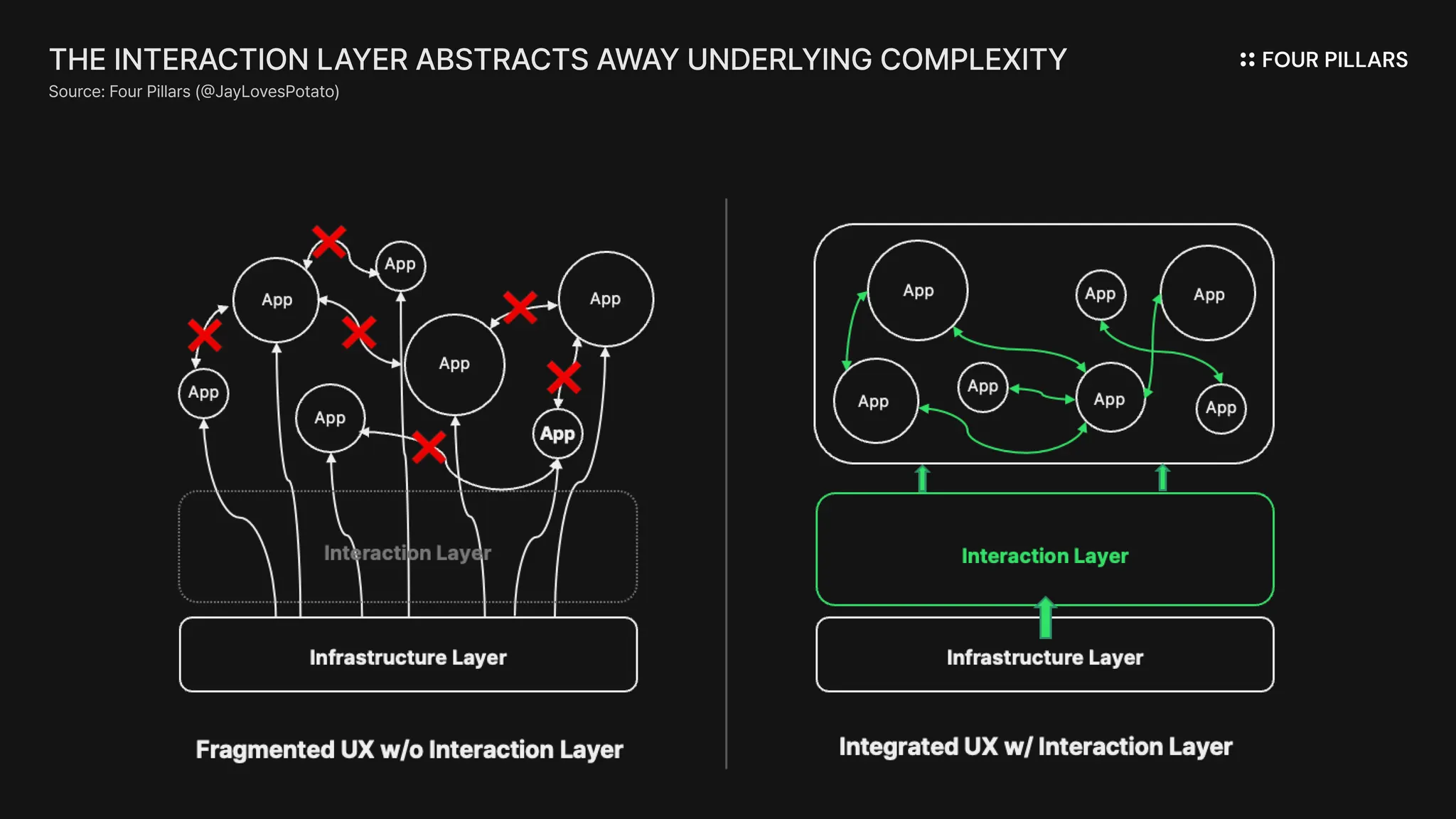
Blockchain follows the same trajectory. The technology holds the potential to represent real-world value faithfully on a trusted digital network and to redefine financial interactions. Yet, in its early stages, meaningful usage was extremely difficult; one had to understand every internal mechanism—from consensus structures to gas fees to signature schemes. The same was true for exchanging data across chains or defining complex interactions within a single protocol. Developers implemented their own fragmented standards, resulting in siloed liquidity, inconsistent interaction models, and inevitable security risks.
However, as various abstraction stacks began to emerge—and as parallel efforts to improve scalability continued to mature—these layers has taken us beyond the early phase where users merely interacted with complex Web3-native DeFi applications, and into an environment where entirely new categories of applications are emerging across much broader sectors. Every day, countless new projects with distinct narratives appear at unprecedented speed, and large enterprises and institutions are accelerating blockchain adoption through targeted initiatives spanning gaming, stock tokenization, payments, and more.
Against this backdrop, the following section highlights key abstraction-layer projects that have either already played an important role in expanding the industry into new verticals or are poised to do so going forward. I categorize them into four perspectives: 1) user onboarding, 2) advanced abstractions for high-quality applications, 3) strategic abstractions for multichain liquidity, and 4) experimental abstractions that redefine interaction models.
The most fundamental and intuitive form of abstraction from a user’s perspective is, unsurprisingly, the abstraction of the wallet stack—the very medium through which all interactions take place.
For newcomers stepping into crypto, understanding the difference between custodial and non-custodial wallets, setting up a new wallet, and managing it over time is not only unfamiliar and complex but also a continuous operational burden. For service providers, this initial friction becomes a major bottleneck in onboarding, preventing the core value of their business logic from being delivered cleanly to users. Wallet-abstraction layers address this by dissolving that complexity and embedding the Web3 experience directly and seamlessly into applications and their use cases.
A representative example is Privy. Privy acts as a middleware solution that abstracts the entire wallet-infrastructure stack, offering a unified suite of capabilities—including low-level key-management APIs for security, multichain custom account abstraction, embedded-wallet support, and social or passkey-based logins. As a result, users interacting with apps built on Privy can access blockchain features safely and naturally without having to configure a wallet themselves. Privy’s impact has been substantial: in just three years from its launch, it has supported over 1,000 developer teams and onboarded more than 75 million accounts. The company was recently acquired by Stripe, which is integrating Privy’s technology to make stablecoin payments more user-friendly—ultimately enabling a far broader audience to access frictionless digital payments.
A similar provider is Turnkey, a non-custodial wallet-infrastructure project that helps developers embed secure and flexible wallet functionality directly into their applications. Turnkey offers wallet creation, key management, and transaction signing through a single API, dramatically reducing development overhead. Users retain full ownership of their keys, and security is reinforced through hardware enclaves built on a TEE (Trusted Execution Environment). With multichain support and a high-performance architecture, Turnkey can be easily integrated into a wide range of Web3 applications, DeFi platforms, and NFT services. Its usability and strong security posture have accelerated its adoption, and like Privy, it is increasingly viewed as a foundational layer for onboarding and account abstraction. Many Web3 builders now rely on Turnkey’s embedded wallets and automated signing flows to enhance UX and reduce friction.
In this way, wallet-stack abstraction has become the first and most crucial gateway for interacting with Web3 applications—lowering the barriers that once blocked new users from onboarding and engaging consistently. It has opened the door to far broader application possibilities across sectors, and it will continue to serve as a central pillar driving ecosystem expansion moving forward.
The second major abstraction category is the protocol-level interaction layer—arguably the one that delivers the most tangible benefits to application developers.
A large portion of the UX challenges faced by blockchain applications to date stems from the fact that many Layer 1s were not structurally designed to serve as a fully capable backend. As a result, developers often had to implement most required functionality themselves, either within the application layer or via fragmented middleware solutions. This not only created operational inefficiencies but also introduced additional vectors for security vulnerabilities.*
To address this, several Layer 1s today are investing heavily in improving scalability while simultaneously providing native protocol-level standards and libraries. These built-in capabilities allow developers to express assets and interactions in far richer ways, while making it dramatically easier to build high-quality, full-stack services that remain optimized around their core business logic.
*A well-known example is Ethereum’s EIP-4337. Although the standard introduced the concept of account abstraction and attracted significant attention, its implementation was not adopted at the protocol level. Instead, it emerged in a fragmented, application-layer form—leading to early compatibility issues across different applications.
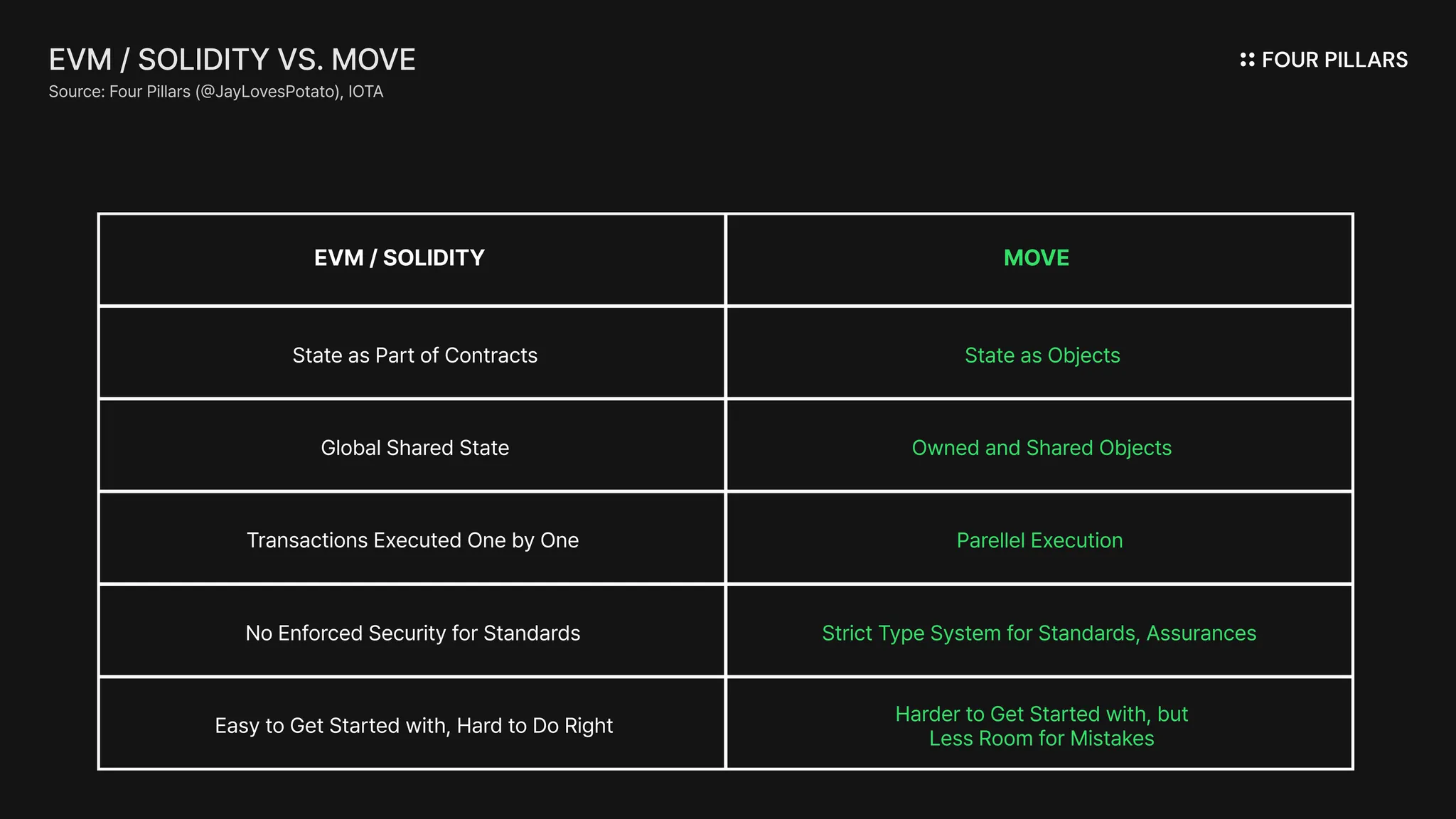
For example, Sui provides an object-centric state-management model that allows developers to define not only the assets themselves but also the relationships between those assets with remarkable precision. Because each object maintains its state independently, transactions that do not interfere with one another can be executed in parallel—enabling high TPS and low fees even on identical hardware*. In addition, Sui’s Programmable Transaction Blocks (PTBs), which can bundle up to 1,024 operations under a single signature, allow developers to consolidate what would otherwise require multiple transactions into one. This makes it possible to implement complex interaction logic in a more stable and cost-efficient manner.
Sui further enhances this developer and user experience through modules such as zkLogin, Passkeys, and KELP, combining Web2-level ease of use with Web3’s self-custodial trust guarantees. Developers can allow users to log in instantly with Web2 accounts—no seed phrase required—execute transactions with biometric authentication instead of repeated signatures, and recover accounts safely if keys are lost. Features such as RPC 2.0 (GraphQL), security tools like Move Prover and Bugdar, along with the Move Registry and various SDKs, provide a robust foundation for building complex on-chain logic intuitively and reliably.
In this way, Sui’s core team is directly developing Only Possible on Sui features that can be implemented uniquely at the protocol level, giving applications the standards they need from the ground up. This enables developers to use these capabilities effortlessly and to build more advanced products without taking on unnecessary infrastructural burdens. As a result, projects such as Talus, the AI-powered autonomous Web3 economic infrastructure; Overtake, the game-focused on-chain P2P marketplace; and IOTA, which is building a borderless trading network, have already adopted the Sui stack to build aggressively and expand their ecosystems at high velocity. Beyond these, Sui continues to secure new adoption cases across gaming, payments, and other verticals—gradually shaping a strongly differentiated ecosystem.
*This architecture enables sophisticated asset modeling—such as “dynamic NFTs”, where character levels or item-enhancement stats update in real time as metadata changes, and “nested NFTs”, where multiple objects (e.g., characters, equipment, attributes) can be composed into a single asset hierarchical structure.
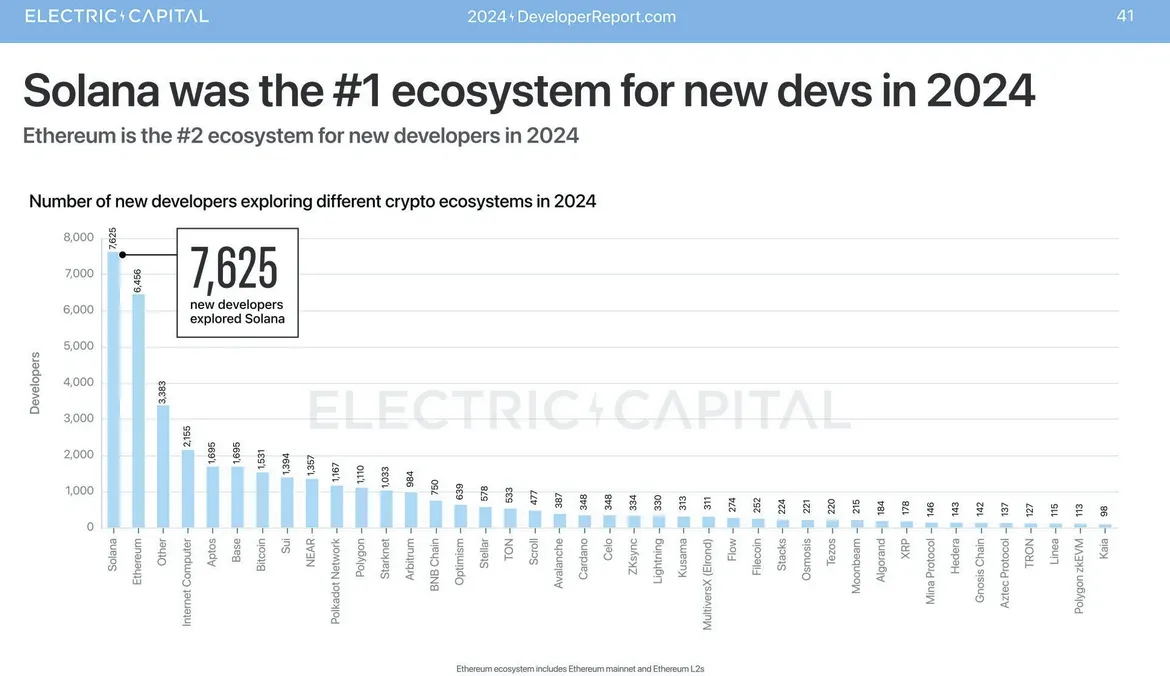
Source: Electric Capital
Solana, which has grown on the back of a strong builder-centric culture, is also known for providing a rich suite of middleware solutions and standard libraries that support a wide range of use cases and application development (e.g., the Solana Program Library and the Anchor Framework). In addition, Solana offers a variety of frameworks and functionalities: Token Extensions, which enable sophisticated token behavior required for enterprise-level regulatory, legal, and compliance needs; SPE (Solana Permissioned Environments), which allow businesses to operate within customized environments that meet specific security and compliance requirements; Solana Pay, a JavaScript library for implementing Solana-based crypto payments with ease; and xStocks, which brings tokenized U.S. stocks and ETFs onto the Solana network.
As a result, Solana consistently ranks among the top ecosystems for new developer onboarding each year and has become a prominent arena where institutional players and application builders experiment with new forms of innovation. This momentum has solidified Solana’s position as the second-largest ecosystem after Ethereum—distinct, fast-growing, and increasingly self-sustaining.
Ultimately, the various abstraction layers implemented at the protocol level across smart contract platforms will continue to evolve, accelerating development across entire ecosystems and enabling differentiated adoption pathways that shape each network’s unique identity. In the long run, these abstractions will also serve as a foundation for stronger application-level synergies, enhanced security, and greater community cohesion.
The third abstraction category centers on standardized token frameworks that enable assets to circulate seamlessly across multiple chains.
The blockchain ecosystem is composed of numerous chains with distinct purposes and cultures. For applications aiming to reach broader liquidity and user bases, securing interoperability across these ecosystems is essential. However, existing token standards were designed around the VM architectures and contract environments of their respective chains, leading to functional differences. Because these standards inherently depend on single-chain execution environments, transferring assets across chains typically results in newly wrapped tokens being issued on each destination chain—causing liquidity fragmentation, versioning and management complexity, and additional security risks. These challenges underscored the need for a unified asset standard, prompting LayerZero to propose a new framework called OFT (Omnichain Fungible Token), informed by its experience as an interoperability layer.
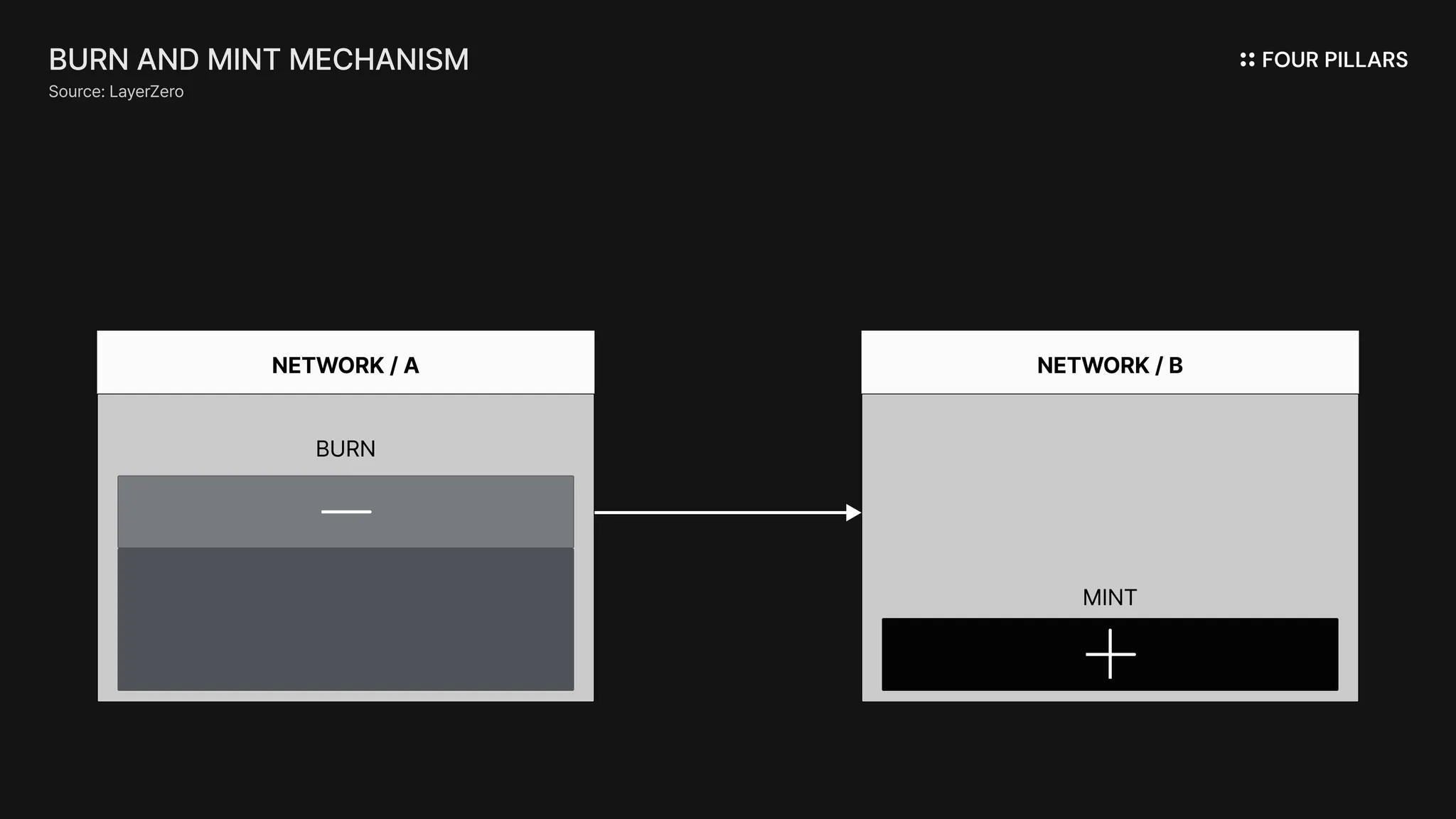
OFT provides a framework that allows a single asset to be deployed and managed with a consistent total supply across multiple blockchains. It has quickly become the dominant choice in multichain token framework. Unlike the traditional lock-and-mint model* or liquidity-network model**, OFT uses a burn-and-mint mechanism, enabling fast and low-cost transfers without requiring separate liquidity pools or wrapped tokens. This significantly reduces liquidity fragmentation, eliminates the risks associated with stranded or locked assets, and ensures that the asset’s total supply remains consistent across all chains(Existing ERC-20 assets can also be integrated into the OFT framework through the OFT Adaptor).
The OFT ecosystem—spanning Web3-native projects as well as institutional players—has been expanding rapidly. According to OFT Scan, the standard has now been adopted by more than 534 projects across 153 networks, including PayPal’s PYUSD, Ethena’s USDe, Usual’s USD0, and Ondo Finance’s USDY. The cumulative value transferred through OFTs has surpassed $13 billion.
By standardizing token behavior across chains, OFT dramatically reduces the burden builders face when navigating chain-specific token standards or bridging constraints. As a result, it has become an attractive option for virtually any team seeking to scale a multichain ecosystem quickly and efficiently.
*Locking the native asset on one chain while minting a representative voucher asset on another.
**A model in which liquidity pools pre-funded on both chains are adjusted to facilitate asset transfers during bridging.
The final abstraction example is Rialo, whose approach aims to fundamentally redefine how Web2 and Web3 communicate by rethinking blockchain architecture itself.
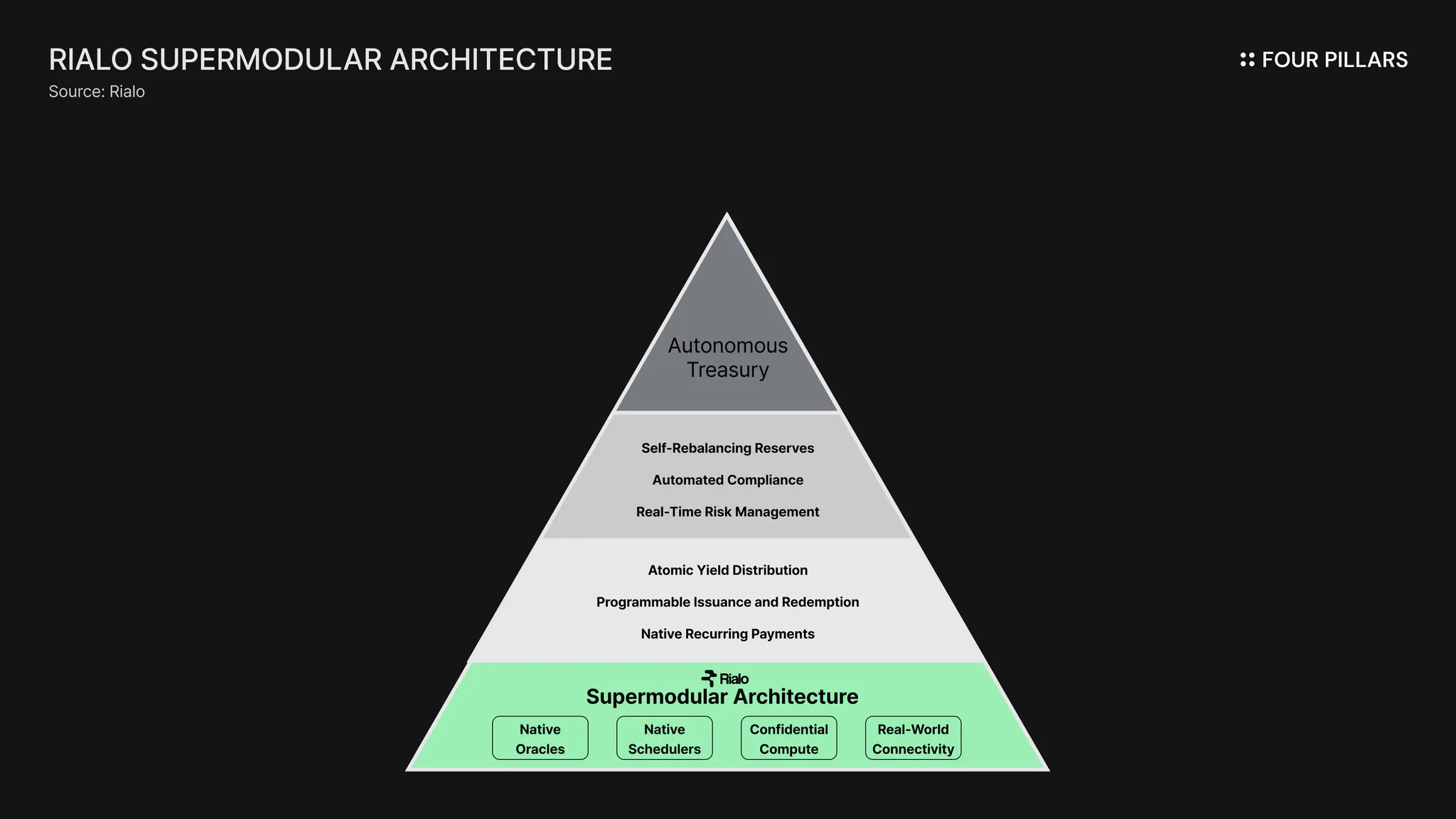
Rialo emerged with the motto “Rialo Is Not a Layer 1,” positioning itself as a project that challenges the foundational assumptions underlying traditional blockchain design. Historically, building decentralized applications required developers to stitch together numerous components—external APIs, oracles, message queues, schedulers, and more. This fragmented architecture led to structural issues such as increased costs, greater security risks, and high operational complexity. Rialo seeks to eliminate this burden by natively integrating Web2-familiar capabilities—HTTPS calls, event-driven triggers, scheduled executions—directly into the smart contract layer. In doing so, it provides a foundation for more intuitive and natural user experiences.
This philosophy stands in stark contrast to the conventional focus of L1s and L2s, which have often concentrated narrowly on TPS or fee competition stuffs. Rialo argues that true mass adoption requires direct connectivity with real-world data, services, and usage patterns, paired with a UX so seamless that users do not even realize they are interacting with blockchain infrastructure. Instead of relying on stacked layers of middleware, Rialo adopts a model in which the chain itself interacts with external data sources—enabling much faster and more reliable communication. This allows developers to perform tasks like RWA issuance, agent-driven trading, or cross-domain oracle operations as effortlessly as invoking an API endpoint in a Web2 application, all without building separate oracles or bridging systems.
In essence, Rialo positions itself as a “Real-World Chain,” introducing a new conceptual category in which the blockchain behaves as a natural extension of existing Web2 systems. If this architecture proves successful, it could enable an entirely new class of Web3 applications—matching or even exceeding Web2 standards in speed, usability, and cost efficiency. In doing so, it may ultimately reshape the landscape of Web3 application development and redefine how users interact with decentralized systems.
As countless competitors continue to emerge, the question of which smart contract platform will ultimately claim the “throne” is a topic that resurfaces time and time again. Yet, I believe this question has fundamentally lost much of its meaning. In a crypto environment where users hold diverse values and preferences, it is exceedingly difficult for any platform relying on a copied playbook—one that merely imitates the culture or philosophy of another—to surpass ecosystems that have accumulated deep, long-standing foundations for synergy and community. Put differently, once each ecosystem establishes a distinct position anchored in its own philosophy, a far more realistic future is one in which these ecosystems coexist and grow in parallel, rather than one in which a single philosophy dominates and subsumes all others.
Indeed, even Solana—once framed as an “Ethereum killer”—has evolved into an ecosystem with its own unique culture, user base, and identity. This alone suggests that the future is not a zero-sum battle for a singular crown, but rather a multichain landscape where multiple independent ecosystems thrive in their own ways.
This naturally leads to a different—and far more meaningful—question: Which smart contract platforms are positioned to endure and coexist in this multichain future?
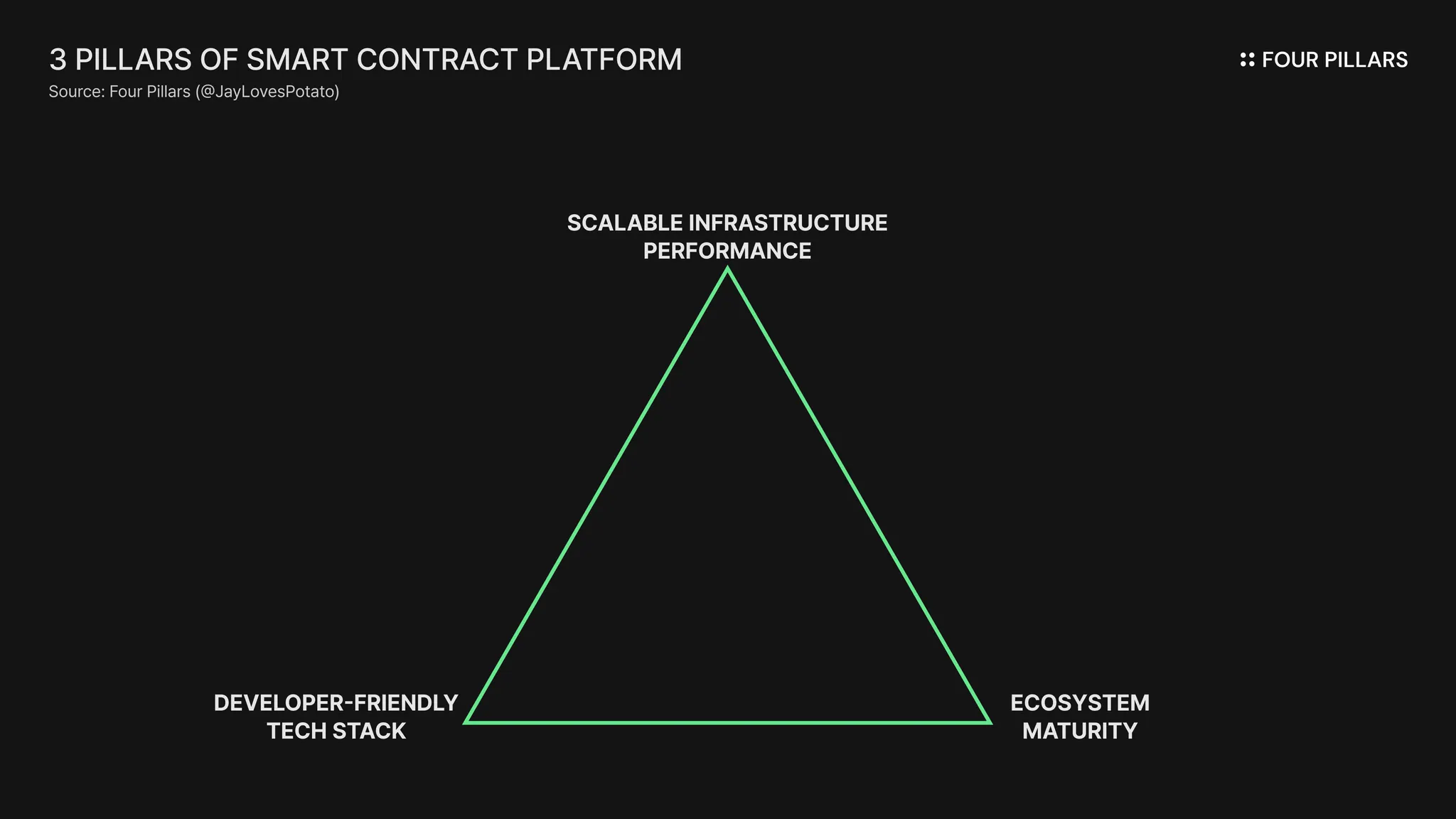
Now that the absolute definition of decentralization has become increasingly blurred, the core competitive factors for next-generation smart contract platforms—assuming a reasonable baseline of decentralization is met—can be distilled into three elements: 1) Scalable infrastructure performance, 2) A developer-friendly tech stack, and 3) Ecosystem maturity.
However, because blockchain infrastructure is fundamentally open-source, performance across platforms continues to converge upward, and in many cases, infrastructure or tech stacks can be forked with relative ease. In other words, unless a platform is pioneering an entirely new paradigm—such as Sui’s Move-based stack—it is becoming increasingly difficult to build long-term differentiation purely through technical superiority. Under these conditions, the most decisive competitive factor is, without question, a platform’s unique ecosystem maturity.
Here, ecosystem maturity does not refer to temporary, surface-level metrics such as short-term user spikes or TVL fluctuations. Rather, it represents the accumulated foundation of sustainable synergy—the long-term build-up of diverse applications, a loyal user base, broad mainstream reach, cohesive cultural identity, and strategic stewardship by the foundation or core contributors.
Over the past several years, countless infrastructure projects have appeared and disappeared (or lost momentum). But among all platforms that operate on “good enough” technical performance, only Ethereum and Solana have consistently grown their ecosystem maturity. Ethereum, as the most decentralized asset outside Bitcoin and the origin of the smart contract paradigm, holds unmatched legacy and liquidity; naturally, L2s, institutions, and protocols continue to expand around the EVM, strengthening the network’s synergistic gravity. Solana, on the other hand, has developed a uniquely strong builder culture, where teams collaborate under a shared vision of an “Internet Capital Market,” resulting in a highly sticky user base and a developer environment with exceptional pull.
The moats created by these ecosystems—built through years of compounding synergy—have grown far too large to be easily eroded. Looking forward, Ethereum will remain the most compelling platform for newcomers who value institutional trust, liquidity, and legacy, while Solana is likely to continue attracting applications eager to experiment with large user bases and build products that thrive on high-throughput, consumer-facing interactions.
Given Ethereum and Solana’s dominant presence, does this mean that new infrastructure projects have no real path to adoption? The short answer is no—as long as a platform has the potential to build a community ecosystem grounded in its own distinct philosophy, meaningful traction is still possible.
It should go without saying that Ethereum and Solana did not begin with the status they enjoy today. Rather, both ecosystems started with a small but passionate group of early contributors who resonated deeply with their respective philosophies and cultural identities, gradually accumulating the scale and momentum that now seem obvious in hindsight.
Viewed through this lens, there are two standout contenders that, despite not yet achieving large-scale ecosystems, have already established clear playbooks and loyal followings—demonstrating strong potential to grow into fully independent ecosystems of their own: Hyperliquid and MegaETH.
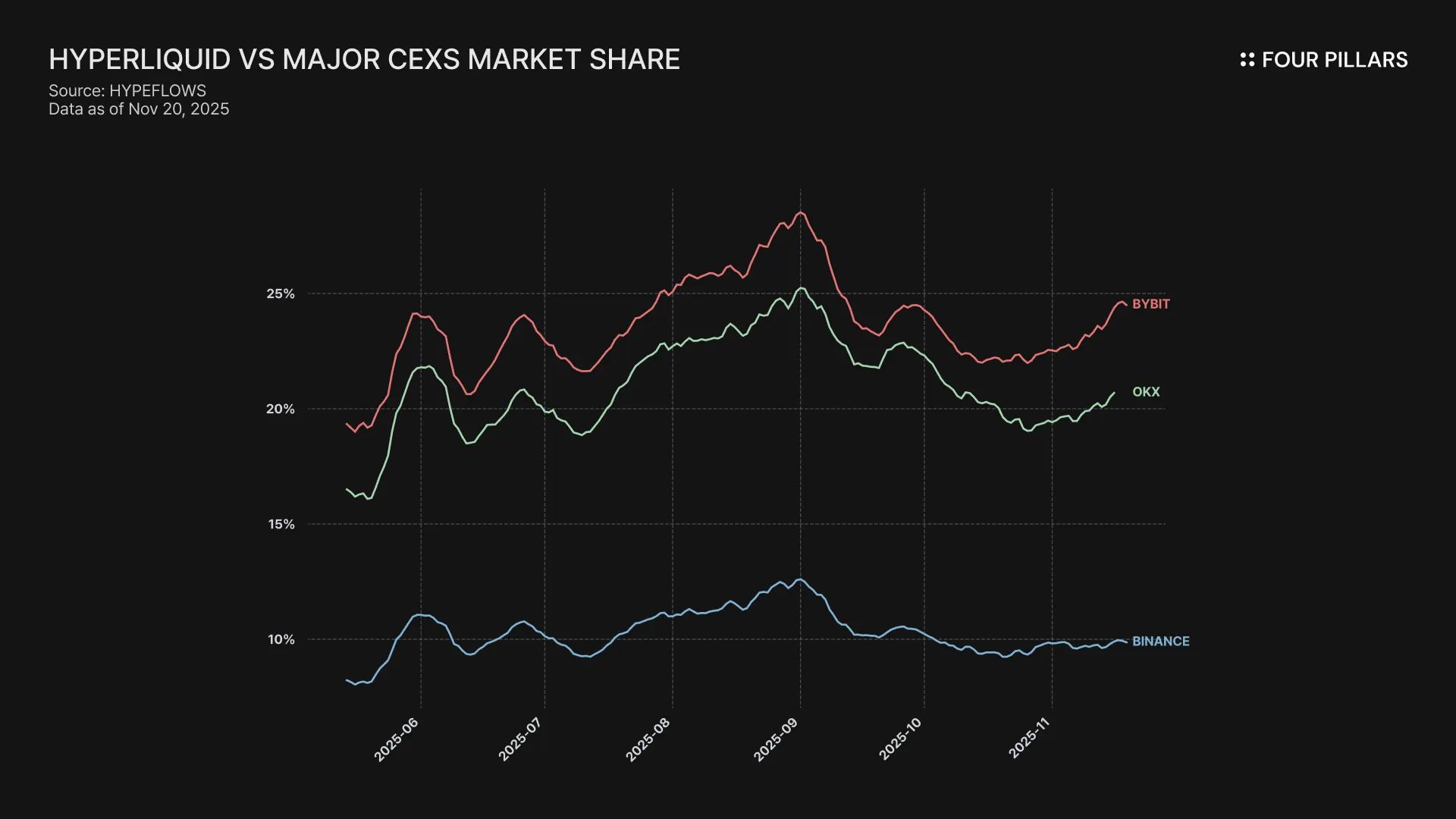
First - Hyperliquid was born from the belief that users deserve a trustworthy, user-centric, and truly decentralized alternative to centralized exchanges—effectively positioning itself as an “on-chain Binance.” Guided by the principle of “growing together with the community,” the Hyperliquid team has consistently prioritized user experience across product design and operations, while building mechanisms that return meaningful value back to its users.
Having raised no external capital, Hyperliquid allocated 70% of its $HYPE supply to the community at TGE. As a result, roughly 94,000 early users received 274 million tokens (31% of total supply) through the airdrop, forming the foundation of a strong trader-driven fandom. A network upgrade later earmarked 99% of Perp DEX trading fee revenue for burning or buying back $HYPE—further reinforcing this fanbase and accelerating broader user expansion. In addition, the ecosystem has strengthened its cohesion through HIP (Hyperliquid Improvement Proposals), a governance initiative that encourages community-driven decision-making.
Consequently, Hyperliquid quickly became the undisputed #1 DEX by trading volume and active traders, capturing roughly 5% of the entire CEX market and consistently reaching over 10% of Binance’s trading volume—a remarkable achievement for a decentralized platform. This explosive growth has drawn the attention of major institutions, VCs, and influencers—all treating $HYPE as a strategic asset worth hundreds of millions of dollars—while Hyperliquid’s user base continues to expand at an accelerating pace.
Secondly - MegaETH emerged with the goal of making blockchain behave as responsively as Web2—creating a foundation capable of natively supporting diverse, high-velocity applications. To achieve this, the team completely reimagined the traditional Layer-2 architecture, pushing infrastructure performance toward a target of 100,000 TPS and sub-10ms block times. Rather than prioritizing early scale, MegaETH chose instead to carefully curate a small group of builders and community members who deeply resonate with its vision and are committed to contributing meaningfully to the ecosystem.
At the core of this strategy is MegaETH’s accelerator program, MegaMafia, which supports a highly selective group of elite builders. Out of hundreds of applicants, only about 25 teams have been chosen across two cohorts—each selected for their potential to create genuinely innovative use cases.
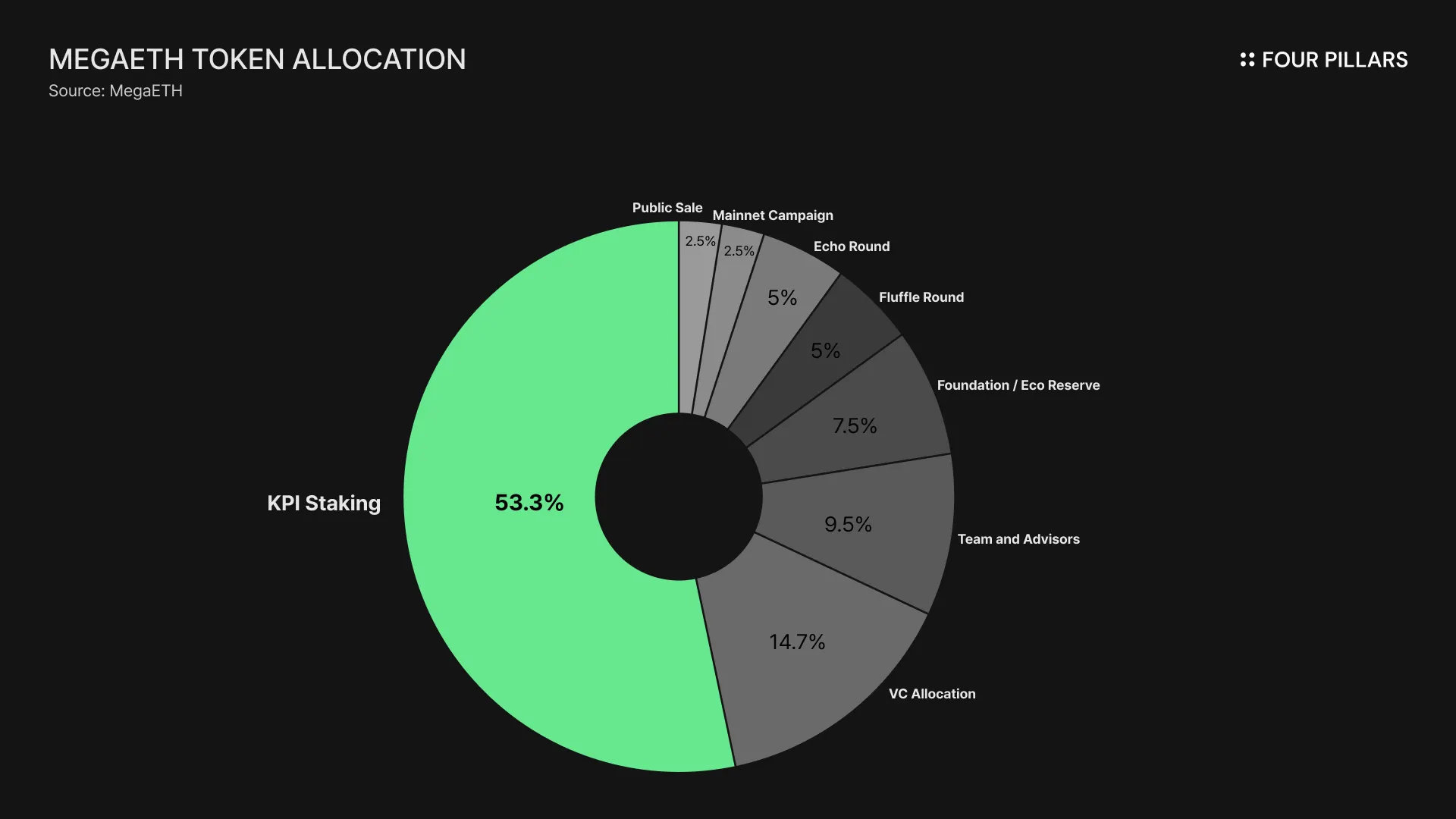
On the community side, MegaETH applied the same philosophy of deliberate curation. The team granted special benefits only to individuals with clear potential to contribute to the ecosystem. This included the selective distribution of approximately 10,000 limited-edition SBTs known as “Fluffles”, as well as a $50 million presale that eschewed mass public participation in favor of a small, qualified group expected to contribute to the network’s long-term development. These early participants were also granted exclusive access to future incentive programs. Additionally, the inclusion of KPI Staking within the tokenomics ensures that rewards accrue primarily to contributors who are aligned with network growth—further tightening the incentive alignment between ecosystem participants and the chain’s long-term trajectory.
As a result, whether they entered as builders or presale participants, members onboarding into the MegaETH community have already formed a highly cohesive and passionate base—actively evangelizing MegaETH’s philosophy and ecosystem even before the mainnet has officially launched.
In short, both Hyperliquid and MegaETH have created playbooks fundamentally distinct from Ethereum and Solana, forming strong, values-aligned communities at a remarkably fast pace despite being at an early or even pre-launch stage. Some critics may argue that their communities appear “too exclusive,” but this overlooks a crucial point: that very exclusivity is what ensures that the initial core is composed of contributors who are genuinely aligned with the ecosystem’s philosophy.
Many projects aspire to build strong communities, yet in a market dominated by short-term incentives and opportunistic participation, achieving this is extraordinarily difficult. In an era where airdrops have become an expected entitlement, how many projects can truly claim to have cultivated a loyal base over time? The communities that uphold Solana and Ethereum today were formed by a small group of believers who supported those ecosystems long before they were fashionable. In that sense, Hyperliquid and MegaETH have already laid a meaningful foundation for ecosystem maturity.
However, this represents only half of the journey. The remaining half—whether these ecosystems can grow into long-standing, independent platforms that stand alongside Ethereum and Solana—depends entirely on how effectively the builders of HyperEVM and MegaETH carry forward each protocol’s philosophy and create synergy among themselves. This cannot be achieved by the core protocol teams alone; it requires sustained collaboration, execution power, and alignment between the protocol and its builders.
Dive into 'Narratives' that will be important in the next year


 Sui
Sui Solana
 LayerZero
 Rialo
Rialo Ethereum
 MegaETH
 Hyperliquid

 SBI
SBI