

Data is rapidly becoming the core economic infrastructure of the AI era, yet the global data storage and delivery landscape remains heavily centralized around AWS, Azure, and GCP. Repeated large-scale outages have exposed the structural vulnerabilities of centralized infrastructure and intensified the fundamental need for decentralized storage solutions.
Despite offering lower costs and censorship resistance, earlier decentralized storage systems struggled to achieve meaningful adoption due to complex developer and user experiences, as well as limited ecosystem maturity. As a result, the market largely views decentralized storage as a technology with significant potential but not yet ready for mainstream integration.
Next-generation protocols such as Walrus, Shelby, and Irys are evolving to directly address the limitations of their predecessors by improving developer accessibility, enabling real-time performance, and introducing programmable data capabilities. Their growing integrations with Web2 businesses indicate that decentralized storage is beginning to prove its viability as real-world infrastructure rather than remaining confined to the Web3 domain.
Although decentralized storage remains in an early adoption phase, the combination of rapidly expanding data demand and the mounting structural risks of centralized cloud systems makes gradual maturation increasingly inevitable. Achieving widespread adoption will require standardized developer tooling, broader infrastructure expansion, and significant UX improvements. If these developments continue, decentralized storage is positioned to evolve from a niche technical alternative into a new paradigm for global data infrastructure.
1.1.1 Data as the New Economic Infrastructure
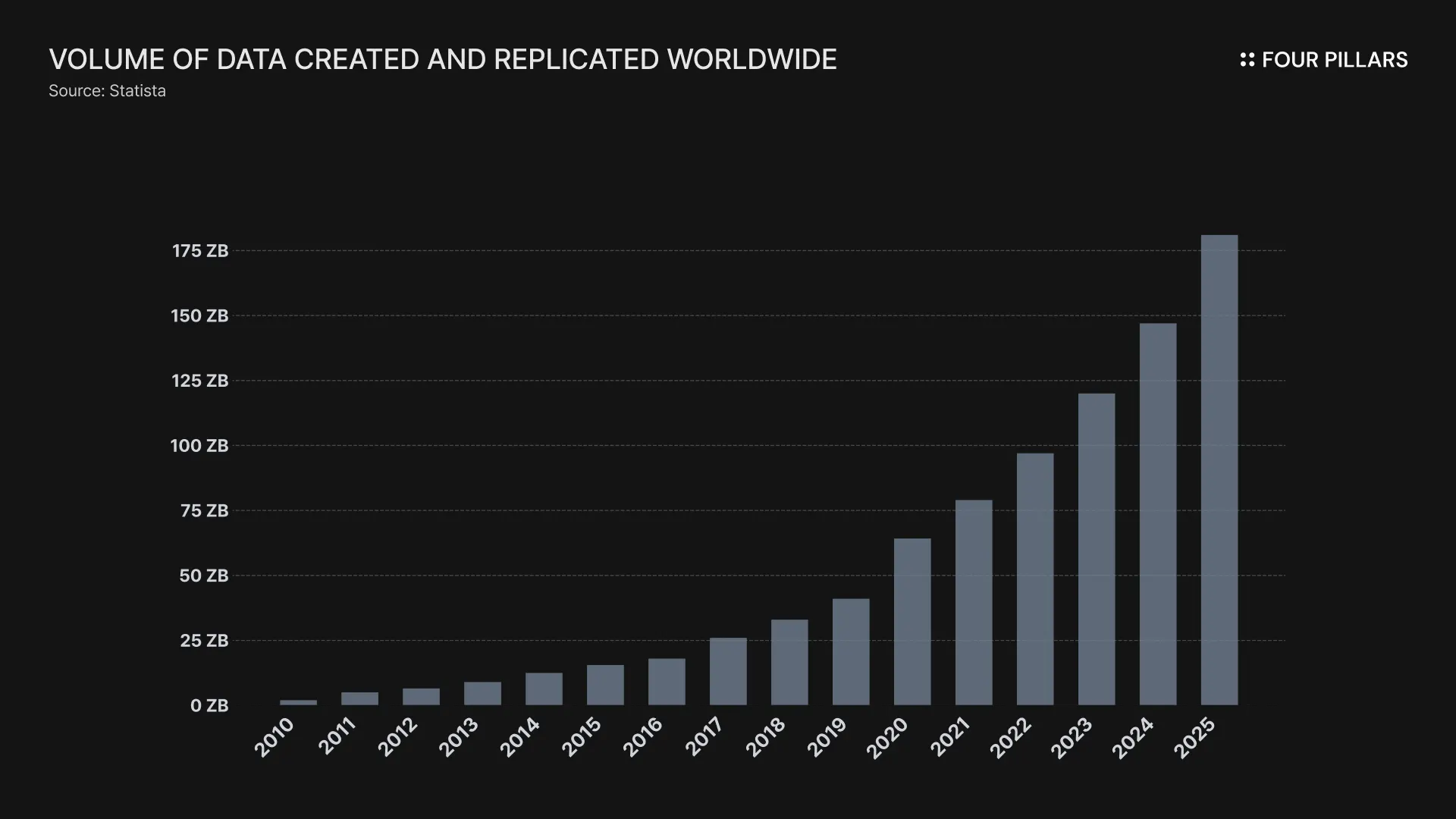
With the rapid advancement of AI technologies and various economic drivers, data has evolved from a secondary asset into a core component of modern economic infrastructure. According to Statista, the amount of data generated on the internet grows by more than 20% each year and is expected to reach around 180 zettabytes by 2025.
Smart sensors, connected vehicles and industrial IoT devices generate massive flows of data every second. Large language models such as ChatGPT consume enormous datasets for both training and inference. Data is no longer something merely stored or managed. It has become a vital raw material for value creation and a foundational infrastructure of the AI era. The evolution of data infrastructure follows a clear direction. It aims to let more participants access data faster, more securely and more efficiently than ever before.
1.1.2 The Data Market Remains Centralized
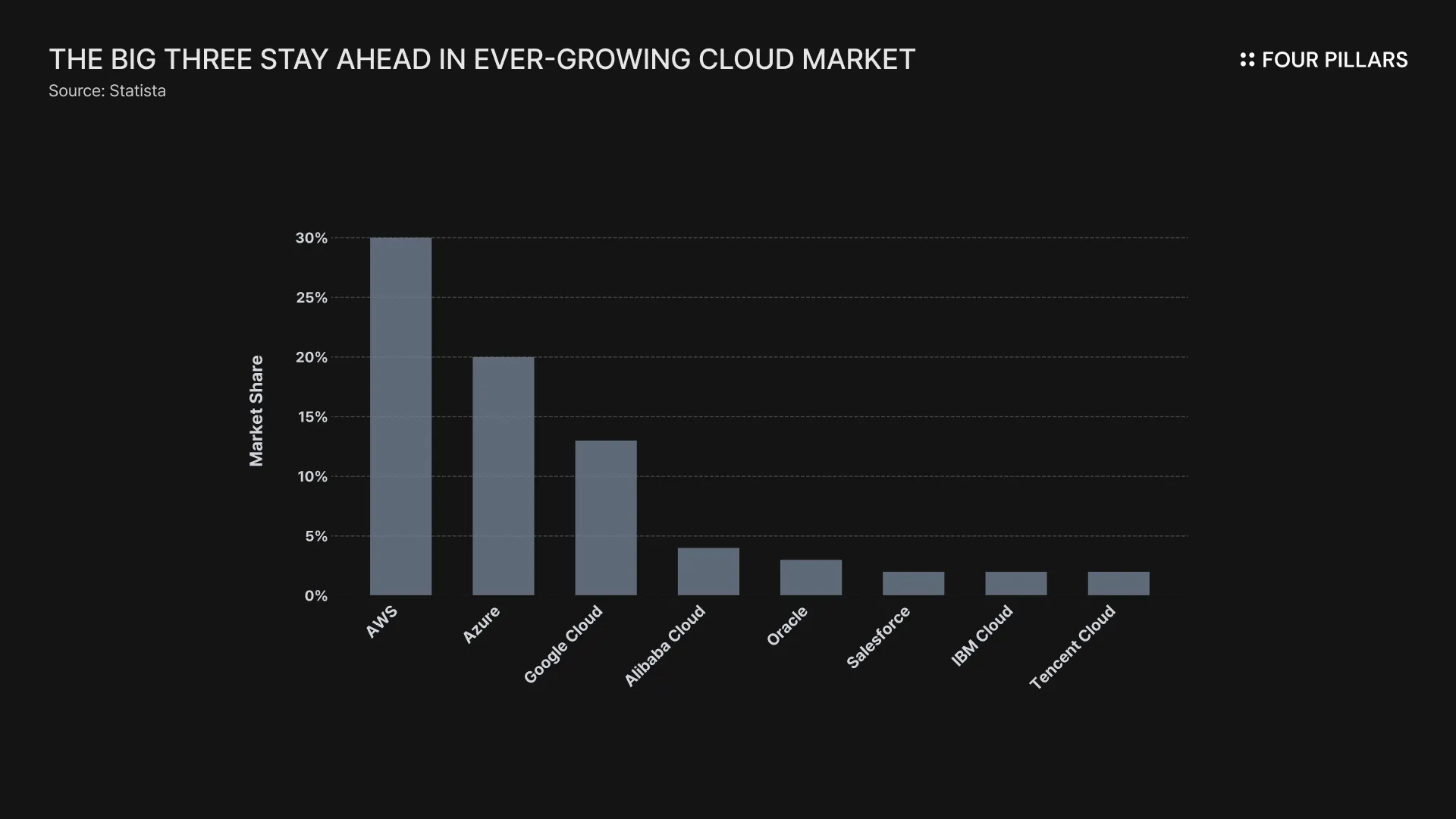
In 2025, data remains centralized. Most of the world’s massive data volume exists within what is often called the Cloud Big Three: Amazon AWS, Microsoft Azure, and Google Cloud. Together they hold more than 60% of the global cloud infrastructure market, and most web services and applications operate on their platforms. In the past, telecommunications companies controlled the flow of data. Today, cloud providers control the storage and access itself. This structure contains a critical risk known as a single point of failure.
On October 20, AWS suffered a major outage. Services such as Reddit, Coinbase, and Epic Games were simultaneously disrupted, affecting millions of users. Only a few days later, on October 29, Microsoft Azure also went down, halting not only its own services but also those of British telecom operators, airports, and other industries. These recurring failures reveal the vulnerability of centralized data infrastructure and underscore the need for a fundamental shift in how data is stored and distributed.
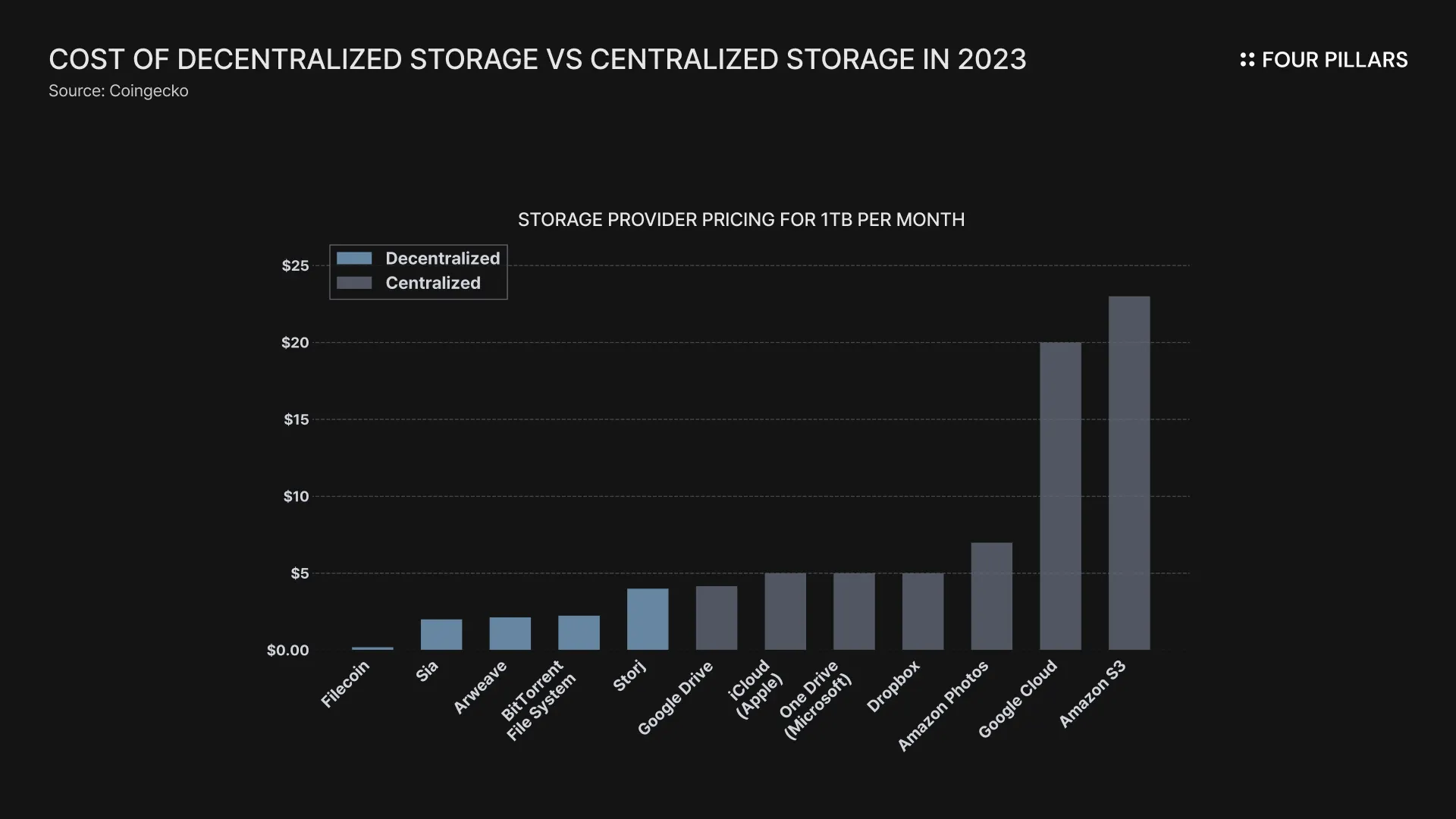
As the structural vulnerabilities of centralized cloud infrastructure become more apparent, decentralized storage has emerged as a potential alternative. However, technical feasibility and real-world adoption are two very different matters. The main reason organizations continue to rely on the cloud is convenience.
Companies can secure the storage space and computing power they need with just a few clicks, and CDNs allow fast access to data from anywhere in the world. Developers can focus entirely on building services without the burden of managing infrastructure. This is why users continue to rely on centralized cloud systems despite the known risks of data monopolies, security threats, and service disruptions. Decentralized storage promotes lower costs and resistance to censorship, but in practice it faces two major limitations, complex usability and a narrow ecosystem.
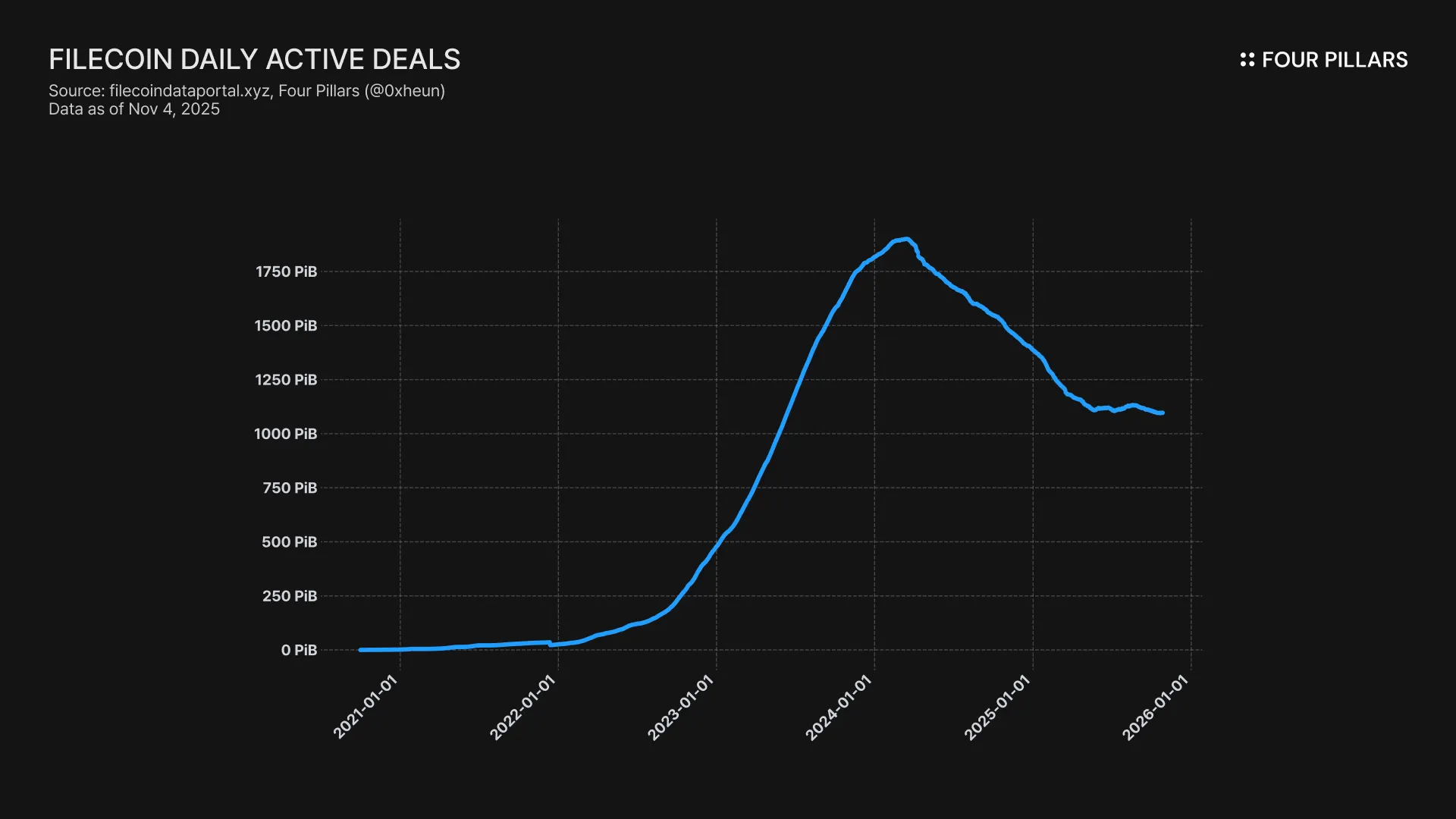
Filecoin is the most prominent example. After raising $250M through its 2017 ICO, it was hailed as the future of decentralized storage and quickly expanded after its mainnet launch in 2020. In early 2024, its daily active storage deals peaked at over 1,750 PiB. Since then, however, that figure has fallen to around 1,000 PiB. The decline was not driven solely by broader market stagnation. Developers had to learn an entirely new architecture instead of relying on familiar interfaces like AWS S3, and ordinary users found data uploads and management cumbersome.
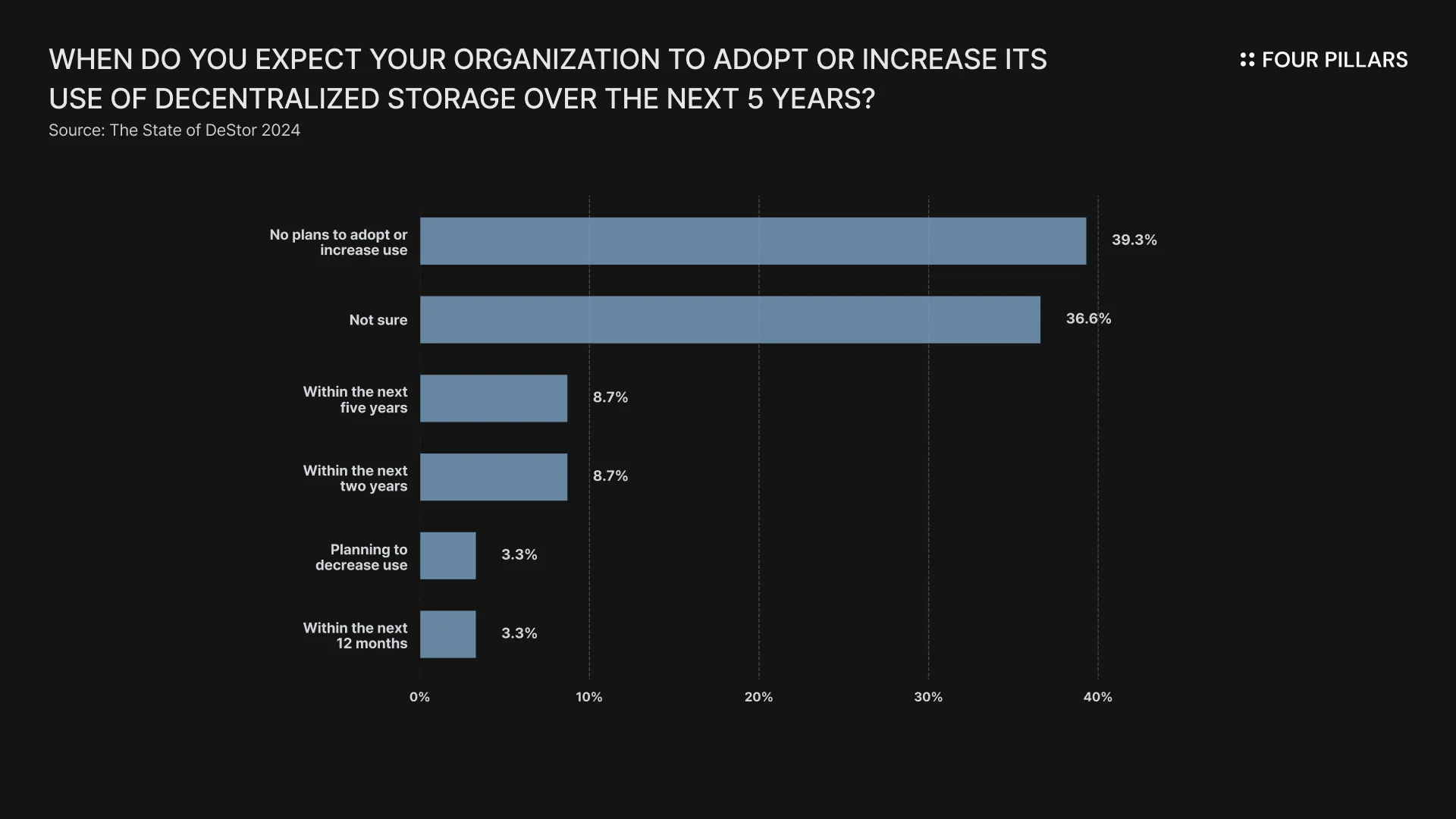
The market’s response has been even more cautious. According to The State of DeStor 2024, 75.9% of IT decision-makers said they had either no plans (39.3%) or were uncertain (36.6%) about adopting decentralized storage within the next five years. The biggest concerns were security and privacy at 35.7%, followed by technical complexity at 19.2%. Even if decentralized storage holds the technical potential to address the structural problems of centralized clouds, it must first prove its convenience and practicality to be chosen in the real market.
Although decentralized storage has not yet broken into the mainstream, the market itself continues to grow. According to Global Market Insights, the global decentralized storage market was valued at around $620M in 2024 and is projected to reach approximately $4.5B by 2034, with a compound annual growth rate of 22.4% between 2025 and 2034. Within this growth outlook, a new generation of protocols has emerged, each proposing ways to overcome the limitations of earlier systems. Three protocols in particular are attracting attention.
Walrus
Walrus is a decentralized storage protocol developed by Mysten Labs. At its core is RedStuff, a two-dimensional erasure coding system that achieves high data reliability with a replication factor only 4.5 times lower than conventional systems. This design makes Walrus more efficient than traditional storage networks.
Source: X(@WalrusProtocol)
Another major strength of Walrus lies in its developer-friendly architecture and its expanding ecosystem built through strategic partnerships. Walrus provides SDKs in several programming languages such as TypeScript, Python, Golang, and Rust, enabling developers to integrate the protocol easily with familiar tools. It can be operated through binary clients for macOS and Ubuntu, as well as via JSON and HTTP APIs through a command-line interface, allowing developers to build applications that utilize the Walrus decentralized storage layer in flexible ways.
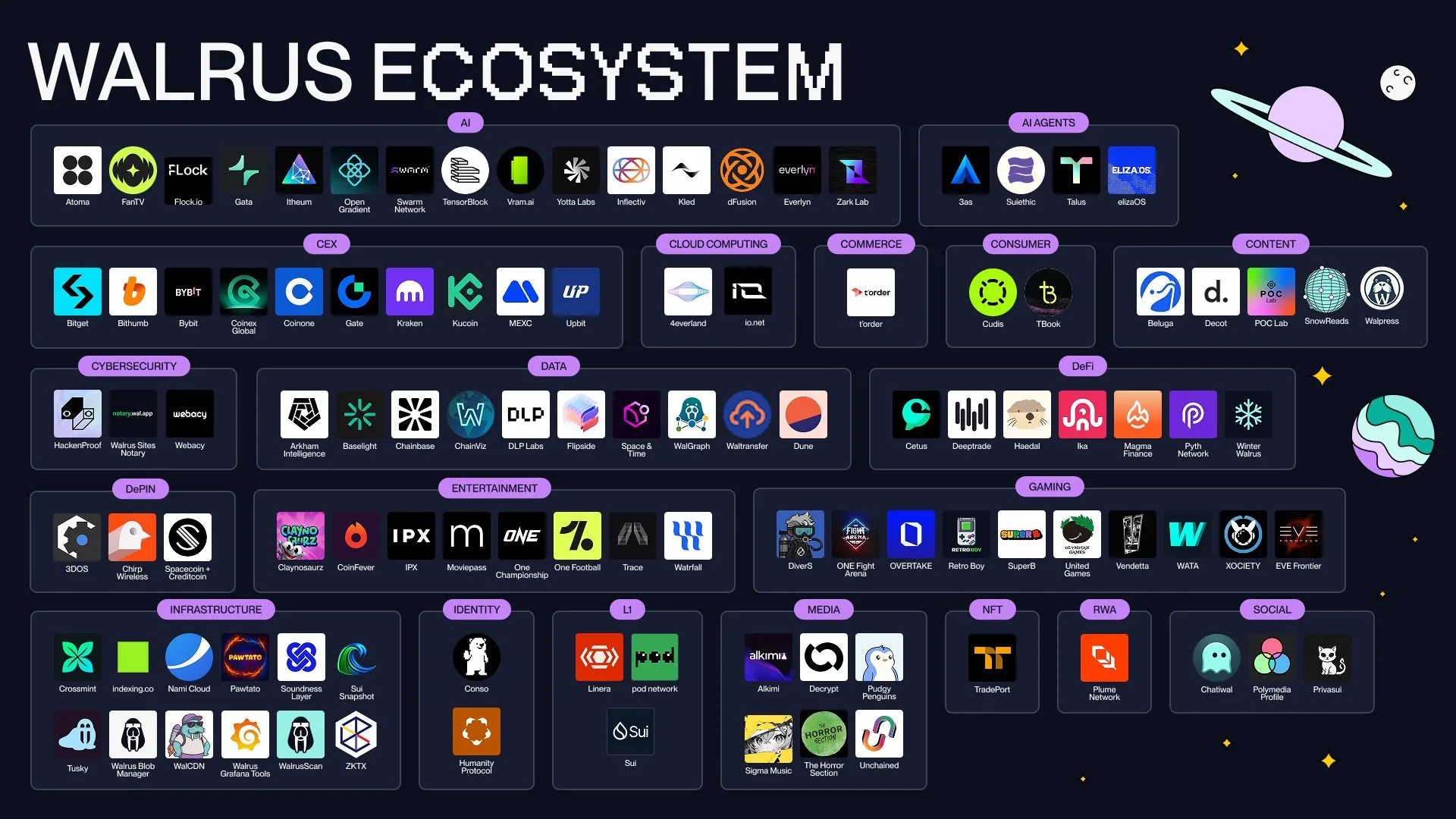
Walrus is expanding its ecosystem beyond projects onboarded to Sui, forming partnerships with various Web2 services. The media outlet Decrypt became the first publication to integrate Walrus, and the Korean table-ordering platform T’Order plans to use it to process transaction data from over 300,000 POS devices, representing around $4B in annual transaction volume. These examples show Walrus’s potential to extend beyond Web3 and into real business environments.
Shelby
Shelby is the first Web3 decentralized, cloud-grade hot storage protocol jointly developed by Aptos and Jump Crypto. It uses a dedicated fiber network and new encoding and audit mechanisms to target sub-second response times and CDN-level throughput even in a decentralized structure.
At its core is a read-to-earn incentive model that rewards nodes in real time for providing data, embedding the motivation to store and serve high-value data directly into the protocol itself. Currently in its Devnet phase, Shelby combines Jump Trading Group’s expertise in high-performance storage systems with the Aptos team’s large-scale infrastructure experience from Meta. This combination suggests that decentralized storage could evolve into a practical foundation for real-time applications.
Irys
Irys is the world’s first programmable datachain, designed to transform data into executable assets. It operates on a dual-ledger system composed of the Submit Ledger and the Publish Ledger, ensuring that only verified data can be permanently stored. The IrysVM is fully compatible with the Ethereum Virtual Machine(EVM) and allows smart contracts to directly read and manipulate stored data. Irys has also formed partnerships with networks such as Polygon and Base, as well as multiple other projects, continuing to expand its ecosystem.
These new protocols provide practical solutions to the key challenges that earlier decentralized storage systems faced. The projects building on and partnering with these protocols are no longer confined to the Web3 ecosystem. This indicates that decentralized storage is evolving from an experimental concept into infrastructure capable of meeting real business needs.
There is still a long way to go. Blockchain infrastructure remains unfamiliar to most people, and the user experience is not yet as seamless as that of traditional cloud services. However, this is a matter of maturity, not limitation. Just as the early internet and early cloud services gradually improved, decentralized storage is following a similar path of steady refinement.
In conclusion, decentralized storage now stands at the early stage of practical adoption. To reach broader use, it must build infrastructure that is easily accessible to existing developers and foster collaboration with industries and services beyond Web3 to create enterprise-level use cases. At the same time, user-friendly interfaces and improved UX are needed for wider consumer adoption. If this progress continues, decentralized storage will move beyond being a technical alternative and establish itself as a new paradigm for data infrastructure.
Dive into 'Narratives' that will be important in the next year


 Walrus

 SBI
SBI