Smart contracts executed on blockchain networks are lowering the barriers to value transfer, enabling a wide range of use cases that extend far beyond finance. Among them, philanthropy may be one of the most intuitive—yet also one of the most fundamentally reconfigurable—domains.
Source: impactstake.com
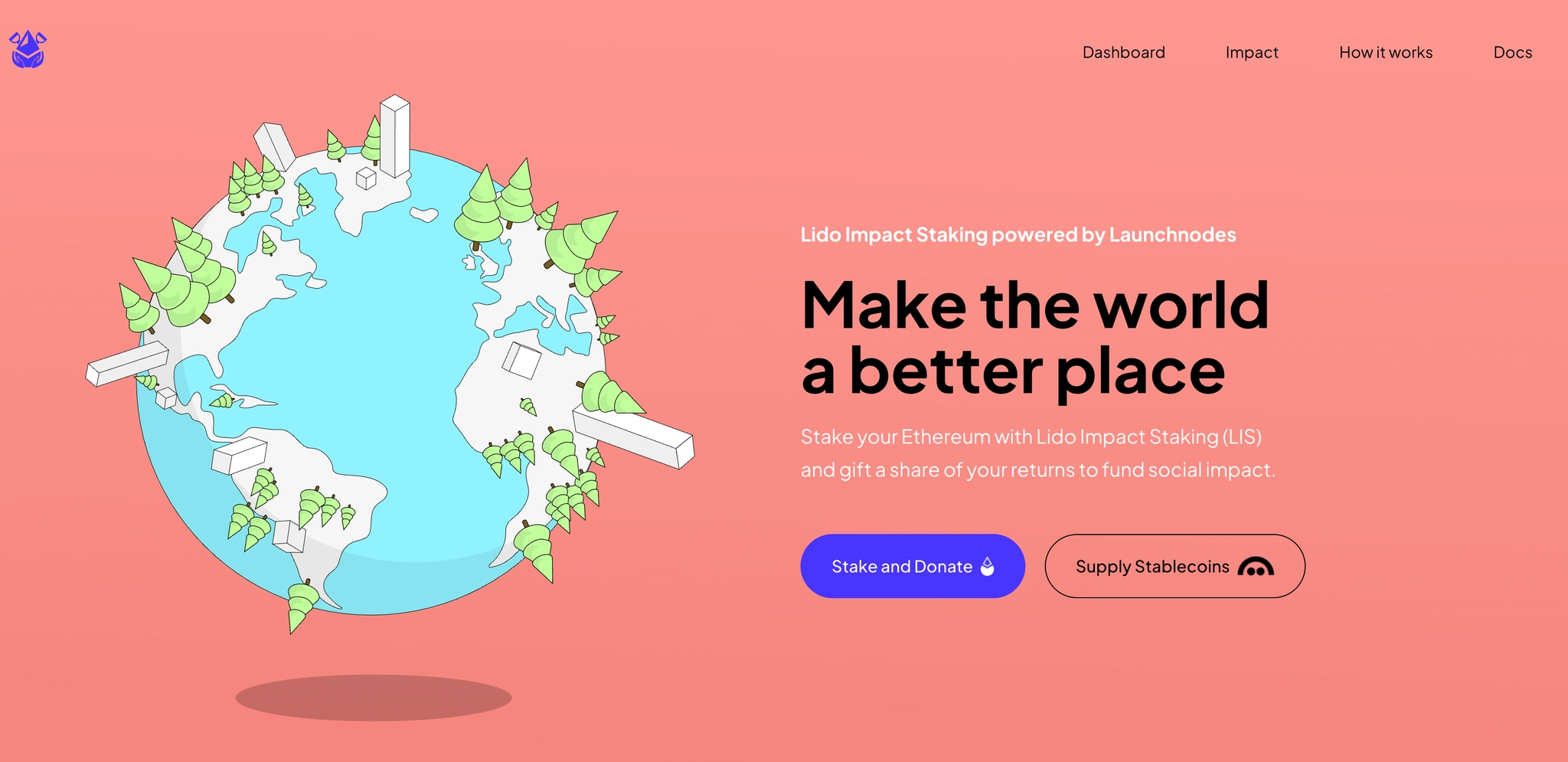
Lido Impact Staking (LIS) stands out as a particularly compelling example of this shift. Grounded in the core ethos of blockchain, LIS leverages the native mechanism of staking to illustrate how on-chain value flows can be directed toward real-world impact.
Source: research.lido.fi
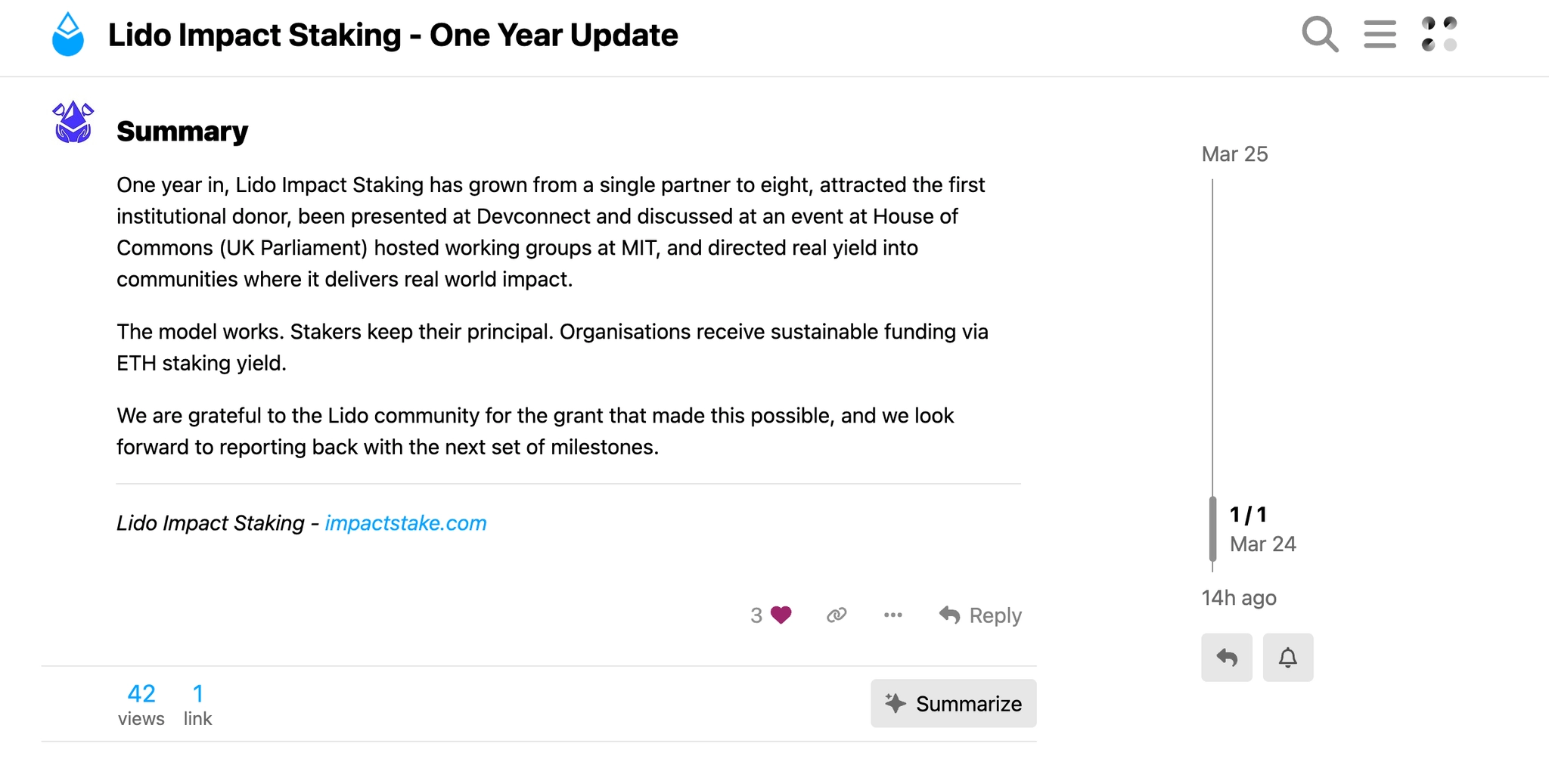
LIS was initially introduced as a pilot through a grant from the Lido DAO, in collaboration with ecosystem contributors such as Launchnodes. Over roughly a year of operation, it has steadily evolved—expanding both its structural design and participation base. What began as a proof-of-concept has since developed into a more mature framework, onboarding organizations such as UNICEF, UNHCR, and ITU, and demonstrating tangible real-world use cases - most recently, “Speech Without Borders” joined the initiative, further extending its scope into supporting freedom of expression.
The design of LIS becomes particularly compelling when contrasted with traditional donation models. While conventional philanthropy typically relies on “one-off capital outflows”, LIS instead generates a “perpetual funding stream” derived from Ethereum staking yields via Lido.
Source: UNICEF
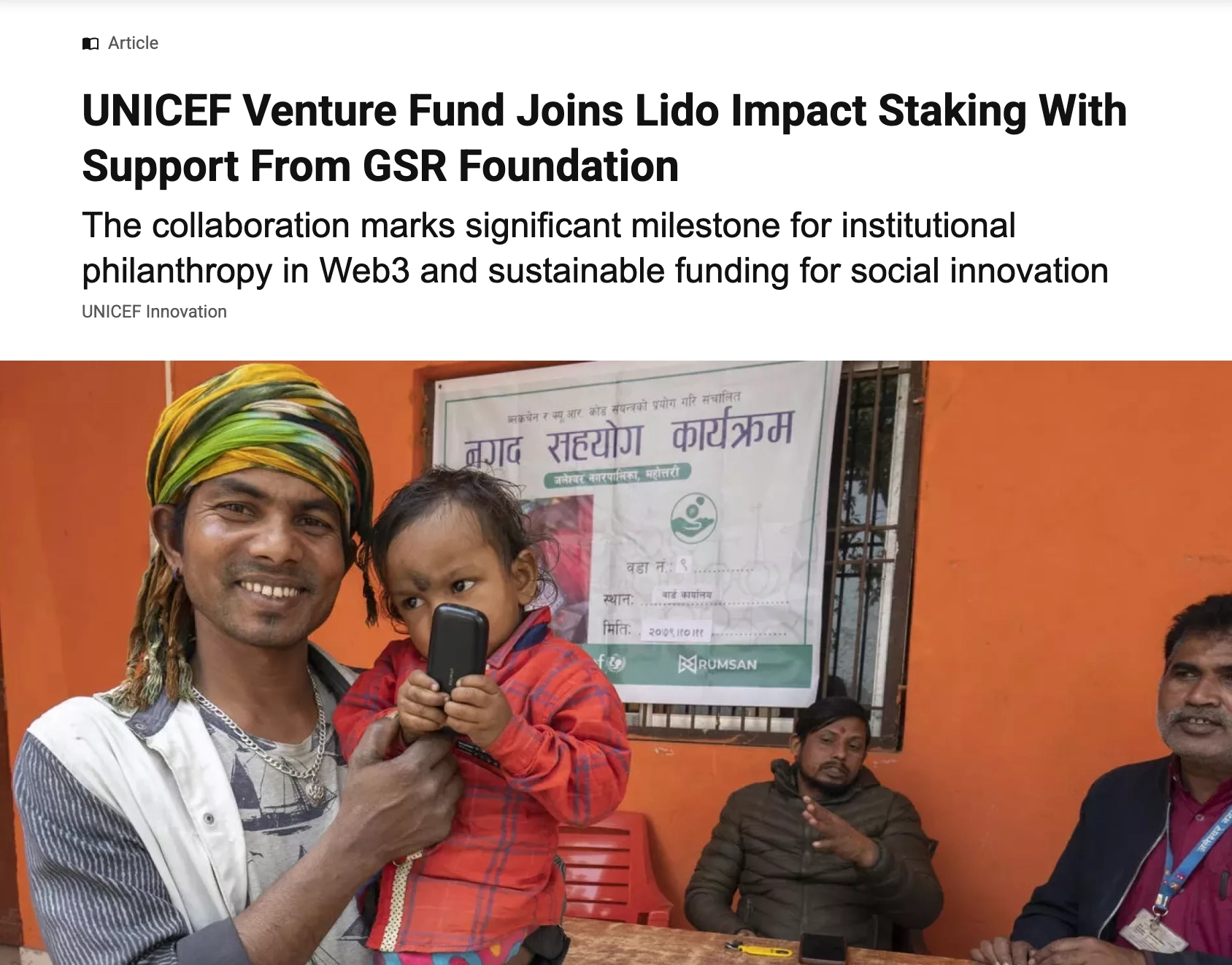
As demonstrated in cases such as UNICEF, this model enables organizations to secure continuous funding, allowing them to plan long-term initiatives on the basis of predictable cash flows. At the same time, by combining on-chain transparency with measurable impact metrics, LIS can be seen as a structural attempt to address some of the most persistent challenges in philanthropy—namely, trust and accountability.
Beyond its funding model, LIS also reflects thoughtful design in terms of accessibility and scalability. NGOs can join permissionlessly, provided they meet a minimal set of requirements, and each participating organization is equipped with a dedicated staking interface tailored to its branding and activities.
LIS currently holds approximately 204.78 ETH in total value locked (TVL), with around 6.44 ETH in staking rewards already distributed to partner organizations—underscoring that the model is not merely conceptual, but actively in operation.
Ultimately, LIS can be understood as a concrete example of transforming staking into a purpose-driven capital flow. As Lido continues to build on its scale and influence, and as similar models become repeatable on standardized assets such as stETH, staked capital may evolve into a generalized capital routing mechanism—one that can be leveraged by a wide range of DAOs and institutions.


 Lido
Lido
