
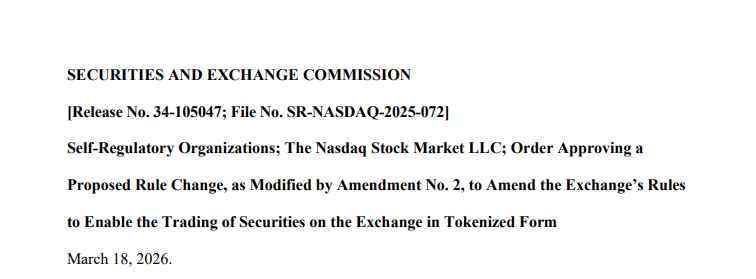
On March 18, the SEC approved a rule change that allows stocks on Nasdaq to be traded in a blockchain-based tokenized form. This marks the final outcome of Nasdaq’s proposal submitted to the SEC on September 8, 2025.
In the news and across communities, people are throwing around buzzwords like 24/7 trading, T+0 settlement, and lower fees, making it sound like a massive breakthrough. That’s only half true. In the short term, this is not as big of a deal as you might think.
Here’s how tokenized stock trading actually works under this approval:
An investor submits an order and selects the tokenization option
The trade is executed on Nasdaq exactly the same way as today
After the trade, DTC handles settlement, and the shares are settled in tokenized form
(the investor would need to specify a blockchain and wallet address)
The key point is that these tokenized shares are identical to traditional shares. They carry the same CUSIP, ticker, and shareholder rights. From both an investor and market perspective, there is no visible distinction between a tokenized share and a regular one.
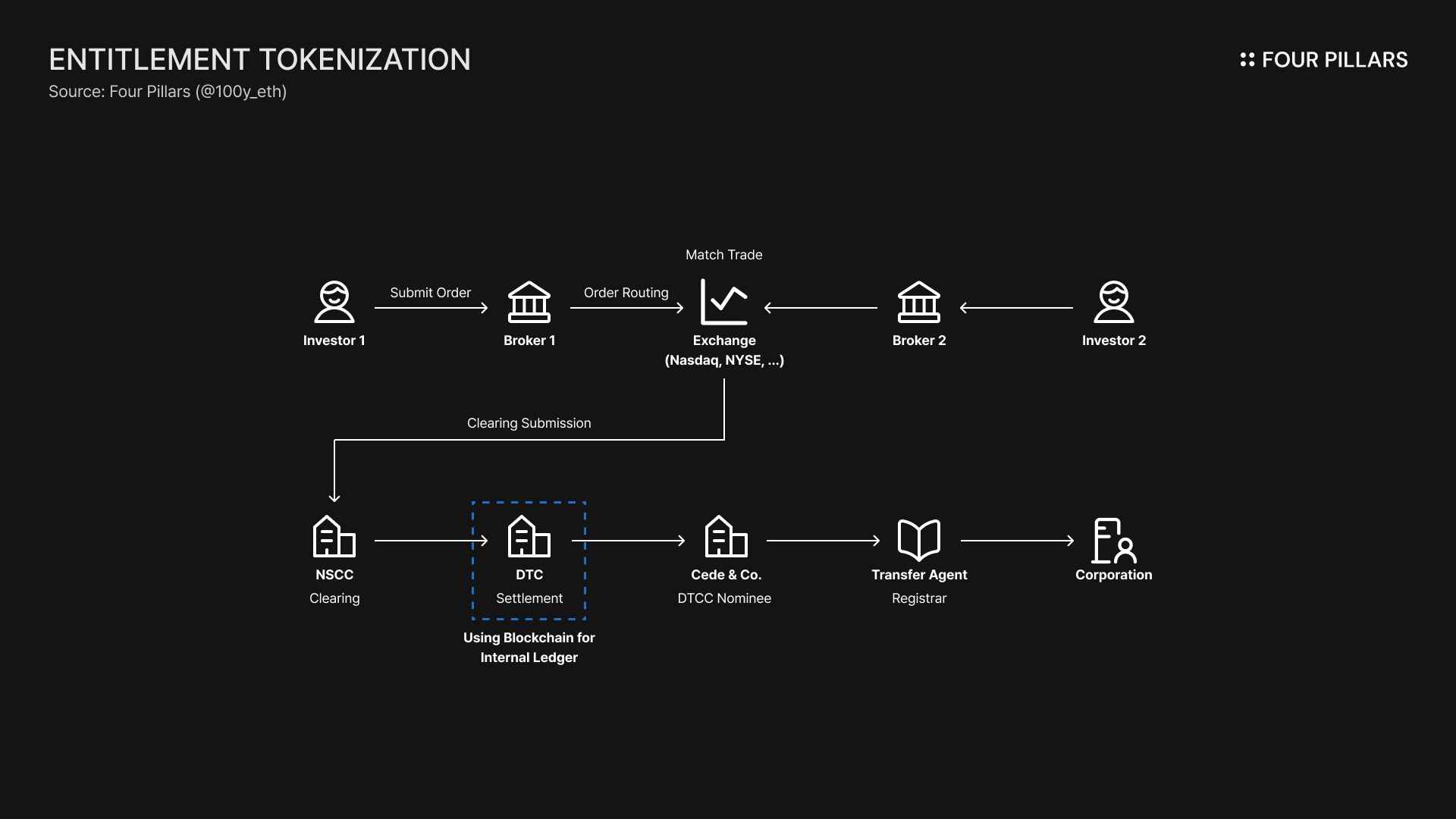
This approach is what’s known as entitlement tokenization. The existing trading flow and intermediary structure remain unchanged. The only difference is that DTC uses tokens during the settlement process instead of the traditional book-entry method.
The most important takeaway is that almost nothing changes in the existing system. According to the SEC document, settlement is still handled by DTC, and it remains on a T+1 basis:
“Trades in tokenized securities handled by DTC would continue to settle on a T+1 basis.”
Not all stocks are eligible for tokenization either. The initial scope is limited to securities included in the Russell 1000 Index and ETFs tracking major indices like the S&P 500 and Nasdaq-100. In other words, tokenization will begin with large- and mid-cap U.S. equities.
Also, while the SEC has approved the rule, actual implementation will take time. DTC still needs to complete the underlying infrastructure for tokenized settlement before this can go live.
That said, from a long-term perspective, this approval is a major milestone for the crypto industry. It effectively expands the definition of a “security” to include tokenized forms.
Nasdaq and DTC are aiming to introduce 24/5 trading starting in 2026, with the long-term goal of reaching 24/7 trading. This is a gradual shift, but this approval represents the first real step toward making that vision a reality.
The era of tokenized equities has officially begun.


